
 Evy Coe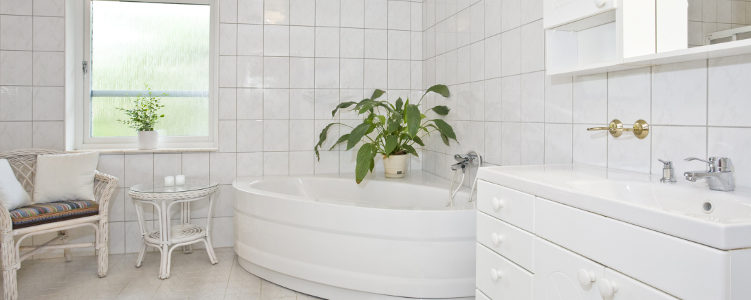
Traditionally, bathroom tiling is fitted onto the wall areas around wash basins, showers and baths. This is to prevent water damage to your walls. However, lots of people now choose to cover their whole room with it. This includes the floor, where tiles are now often used instead of laminate or lino.
If you want to invest in some bathroom tiling but don’t know where to start, we can help. Read on to find out more about tiles and how to use them in your bathroom.
Types of bathroom tiling
There are several different types of bathroom tiling. You can often work out which type to use by thinking about where you want to put it.
Ceramic tiles
Ceramic tiles are one of the most common types of tile and very popular. Due to their thickness, they’re only suitable for indoor use, which means they’re usually found in bathrooms. Ceramic tiles are available in a wide range of colours and patterns, and in matte, satin and gloss finishes.
Porcelain tiles
Porcelain tiles are also very popular. They’re slightly thicker than ceramic tiles so tend to more durable and long-lasting. They’re suitable for indoor and outdoor use and can be fitted on walls and floors.
Glass tiles
You can also find glass tiles in a lot of bathrooms. They’re good for making decorative designs and are usually used in borders, splashbacks and feature walls. Glass tiles are very delicate so are only suitable for walls.
Mosaic tiles
Mosaic tiles tend to be made of ceramic, stone or glass. While other tiles are usually pre-cut, mosaic tiles normally come on a sheet so you can cut them into the shape and size you want. Because they’re small and highly decorative, mosaic tiles tend to be used in borders and feature walls.
Top design tips
Unfortunately, the hard work doesn’t stop once you’ve worked out where you’re going to put your bathroom tiling and what type you’re going to use. You also need to think about colour, texture and size.
Colour
Black, white and cream are very popular bathroom tiling colours. And these can look really great in a range of bathrooms. But if you’re not a fan, these aren’t your only choices. Colours like beige, sand and grey can also look fantastic and give your bathroom a bit of character. Wood and stone effects can also look great, especially on flooring.
Texture
Texture is another factor to think about. Smooth, glossy tiles are a classic, stylish choice that almost always looks good. However, if you’re tiling your floor it’s best to choose a textured tile if you can, as these are less likely to be slippery when wet. If you use textured tiling it’s best to go for a plain or natural design to avoid the room feeling too cluttered.
Size
The size of tile you choose can also make a big difference to your bathroom. Choose fairly small tiles for a small bathroom – this can help to make it feel bigger. Don’t go too small though, as this could make it feel busy and cluttered. Bigger tiles are great for larger bathrooms as they can open them up even more.
Following our advice on types, colour, texture and size should help you to pick the perfect bathroom tiling for your home. To learn more about other bathroom products, see our articles on pedestal basins, toilets and bath and showers.
Tiling time
1-5 days
Depending on the size of the area
Cost of tiling work
£400 - £1,300
Depending on the size of the area
Tile price
From around 35p per tile
Depending on size, material and quality
Advantages and disadvantages
- Protects your bathroom walls
- Helps you create a stylish and unique room
- Tiling can crack or shatter if used in the wrong places