
Damp is one of the most misunderstood problems in UK homes. A dark patch on a wall might come from rainwater, condensation, a plumbing leak, groundwater or several faults occurring at the same time.
Because the symptoms often look similar, correct diagnosis matters. A chemical damp-proof course will not repair a leaking gutter, while mould-resistant paint will not solve poor ventilation. Likewise, waterproof render may trap moisture inside an older solid wall instead of helping it dry.
Before choosing any treatment, a homeowner should first identify where the moisture comes from and how it enters or forms within the building. Otherwise, an expensive repair may only hide the symptoms temporarily.
This guide explains:
- the main causes of damp in UK homes;
- how the different types of damp can appear;
- why damp-proofing treatments sometimes fail;
- how older buildings need a different approach;
- when to use a damp-proofing specialist.
What does damp proofing mean?
Damp proofing is a broad term that covers work intended to prevent, reduce or manage unwanted moisture in a building.
Depending on the cause, suitable work might include:
- repairing damaged roofing, flashing or guttering;
- installing or repairing a damp-proof course;
- lowering raised patios, paths or flower beds;
- removing materials that bridge an existing damp-proof course;
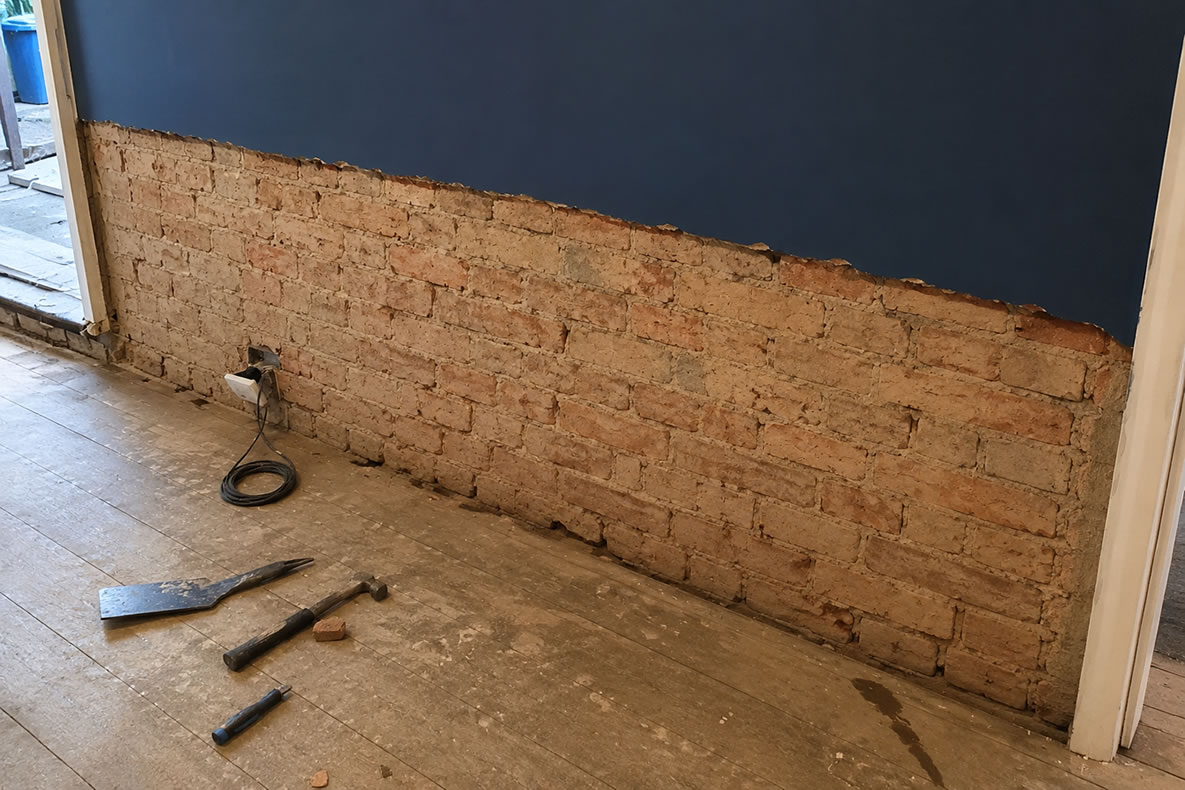
- replacing salt-contaminated plaster;
- waterproofing a basement;
- improving ventilation and extraction;
- insulating cold walls and surfaces;
- repairing leaking pipes;
- restoring breathable finishes in older buildings.
However, no single treatment fixes every form of damp. Therefore, a contractor should investigate the problem before recommending injection, tanking, replastering or ventilation work.
Why is damp so common in UK homes?
Several factors make British properties particularly vulnerable to moisture.
First, the UK experiences regular rainfall, wind-driven rain and long periods of cool weather. At the same time, a large proportion of the housing stock is relatively old and has been altered many times.
Common causes and contributing factors include:
- leaking roofs, valleys and chimney flashings;
- overflowing gutters and blocked downpipes;
- damaged render or eroded pointing;
- cold external walls and thermal bridges;
- inadequate bathroom and kitchen extraction;
- drying clothes indoors;
- blocked air bricks and sealed fireplaces;
- raised external ground levels;
- unsuitable cement renders and waterproof coatings;
- poorly planned insulation upgrades;
- plumbing and heating leaks.
Furthermore, damp and mould can affect more than decoration. Persistent moisture may damage plaster, timber, masonry, flooring and household belongings. It can also create unhealthy indoor conditions and make a property harder and more expensive to heat.
The main types of damp in UK properties
Although homeowners often use the word “damp” for every moisture problem, specialists usually separate it into several categories.
1. Condensation and surface mould
Condensation is probably the most widespread moisture problem in UK homes.
Everyday activities release water vapour into the air. Showering, cooking, breathing and drying clothes all increase indoor humidity. When warm, moist air reaches a cold wall, window or ceiling, some of that vapour turns into liquid water.
Over time, repeated surface condensation creates ideal conditions for black mould.
Common signs of condensation
Typical symptoms include:
- black mould around windows;
- droplets on glass in the morning;
- mould behind wardrobes or large furniture;
- damp patches in bathrooms and kitchens;
- mould in external corners;
- musty smells in poorly ventilated rooms;
- problems that become worse during winter.
Unlike rising damp, condensation does not usually form a consistent band from the bottom of a ground-floor wall. Instead, it tends to affect the coldest and least ventilated parts of a room.
How to reduce condensation
A successful condensation strategy often combines several measures.
For example:
- use effective extractor fans in kitchens and bathrooms;
- keep trickle vents open where available;
- ventilate rooms regularly;
- leave space behind furniture;
- avoid drying large amounts of laundry indoors;
- maintain reasonable background heating;
- insulate cold surfaces where appropriate;
- deal with major thermal bridges.
After controlling the moisture source, existing mould should also be cleaned safely.
Simply painting over black mould rarely provides a lasting answer. Although the wall may look better for a short time, the mould will return if humidity remains high and surfaces stay cold.
2. Penetrating damp
Penetrating damp develops when rainwater enters through the external parts of a building.
Unlike rising damp, it can appear at almost any height. In many cases, the affected area becomes noticeably wetter after rainfall.
Common causes of penetrating damp
Likely sources include:
- broken or missing roof tiles;
- defective chimney flashing;
- damaged flat roofs;
- overflowing gutters;
- blocked downpipes;
- cracked external render;
- eroded mortar joints;
- failed window seals;
- defective cavity trays;
- debris bridging a cavity;
- leaking parapets or valleys;
- porous or damaged masonry.
Common signs of penetrating damp
Look for:
- patches that darken after rain;
- isolated areas rather than an even low-level band;
- staining near ceilings, windows or chimneys;
- damp on upper floors;
- bubbling paint on an exposed wall;
- algae marks or water streaks outside;
- recurring wetness after storms.
How penetrating damp should be treated
The contractor must repair the route through which the water enters.
Consequently, the correct remedy may involve roofing, guttering, repointing, rendering, drainage or window repairs rather than chemical damp treatment.
For instance, if an overflowing gutter soaks an outside wall, clearing and repairing the gutter should come first. Injecting a new damp-proof course would not address the actual defect.
3. Rising damp
Rising damp occurs when moisture from the ground moves upward through porous masonry by capillary action. A damp-proof course, commonly called a DPC, should stop that movement.
Because of the way it forms, genuine rising damp normally affects basements or the lower parts of ground-floor walls. It does not explain a random patch halfway up an upstairs bedroom wall.
Common signs associated with rising damp
Possible indicators include:
- damp beginning at floor level;
- damaged skirting boards;
- crumbling or bubbling plaster;
- salts on the wall surface;
- a fairly consistent horizontal tide mark;
- continuing deterioration after obvious external leaks have been repaired.
Even so, no single visual sign confirms rising damp on its own.
Why an existing DPC may appear to fail
Sometimes the original damp-proof course remains intact, but another material allows moisture to bypass it.
This process is known as bridging.
Common examples include:
- paving or soil raised above the DPC;
- external render continuing below the DPC;
- internal plaster bridging the course;
- rubble or debris inside a cavity;
- solid floors connected directly to damp walls;
- flower beds built against the property;
- insulation installed across the DPC.
Therefore, a surveyor should check ground levels, wall finishes and cavity conditions before recommending a replacement DPC.
Typical treatment for genuine rising damp
Where the evidence supports a diagnosis of rising damp, treatment may involve:
- removing any bridging;
- installing a remedial chemical or physical DPC;
- removing salt-contaminated plaster;
- applying a suitable replastering system;
- allowing sufficient drying time before decoration.
The contractor must deal with both the incoming moisture and the salts left behind in the wall. Otherwise, the surface may continue to look damp even after the water source has been controlled.
4. Plumbing and appliance leaks
A concealed plumbing leak can easily resemble other forms of damp.
Possible sources include:
- central-heating pipes;
- radiator valves;
- bath and shower seals;
- waste pipes;
- washing-machine hoses;
- toilet cisterns;
- water tanks;
- underfloor heating;
- pipework beneath floors.
A plumbing leak often creates a localised patch that remains damp regardless of the weather. In addition, the problem may sit directly below a bathroom, kitchen or heating appliance.
Before arranging damp-proofing work, homeowners should rule out leaking pipes and fittings.
5. Basement and below-ground damp
Basements face a different moisture problem because the surrounding ground sits above some or all of the internal wall surface.
As a result, a standard above-ground DPC may not provide enough protection.
Possible systems include:
- cementitious tanking;
- cavity-drain membranes;
- perimeter drainage channels;
- sumps and pumps;
- external waterproofing where access allows.
However, basement waterproofing needs careful design. A weak point at a floor-to-wall junction, service penetration, outlet or membrane joint can undermine the entire system.
For that reason, specialist design is usually more reliable than applying a waterproof coating to whichever wall appears wet.
Why damp-proofing treatments fail
Poor workmanship can cause failure. However, an incorrect diagnosis creates just as many problems.
The wrong type of damp was diagnosed
This is one of the most common reasons treatments do not work.
For example:
- condensation may be mistaken for rising damp;
- a leaking gutter may lead to an unnecessary injected DPC;
- salt contamination may be confused with an active leak;
- waterproof plaster may conceal a plumbing problem;
- rain penetration may be blamed entirely on the occupants.
Handheld moisture meters can help identify patterns, but they do not prove rising damp by themselves. A proper inspection should also consider the location, height, weather pattern, building materials, ventilation, salts and external condition.
The contractor treated the symptom instead of the source
Some repairs improve the appearance without stopping the moisture.
Examples include:
- painting over mould;
- coating a damp wall internally;
- filling visible cracks without repairing failed render;
- replacing plaster while the gutter still leaks;
- injecting a wall while external ground levels remain too high.
Although these measures may hide the problem temporarily, damp usually returns because the original route remains open.
Bridging remains in place
A contractor may install a new chemical DPC correctly, yet damp can still bypass it through render, plaster, rubble, soil or a solid floor.
Therefore, treatment should include the removal of bridging wherever possible. Without that step, the homeowner may assume the new DPC has failed.
Contaminated plaster was left untreated
Moisture can carry salts into masonry and plaster. Some salts then absorb water from the air, which makes the surface appear persistently damp.
Consequently, replastering specifications matter. If a contractor leaves heavily contaminated plaster in place or replaces it with an unsuitable system, stains and damp-looking patches may return.
The wall did not have enough time to dry
Thick masonry can dry slowly, especially during cold or humid weather.
Drying time depends on:
- wall thickness;
- masonry type;
- starting moisture levels;
- ventilation;
- heating;
- season;
- whether the moisture source has truly stopped.
If decoration starts too soon, paint may bubble or peel. Furthermore, impermeable finishes can slow evaporation and trap residual moisture.
Ventilation problems were ignored
Where condensation contributes to the problem, structural treatment alone will not succeed.
Modern replacement windows, sealed chimneys, blocked vents and added insulation may reduce natural airflow. Unless the homeowner introduces controlled ventilation, humidity can rise and mould may develop elsewhere.
Therefore, a complete damp strategy sometimes needs both building repairs and ventilation improvements.
Unsuitable waterproof materials were used on an older building
Traditional solid-wall buildings often rely on permeable lime mortar, render and plaster. These materials allow moisture to evaporate rather than trapping it inside the wall.
Modern cement render, waterproof paint, gypsum plaster and internal tanking can disrupt that process.
As a result, inappropriate damp treatment may move moisture into adjacent walls, timbers or floors instead of solving the underlying issue.
Older buildings need particularly careful investigation. A specialist who understands traditional construction should consider breathability, ground levels, drainage, ventilation and previous alterations before specifying treatment.
External maintenance problems were overlooked
Even well-installed internal work may fail when external defects remain.
Common examples include:
- gutters that continue to overflow;
- defective chimney flashing;
- damaged roof coverings;
- downpipes discharging beside walls;
- open mortar joints;
- blocked air bricks;
- cracked render;
- high patios or paths;
- leaking drains.
A thorough damp survey should therefore inspect the outside of the property as well as the affected rooms.
Why should you use a damp-proofing specialist?
The main value of a specialist lies in diagnosis rather than product application.
Different moisture problems can create similar stains, yet each one needs a different remedy. A competent surveyor should identify:
- where the moisture originates;
- how it travels through the building;
- why it collects in a particular place;
- which materials and wall types are present;
- which defects require repair;
- whether specialist damp treatment is necessary at all.
In some cases, the correct recommendation may simply involve repairing a gutter or improving extraction. In others, a remedial DPC, basement membrane or specialist replastering system may be appropriate.
A specialist should assess the whole property
A proper survey may include:
- checking external ground levels;
- locating the existing DPC;
- inspecting gutters and downpipes;
- reviewing roofing and chimney details;
- examining pointing and render;
- assessing ventilation;
- considering plumbing leaks;
- identifying wall and floor construction;
- using moisture readings as part of a wider investigation;
- considering salts where relevant;
- checking whether the building uses traditional materials.
This broader approach reduces the risk of paying for the wrong treatment.
Correct diagnosis can prevent unnecessary expense
An incorrect damp diagnosis can lead to extensive and disruptive work.
For example, homeowners may pay to:
- remove otherwise sound plaster;
- replace skirting boards unnecessarily;
- inject walls that do not suffer from rising damp;
- apply impermeable systems to breathable walls;
- redecorate several times;
- repair concealed timber damage later.
Although a detailed survey may cost more than a free sales inspection, it can save money by preventing unsuitable work.
A specialist should provide a clear written specification
A good survey or quotation should explain:
- the type of damp diagnosed;
- the evidence supporting that conclusion;
- external repairs required first;
- exact areas included in the treatment;
- products and systems proposed;
- plaster-removal heights;
- replastering materials;
- ventilation recommendations;
- likely drying periods;
- exclusions and assumptions;
- guarantee terms.
Be cautious when a company diagnoses rising damp immediately and recommends chemical injection without inspecting the outside of the property.
What should you look for in a damp specialist?
No qualification or trade badge guarantees perfect work. Nevertheless, several checks can reduce risk.
Look for:
- experience with your type and age of property;
- relevant damp and timber qualifications;
- membership of a recognised trade organisation;
- public liability insurance;
- professional indemnity insurance for surveying, where appropriate;
- detailed reports with photographs;
- clear references or case studies;
- written guarantees that explain exactly what they cover;
- knowledge of traditional construction where relevant.
For expensive or disputed work, an independent building surveyor may provide the diagnosis before treatment companies quote for the repairs.
Warning signs of a poor damp survey
Take care if the surveyor:
- diagnoses rising damp within minutes;
- relies only on a handheld moisture meter;
- never inspects the outside walls;
- ignores roofing, guttering, drains and plumbing;
- does not ask when the damp appears;
- recommends the same treatment in every property;
- proposes an injected DPC for mould high on an upstairs wall;
- specifies cement-based waterproofing in an older building without discussing breathability;
- pressures you to sign immediately;
- cannot explain how the treatment matches the cause.
What can homeowners check before arranging a survey?
You should not drill, remove plaster or disturb the building simply to investigate damp. Even so, basic observations can help a surveyor.
Record:
- which rooms and walls are affected;
- whether damp starts at floor level;
- whether it becomes worse after rain;
- whether the problem mainly appears in winter;
- whether black mould or salts are present;
- whether plumbing sits nearby;
- whether furniture touches an external wall;
- whether gutters overflow;
- whether the outside ground sits close to the DPC;
- whether the property has solid or cavity walls;
- whether previous damp treatment has taken place.
Photographs taken during different seasons and weather conditions can also reveal useful patterns.
Damp proofing in older and listed properties
Pre-1919 and traditional buildings often need a different approach from modern cavity-wall homes.
They may contain:
- solid brick or stone walls;
- lime mortar;
- lime plaster;
- suspended timber floors;
- slate damp barriers;
- limited cavities;
- later cement or gypsum repairs.
Sometimes the visible damp comes from modern alterations that prevent the original fabric from drying.
Before using chemical injection, internal tanking or waterproof coatings, seek advice from someone who understands traditional construction. In addition, listed-building consent may apply where work alters historic fabric.
Is specialist damp proofing always necessary?
No.
Sometimes the most appropriate remedy involves:
- repairing a leaking gutter;
- reconnecting a downpipe;
- replacing roof flashing;
- repointing external masonry;
- fixing a pipe;
- installing a better extractor fan;
- lowering a flower bed;
- reopening air bricks;
- improving insulation;
- moving furniture away from an external wall.
Therefore, a trustworthy specialist may conclude that conventional damp-proofing treatment is unnecessary.
Questions to ask a damp-proofing company
Before accepting a quotation, ask:
- What type of damp have you identified?
- What evidence supports the diagnosis?
- Have you ruled out condensation, plumbing leaks and rain penetration?
- Is the existing DPC missing, damaged or bridged?
- Which external repairs must happen first?
- Why does the proposed system suit this property?
- Are the materials compatible with an older building?
- How much plaster will you remove, and why?
- Which replastering system will you use?
- How long should the wall dry before decoration?
- Does the treatment include ventilation improvements?
- What does the guarantee cover?
- Who provides the guarantee?
- What happens if the damp returns?
- Will you provide photographs and a written report?
Final thoughts
Successful damp proofing starts with the correct diagnosis.
Moisture can come from the ground, the weather, indoor humidity or a concealed leak. In addition, several causes may affect the same property at once.
Treating the wrong problem wastes money and may make the building more difficult to dry. By contrast, a competent specialist will investigate the property as a whole, explain the evidence and recommend the least disruptive effective solution.
For one home, that solution may involve a new damp-proof course. Another may need a basement waterproofing system. Elsewhere, repairing a gutter and improving ventilation may solve the entire problem.
Ultimately, good damp proofing depends less on the product and more on understanding why the wall became damp in the first place.
Frequently asked questions
What are the main causes of damp in UK homes?
The main causes include condensation, penetrating damp, rising damp, plumbing leaks and below-ground moisture. Defective guttering, roof leaks, cracked render, high external ground levels and poor ventilation can also contribute.
Is every damp patch caused by rising damp?
No. Genuine rising damp mainly affects basement and ground-floor walls. Damp higher up a wall, around a window or near a ceiling is more likely to involve rain penetration, condensation, plumbing or another defect.
Does injecting a damp-proof course always fix damp?
No. Chemical injection only helps where genuine rising damp exists. It will not repair leaking roofs, overflowing gutters, plumbing faults or condensation. Bridging and contaminated plaster may also need separate treatment.
Why does damp return after treatment?
Damp often returns because the original diagnosis was wrong, external defects remain, the DPC is bridged, unsuitable plaster was used, ventilation is poor or the wall was redecorated too early.
Can damp-proof paint stop condensation?
Damp-proof paint may hide stains temporarily, but it does not reduce indoor humidity or warm cold walls. Better ventilation, heating and insulation usually provide a more effective solution.
Why should I use a damp-proofing specialist?
Different forms of damp can look similar while requiring completely different repairs. A competent specialist should identify the moisture source, assess the building construction and recommend treatment that addresses the cause.
Do older homes need a different approach?
Often, yes. Traditional solid-wall buildings rely on breathable materials and manage moisture differently from modern cavity-wall properties. Dense cement renders and waterproof coatings can trap moisture and worsen damage.
Should I use an independent damp surveyor?
An independent surveyor can help where the diagnosis is uncertain, contractors disagree, the work is expensive or the property uses traditional construction. Their report can then support like-for-like quotations.