
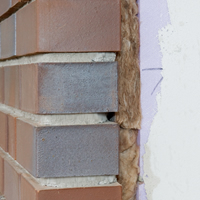
If you thought most properties around the UK had cavity walls, you would be wrong. In fact, there are 10 million homes around the country which instead have solid walls. The problem here is that it’s much harder to insulate solid walls and keep heat in your home.
Cavity walls are much simpler to insulate as a foam-like insulation is pumped into the hole between the inner and outer wall. This hardens and prevents heat escaping, providing you with large energy bill savings.
So as energy bills continue to increase, it’s important to become educated on the best ways to save money. And if you have solid walls, insulation here is crucial.
Introducing solid wall insulation
So where does the insulation go for solid walls? What tends to happen is the insulation lines your interior wall and then plasterboard is used to cover it, creating a smooth finish.
So what do you need to think about?
- Thickness
The thicker the insulation on your walls, the more heat you’ll retain and the more money you’ll save right? It doesn’t take a rocket scientist to work that one out, but there does come a point where you spend more money on the insulation than you’ll save. To benefit most, you should have solid wall insulation between 10mm and 100mm in thickness.
- Products
As you would expect, there are quite a few insulation products on the market to choose from, so the question here would be which is best for your home. Each will have its pros and cons in terms of cost, insulation qualities and how it handles moisture. For example, aerogels are the best insulators, whilst mineral wool and fibreboard are the most cost effective. To find out what would be best for your home, it’s also worth speaking to a professional.
- Thermal bridging
In your home you’ll also have to think about thermal bridging points, which are areas that are difficult to insulate and can get very cold in the winter, attracting condensation and resulting in mould. Thinner and high performing insulating materials are best here.
- Services
By services we are talking about the services to your home; the gas and water pipes and electrical wires. Of course, these travel behind the walls out of sight and you’ll need to consider the hassle of covering access further with insulation and leaving them on the cold side of the wall. Water pipes in particular can freeze in the winter, resulting in an expensive call-out charge.
Facts & Figures You’ll Love To Share
- [tweetable alt=””]With the right insulation you can save hundreds of pounds every year, making a huge saving on those expensive energy bills.[/tweetable]
- [tweetable alt=””]Solid and cavity wall insulation prevents heat escaping through the walls and you can save over £200 a year.[/tweetable]
- [tweetable alt=””]If your boiler is inefficient, replacing the system with an A-rated model would save you up to £310 annually.[/tweetable]
- [tweetable alt=””]For those who can’t afford to invest in insulation, consider the Government’s Green Deal which offers a low-interest loan.[/tweetable]