
There are a range of roof construction types in the UK and no matter your property; you need to ensure it has a suitable covering which is well maintained throughout the year. Of course, your primary concerns should be weather resistance and durability.
There are many materials which cater for rooftops and a lot will come down to your individual taste and preference. You will also have to check there are no local planning permissions, whilst cost will be a factor in your decision too.
So have a look through the options available to you and get the best rooftop for your home.
Clay tiles
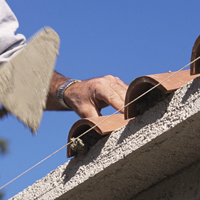
Clay tiles are made from natural products and are nowadays often manufactured by machines, although some are still handmade. Tiles are the most popular roof construction material in the UK, with a range of colours available combined with hardwearing and durable properties. Tile rooftops are highly resistant to the changing weather and are strong against high wind loads too.

Slate
Slate is another very popular roofing type, purely because of its excellent durability. In fact, slate can last well for up to 80 years, longer than you’re likely to need it for. In fact it’s quite common for the nails holding the slate in place to corrode well before the slate itself. Slate roofs aren’t cheap because of this durable nature, but there is the option to have second-hand materials which will still have a long life expectancy.
Felt
Felt is a particularly common roof construction material for flat roofs, with great waterproofing qualities. It’s nailed, stapled or stuck directly onto the timber sheets or joists and comes in various lengths and thickness depending on your needs. As a result the life expectancy can differ from roof to roof but you’ll get between 15 to 25 years from them on average.
Fibreglass
Fibreglass is an environmentally friendly option for your rooftop, being easy to maintain, whilst also offering hardwearing qualities. With a long life expectancy of 50 years it’s resistant to rot, rust and corrosion too. Added benefits include insulation against both noise and heat loss. Fibreglass roofs tend to be much more expensive, but the cost can be offset by the long life expected.
Rubber
Synthetic rubber roofing holds many advantages, with one being the fact it can be supplied as one made to measure sheet. It’s fixed to the property with adhesives and sealants. Rubber roofing is very strong and also resistant to sunlight so it’ll last for up to 50 years. In fact, over the life expectancy it’ll work out to be comparable with a quality felt roof construction.

Metal
Metal roof constructions have many benefits. If you want a low maintenance, fire retardant, lightweight, stylish roofing option, with a life expectancy of more than 30 years, then this is your best bet. And on top of this, metal is energy efficient whilst being 100% recyclable. Unfortunately many homeowners are put off by the price as metal can be significantly higher in cost than the other options available.
Single ply
Single ply is manufactured mainly from synthetic polymer and creates a lightweight sheet that’s strong and flexible too. It’s watertight too and you can easily insulate the roof after installation. It can be a little more expensive than felt, the traditional flat roof option, but it’s available in more colours, giving you extra creativity opportunities. It will also last a little longer, with average life expectancies between 25 and 30 years.