
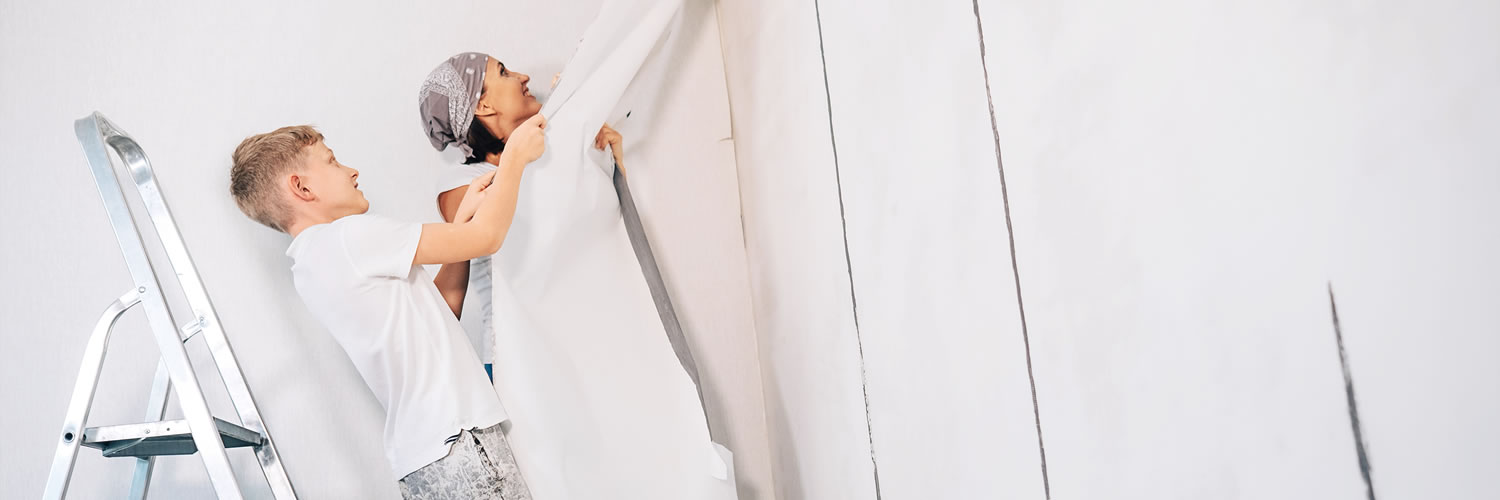
Have you enthusiastically decided to give your home a new refreshing look? Then has your resolve wained as you realise there’s a mass of wallpaper that needs removing? Wallpaper removal can seem like a dunting task but to get that fresh new look it’s worth spending time stripping wallpaper properly so that you have a prepared smooth surface before redecorating.

Let’s get Ready
Preperation is key to make the job as painless as possible so it’s worth getting together all the key things you’ll need before you start. Listed below are the required items and materials. If you don’t have them readily to hand, all these things can be purchased from your local DIY store or from Amazon.
[mks_col]
[mks_one_half]
Items Required
- Screwdriver
- Rubber gloves
- Bucket
- Sander (electric or by hand)
- Dustpan
- Cloth’s
- Vacuum (dust can cause issue with a regular vacuum)
- Sponges
- Taping knife
- Stanley knife
- Putty knife
[/mks_one_half]
[mks_one_half]
Materials Required
- Sanding paper (for drywall)
- Gel paint stripper
- Joint compound
- Masking tape
- Plastic drop cloth
- Scoring tool
[/mks_one_half]
[/mks_col]
What to look for when removing wallpaper from a plastered wall
Wallpaper removal requires time and effort and it can be quite messy unless the wallpaper you’re wanting to remove is a peelable type. When it comes to removing wallpaper from plastered walls, the most important thing to look out for is the condition of the wall underneath. You may well find that the plaster wall is crumbling or damaged in places, often in the past wallpaper was used to cover up imperfections in the plaster. This may mean that once the old wallpaper is gone the plaster beneath will need an element of repair work before you can redecorate.
How to remove tough or old wallpaper
The first step is to prepare the wall and room. Wall plates from light switches and outlets should be removed and taped over to potect them from moisture, dirt and chemicals. Old sheets or plastic coverings can be used to protect flooring and it’s a good idea to tape around the edges of floorboards and over skirting boards to avoid damage.
Once the foundation prep is complete you can move on to the job itself. There are generally two main ways to remove wallpaper, using a chemical wallpaper remover or using a steamer. The method you choose will very much depend on the state of your spacific wall and wallpaper. The steps on each removal technique are shown below.
[mks_col]
[mks_one_half]

Using a wallpaper remover
- Make sure you have your protective equipment to hand, put on chemical resistant gloves and wear eye protection as necessary.
- Score the paper with a scoring tool.
- Prepare the wallpaper remover using the directions provided on the packaging.
- Use a garden sprayer to apply the remover solution and use a 3 or 4 inch scraper blade to scrape away the wallpaper and any residual glue. Respray any stubborn patches of paper and repeat.
- Once all the wallpaper is off make sure to rinse the walls thoroughly
[/mks_one_half]
[mks_one_half]

Using a steamer
- Take the proper safety precautions and score the wallpaper in the same way you would if using a wallpaper remover.
- Prepare the steamer by filling the reservoir with water and turning the machine one. Wait few minutes for the water to boil.
- Apply the steam and scrape off the wallpaper without delay. However, you should be careful not to apply too much steam and damage the plaster.
[/mks_one_half]
[/mks_col]

How to remove old wallpaper that has been painted over
Sometimes the wallpaper you want to remove will have been painted over. This can make it an even more tedious task to tackle. The method used will be the same however there are one or two things you will want to take into account.
- Ensure that the paint doesn’t contain lead. If your property is quite old there’s a chance that any paint used will contain lead. If it does, it’s crucial to incorporate all precautions recommended for the removal of lead-based paints.
- Determine if the wallpaper is strippable. Then protect the area with old sheets or plastic coverings.
- Score the surface then help the wallpaper remover penetrate the paint film by using a stiff wire brush to wear down the surface.
- You can also make use of a wallpaper steamer, especially if scoring the wallpaper and using the remover isn’t effective.
- If all else fails apply some chemical paint stripper. (This should only be used as a last resort) Chemical paint strippers can be harmful and cause great damage if not used with caution. Ensure to put on a mask and protective clothing to cover your skin.
How to remove wallpaper glue
Once all the wallpaper is gone you may find that you’re still left with the sticky glue residue. This will need to be removed before you can continue with your redecoration project. You can do this simply and easily using a cleaning solution you can mix up yourself. Get a bucket and prepare a of mixture of hot water, liquid dish soap and a tablespoon of baking soda. If the glue proves stubborn after application, you can add vinegar to the solution (a cup per gallon of water). Apply the solution to the wall using a damp cloth or sponge. Let the solution sit on the surface for a few minutes before wiping off the glue residue with a rag or you can also use a putty knife to carefully scrape off any residue. Once the glue has been removed clean the wall with a clean, damp rag or cloth.
Not got time to do the job yourself? Or is the thought of it just too much to bear?
If you have decided that the project is just too big a job to cope with on your own. Or if you have started but it’s just becoming all too much then get quotes from up to 4 interior decorators to do it for you. Simply use the form below or look for decorators in our directory