
Chris Huhne, secretary of the Department of Energy and Climate Change (DECC), attacked the critics of renewables and armchair engineers in a speech last Wednesday.
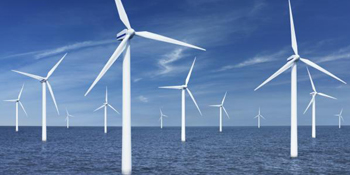
Despite a number of renewable subsidy reductions in recent months, Huhne insists the government is fixed on turning the UK into Europe’s largest offshore wind market. It’s a resource the UK is certainly not lacking, with 40% of Europe’s wind blowing over Britain.
Huhne’s speech comes after the government announced proposals to reduce the subsides for green technologies such as onshore wind farms. However, offshore wind, wave and tidal power will all benefit from the agenda.
It’s the solar industry that received the biggest setback, with the government cutting the Feed-in tariff for small-scale installations from December 12. This change will affect the growth in the solar panel market which has been booming until recently, and is likely to affect jobs too.
But despite these setbacks, Huhne is still adamant that renewables will deliver a new industrial revolution and attacked sceptics for refusing to acknowledge the benefits that renewables bring.
But critics claim their negativity has a solid foundation, as large-scale renewables are expensive, unreliable and add to customer energy bills.
Of course, small-scale installations provide homeowners with plenty of benefits, such as reduced energy bills and reduced carbon emissions. Products such as solar panels produce free energy using natural sources, which make them very environmentally friendly.
But the criticism is for larger installations that cost the government millions of pounds to build.
Huhne said: “At a time when closures and cuts dominate the news cycle, next-generation industries are providing jobs and sinking capital into Britain. I want to take aim at the curmudgeons and faultfinders who hold forth on the impossibility of renewables, the climate sceptics and armchair engineers who are selling Britain’s ingenuity short.
“Yes, climate change is a man-made disaster. Yes, the UK is only 2% of global carbon emissions. But if we grasp the opportunity now our businesses and economy can be much more than 2% of the solution.”