
If a conservatory is something you’ve been thinking about for a while now then you’re bound to have a number of questions in your head that you want answering. Among others you’ll be wondering about the style, size and cost.
Of course, you’ll probably want to do a lot of research and may even have read quite a bit about the above in the literature you’ve seen.
And a term that has possibly sprung up a few times is the ‘dwarf wall’. If you’re new to the construction industry, this could be completely unknown to you.
We aim to clear up the confusion here and help you get around what a dwarf wall is and whether you’ll want one for your conservatory.
What is a dwarf wall?
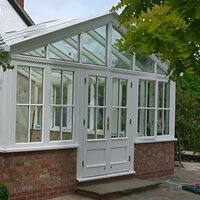
Just from the name itself it’s not difficult to guess what a dwarf wall is. Dwarf walls are a small wall, very often only a few bricks high and run along at least one side of a conservatory. Conservatories designs differ in this regards and some homeowners choose to have two or even three dwarf walls. It’s really down to the person.
Dwarf walls are typically 600mm high but of course, this can be altered depending on the style you choose. It may seem strange to think, but dwarf walls bring a certain appeal to conservatories and do improve the aesthetics.
Are dwarf walls in all conservatories?
Most conservatory styles can have a dwarf wall built in or have it as standard, but again this is all down to your own particular preference. Whether you are keen on a Victorian conservatory, lean-to design or even a bespoke style, the dwarf wall can be implemented.
The benefits of a dwarf wall
There are plenty of reasons to consider a dwarf wall for your conservatory and firstly, they help with the transition from home to conservatory. You can use the same type of brick for the wall as your home, ensuring the conservatory complements the property rather than being a standalone feature.
Your conservatory will also be cheaper to install. Why? Because bricks are cheaper than windows. Rather than having full glass from top to bottom, implementing a dwarf wall helps ease the costs.
Speaking of the glass, it’ll also remain cleaner with a dwarf wall in place. The dirt from the ground won’t splash up onto the windows, saving you a job in cleaning.
Dwarf walls are also pretty handy at helping to control the conservatory’s temperature. Because conservatories are mostly glass, it’s difficult to keep the sun’s heat out in summer, but the small wall will aid in reducing extreme temperatures.