
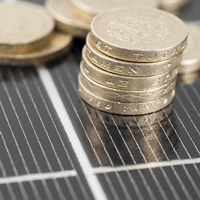
Renewables aren’t a new concept. In fact they’ve been big in the UK since 2011, when the Government first launched its feed-in tariff scheme.
The idea of saving money on those expensive fuel bills is welcome, but did you know you can actually make money as well?
It’s the feed-in tariff that gives you the chance to do this. It’s a Government incentive to push renewables in this country and you can actually earn a very generous income with the scheme.
So what is your excuse for not going green?
Let’s tell you a little more on the feed-in tariff so you have everything you need to know:
How does the feed-in tariff work?
Once your solar panels are fixed to the roof you’ll then be able register your system with the feed-in tariff. With the tariff you’ll receive a fixed payment for each unit of renewable electricity generated. You can register it with the energy provider of your choice, although they must have at least 50,000 customers.
There are then two ways you benefit:
- The generation tariff: This is a set rate paid out for the electricity you produce, even if it’s used in the home to run your lighting or appliances. Rates are being cut, but once you’re connected you’ll be locked to the current rate for 20 years. This gives you two decades of earnings.
- The export tariff: As well as the generation tariff there’s also the export tariff. For the electricity you don’t use at home, it’ll be exported to the grid and you’ll be paid a set amount in return.
To give you an idea of what to expect in terms of payment, the Energy Saving Trust suggest you’ll earn around £850 each year with the feed-in tariff, export tariff and energy savings combined. This will only increase in the future though as electricity prices become more expensive.
Are solar panels expensive though?
Solar panels can be expensive as an initial investment, but there’s a great ROI with all the financial incentives on offer. There aren’t currently any plans for grants on solar PV (which is different to solar thermal) but the feed-in tariff scheme provides ample incentive.
So what is the return on investment?
On average you’ll be looking at an ROI rate of between 8% and 11% depending on the efficiency of your solar panels. This means payback can be in less than 10 years and then gives you a further decade of excellent earnings.
Am I eligible for the feed-in tariff?
As long as you used a Microgeneration Certification Scheme (MCS) installer for the solar panels you’ll be eligible to the scheme. Solar panels installed by a company not registered to the scheme do not qualify, and you can’t set up the panels yourself.
What if I move home?
The feed-in tariff is linked to your property so if you move home you’ll cease to receive payments. However, solar panels are now the most popular non-essential for house buyers, so you could find it much easier to sell-up and you’ll be certain to add value to your home too.
Facts & Figures You’ll Love To Share
- [tweetable alt=””]Solar panels are now priced at a record low, providing an excellent return on investment for every buyer.[/tweetable]
- [tweetable alt=””]The feed-in tariff scheme will help homeowners earn over £500 annually with solar panels.[/tweetable]
- [tweetable alt=””]Solar panels will help to reduce your yearly electricity bills by over £100, providing over two decades of savings.[/tweetable]
- [tweetable alt=””]The generous export tariff ensures no electricity is wasted as it’s sold to the National Grid for a set price.[/tweetable]
- [tweetable alt=””]As gas and electricity prices continue to increase year-on-year, solar panels offer a way to guarantee your energy future.[/tweetable]