
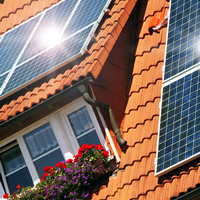
Those who invest in solar panels are planning for the future. Solar power is a long term strategy and what’s important to remember is it’s not for those looking for a quick buck. Instead, with solar panels you’ll be thinking about how to save money for the decades to come.
The reason it’s not meant for a quick buck is simply down to the cost. The initial outlay will be between £4,000 and £7,000, with savings and earnings up to £800 every year. This shows that the annual return on investment stands at around 12%.
If you’re worried about future energy bills, which in today’s climate you should be, and you have sufficient space on your roof for a system, domestic solar panels could be for you.
There are two options to consider for solar – PV and thermodynamics. Solar PV is by far the most popular, providing electricity for your home and linked to the Government’s lucrative feed-in tariff income scheme.
Solar thermodynamics heat water and whilst there is the Renewable Heat Incentive (RHI), you won’t earn the same level of returns.
Ian Cuthbert, Green Deal Supply Chain programme manager at the Energy Saving Trust (EST), says: “A typical average UK solar panel system is about 3.5 to 4 kilowatts in size. There’s a good reason for that, because if your system is above 4 kilowatts then the tariff you receive will be less.
“That will cost you around £7,000. A system of that size will give you a combined savings and income of around £645 a year. Around £125 of that is savings you make from using the electricity directly and the rest is from the feed-in tariffs.
“These are fairly long-term savings. As it stands today, you would make those savings on an annual basis over 20 years.
“The tariffs are linked to RPI (retail price index) and the savings you make on electricity will vary depending on the price charged by the main energy companies. But as those prices increase, then those savings will only increase.
“The feed-in tariffs are guaranteed for 20 years, but so long as the panels last longer than that then you’ll continue to get savings for longer than that.”
Ofgem figures show that UK solar panel installations are as popular as ever. There are over 6,000 homeowners installing solar each month and earning a considerable income. If you’re keen to take advantage then it’s best to act quickly before feed-in tariff rates are cut by the Government.
What’s also crucial is to have your system installed by an MCS registered company. The MCS certification covers the product and installer, ensuring everything meets its stringent regulations. If you want to earn feed-in tariff payments then your solar panels must be MCS accredited.
Facts & Figures You’ll Love To Share
- [tweetable alt=””]With solar PV you’ll generate free electricity whilst earning a lucrative earning with the Government’s feed-in tariff.[/tweetable]
- [tweetable alt=””]Solar thermal panels help to heat hot water and benefit from the Renewable Heat Incentive payment for seven years.[/tweetable]
- [tweetable alt=””]Solar panels will last for 25 years and more, providing decades of savings and earnings and helping to avoid the National Grid rates.[/tweetable]
- [tweetable alt=””]Energy prices have doubled since 2004 and solar panels offer an escape from the clutches of the UK’s large energy suppliers.[/tweetable]