
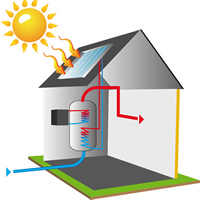
Solar thermal panels are renewable technologies which are installed onto rooftops to generate hot water for the home. Solar hot water systems can provide around a third of the average home’s hot water needs, helping to save between £55 and £80 each year on bills.
And remember, install before March 31, 2014 and you’ll be eligible for a £600 grant for the installation costs. This is under the Renewable Heat Premium Payment (RHPP) scheme.
You will also be able to earn a fixed income from spring 2014, with payments made quarterly for seven years. The Renewable Heat Incentive (RHI) will help you to make a brilliant return on investment.
Choosing a solar hot water system
When it comes down to selecting a solar water heating system there should be four considerations:
- Your water use
- The amount of roof space available
- Your water heating system
- Your budget
On average, one square metre of roof space is needed per person in the property. This will subsequently need between 30 and 60 litres of water tank volume. Remember it’s also beneficial to have a south facing rooftop for maximum hot water gains.
Of course, if you choose less efficient collectors you’ll need a larger rooftop. Flat plate collectors are known to be less efficient than the preferred evacuated tubes.
Solar water heating installation
There are many companies out there who will happily install your solar thermal panels, so how do you go about choosing the right one? First off, it’s recommended to compare up to four quotes from professionals in your area in order to get the best deal.
Be aware of salesmen using dodgy tactics to get your custom and always use an MCS accredited company. Some companies will exaggerate saving potential and may not even be qualified to fit the panels.
Pros and cons of solar water heating systems
Pros
- Solar water heating allows you to produce around a third of your hot water, with savings averaging between £55 and £80 each year.
- Grants of £600 are available up to March 31, 2014
- From spring 2014 you can earn a fixed income for seven years with payments made quarterly.
- The renewable technology will also cut the amount of carbon emissions produced by between 230kg and 510 annually.
- There is virtually no maintenance and because of this many companies will offer warranties of between five and 10 years.
- Planning permission is generally not needed except in instances where the property is in a conservation area or is a listed building.
Cons
- An immersion heater is still needed to increase the water’s temperature and to be used on a cloudy day or at night.
- Panel systems can be heavy so your roof needs to be strong enough to support an installation.
Facts & Figures You’ll Love To Share
- [tweetable alt=””]Solar thermal panels generate heat for your home, reducing bills by between £55 and £80 a year.[/tweetable]
- [tweetable alt=””]Did you know your heating accounts for 60% of your energy bills? Solar panels can help to slash your expenses.[/tweetable]
- [tweetable alt=””]Lucrative Government incentives ensure you’re paid hundreds of pounds every year for the renewable heat your system produces.[/tweetable]
- [tweetable alt=””]You can receive a grant worth up to £600 off the installation of solar thermal panels with the RHPP scheme.[/tweetable]
- [tweetable alt=””]Solar thermal panels offer an escape from the rising price of grid gas and electricity and will secure your energy future.[/tweetable]