
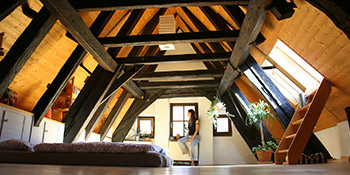
The loft is notoriously a dark and damp area of your home, rarely used as living space and more likely to be home to Christmas decorations, boxes of toys and creepy crawlies. This is why you should consider a loft conversion to open up the space, create a modern, light atmosphere and avoid the need to relocate.
But the last thing you want is varying temperatures due to inadequate insulation. If you go to the hassle of converting your loft you’ll want to use the new room all year round, which is why insulation should be a high priority.
There’s a common misconception amongst homeowners that as heat naturally rises, the loft will be warm and cosy all year round. Half of this theory is correct; the heat will rise. But it’ll continue to rise and exit your home through the roof without insulation. On top of this, any draughts will make the loft conversion even colder.
Experts suggest that uninsulated lofts lose a quarter of the heat you produce in the home. Without insulation you’ll have to increase the temperature of your central heating and watch your energy bills soar.

So, do you want to keep expenses down and lock heat in your home? Then take a look at our tips for maintaining a warm loft conversion.
Should I DIY or use professionals?
If your loft conversion has been completed recently by reputable professionals you won’t yet have any problems with damp or condensation. As such, the fitting of insulation is made much easier and if you’re someone keen on a hands-on approach it’s certainly possible to carry out the work yourself.
If the floor space can be accessed, exposed joints can be insulated with mineral wool. This helps to trap heat rising from the lower levels of your home. If the converted loft has been transformed into a finished room though, it’s best to speak to professionals.
Bringing in the experts will ensure a quicker and smoother transition to enjoying heat retention benefits. Insulation boards are fitted and then the room can be replastered. Essentially, if it’s a new conversion, insulation should already be fitted as the contractors will know how you planned on using the extra living space.
Our insulation price guide has more information of the cost of adding insulation to your home.
Small scale insulation measures
There are some ways to limit heat loss without needing to worry about getting to the floorboards. Your first step should be to eliminate draughts and this is simple enough with a draught excluder. These can be purchased from many shops, whether it’s supermarkets or home department stores.

With a range of products on offer you can be sure of finding something that will do the job whilst meeting your particular taste too. Common draughts are from doors and windows so make sure to target these areas first.
With loft conversions you’re more likely to have a skylight or Velux window fitted, which won’t be suitable with curtains. If you want to reduce heat loss and enjoy an aesthetic appeal, then consider a blind designed with insulation techniques. Blinds are available in many designs and styles so you’ll be able to find something that suits your taste too.
If you have not done so already read our loft conversion cost guide for more information on what you are likely to pay to have your loft converted. Once you are ready to get quotes simply complete the form below and we will match you with up to 4 loft conversion specialist in your local area.