
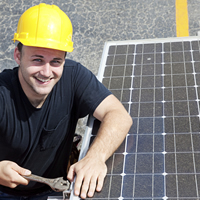
It’s amazing how many people still ask how easy it is to install solar panels themselves and whether DIY is worthwhile to save some money. No matter how good a handyman you are, it’s still not a good idea to carry out the installation.
There are many reasons for this to be the case, but primarily you wouldn’t be eligible to receive the feed-in tariff income, which makes solar panels such a superb investment. Why? Because the solar panels need to be installed by an MCS qualified installer.
The way the solar industry has been created is to provide protection for customers, which is why the Microgeneration Certification Scheme (MCS) has become a figurehead. Installers must provide certification that the system meets MCS standards.
Of course, you can install yourself, but why would you at the expense of losing hundreds of pounds a year in feed-in tariff earnings? You’ll also need to pay for an inspection, which costs between £150 and £200 from the local authority and then gain permission from the district network operator (DNO).
One thing that is great about the whole process is that planning permission is generally not required, whether or not you install yourself. This may change though depending on your property, such as if it’s in a Conservation Area.
The biggest reason you may be tempted to install yourself is to save some money. But in actual fact you may not save as much as you hope. 60-70% of the normal installation costs cover the actual equipment, so when you consider the feed-in tariff losses on top of this, you will end up losing out.
Essentially, if you want to take advantage of solar power then it’s best to use an MCS accredited company in your area. Shop around to save some money because you will find prices differ between installers.
Facts & Figures You’ll Love To Share
- [tweetable alt=””]With solar PV you’ll generate free electricity whilst earning a lucrative earning with the Government’s feed-in tariff.[/tweetable]
- [tweetable alt=””]Solar thermal panels help to heat hot water and benefit from the Renewable Heat Incentive payment for seven years.[/tweetable]
- [tweetable alt=””]Solar panels will last for 25 years and more, providing decades of savings and earnings and helping to avoid the National Grid rates.[/tweetable]
- [tweetable alt=””]Energy prices have doubled since 2004 and solar panels offer an escape from the clutches of the UK’s large energy suppliers.[/tweetable]