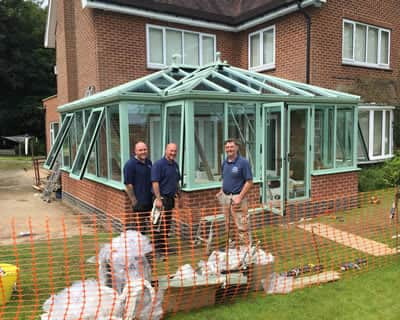
Lean-to conservatories are often known as Mediterranean conservatories or sunrooms and are a great way to add more living space when you’ve only got a small amount of room to work with. They usually have clean lines, a rectangular shape and attach to the side or rear of your home, which makes them one of the easiest conservatory types to build yourself.
So how do you build a wooden lean-to conservatory? The first step is to decide what you want it to look like. Most lean-to conservatories are constructed of glass and the wood frame, but you can choose to have dwarf walls too. Dwarf walls are low brick walls that are useful if you’re planning to plumb in radiators, have air conditioning installed or put plug sockets in the conservatory.
When you’ve decided what your wooden lean-to conservatory is going to look like, you’ll need to get the materials. You’ll need to choose a hardy wood – oak is the most expensive but also the most durable – and source glass for the windows. You’ll also need to decide on a roof material and work out the correct pitch.
The first step to building your wooden lean-to conservatory is to dig the foundations. You’ll then need to level the earth, then add concrete to the correct height, which should be lower than your property’s existing damp course. Then, you’ll build up to the damp course, which will be your conservatory’s floor level. Don’t forget to make sure it’s even.
If you’re building a dwarf wall, start it from the base and build up to no more than 1 metre high. Once the cement is dry, place external sills on top of the dwarf wall. You’ll then need to secure the frames; start with the one that secures to your property, then do the same for the rest, connecting outwards until they meet from the two sides. Then put up your doors.
Now it’s time to build the roof. This should be simple if you’ve bought your own custom-made kit. Place the roof ridge on top of the frames, then add the roof rafters between the roof ridge and hip bars. Fit your glazing sheets and guttering – it’s important that your wooden conservatory roof has guttering just like your house, otherwise your conservatory roof won’t last very long and could even cause rainwater to rot your wooden frames.
Once you’ve built your wooden lean-to conservatory, all that’s left is to decide on how you want to decorate it. But if this all sounds like too much, get in touch with specialist wooden conservatory installers who will be able to give you a quote for building you a lean-to conservatory.