07 Feb
Damp proofing
Ipswich - IP2
Enquiry from: Jane I
Start Date: Immediate
Trench needed around house for water escape



Extensions including garage conversions will usually require extra damp proofing to be installed as part of conversion, as the pre-existing garage normally has a single skin design for walls and floors, which was not built to be in accordance with building regulations for habitable rooms. This damp proofing will have to be added to walls and floors. Moreover, the roofing of the garage conversion will need water proofing. The damp proofing of the floor of the garage conversion will often be achieved by employing a damp proof membrane. This membrane is available in either solid or liquid form. The damp proof membrane will be placed down either on top of the pre-existing concrete floor, below the new floor, or as part of both, depending on whether the floor will be a solid or a floating floor. In a few garages, the walls have already been damp proofed, but this might have to be improved as part of the conversion in order to comply with current building regulations. The walls should be damp proofed in order to safeguard the brickwork from rotting gradually as moisture sets in. This is accomplished by either employing damp proof membranes, waterproof rendering, or cavity insulation, depending on the type of walls that are already present in the garage. Damp proofing is an integral part of the building regulations that the garage conversion will need to adhere to, and so is it important to ensure that your garage conversion incorporates appropriate damp proofing methods.
The average cost of Damp proofing is £1500. Costs vary based upon the materials and the organisation selected. The upper price range can be as high as £1725. The material costs are in general about £375
| Avg. price low | Avg. price low |
|---|---|
| Avg. price | Avg. price |
| Avg. price high | Avg. price high |
£1900
£1425
£950
£475
£0
| Labour cost | £1,050 | |
| Material cost | £375 | |
| Waste removal | £75 |
Searches that showed one of our pages for Ipswich, all services
Searches that showed our page for Felixstowe
Ipswich town features a population of over 138,000 and is located in Suffolk around the estuary of the River Orwell. The large town is the third most populated area in the East of England. A considerable amount of restoring has taken place over the last 10 years, in particular around the waterfront and the industrial dock has been changed into a residential and commercial centre. For your own household development quotations, complete our online form and review companies in Ipswich today.
Ipswich - IP2
Enquiry from: Jane I
Start Date: Immediate
Trench needed around house for water escape
Answer a few quick questions, so we can match you with local damp proofing specialists who can help.
Get free, no-obligation local damp proofing quotes from 4 verified damp proofing specialists working in Ipswich.
Compare customer reviews, services and prices, and choose the right tradesperson for you.

He gave me a call within a couple of of hours
Promptly allocated the correct trade
Very efficient and prompt service
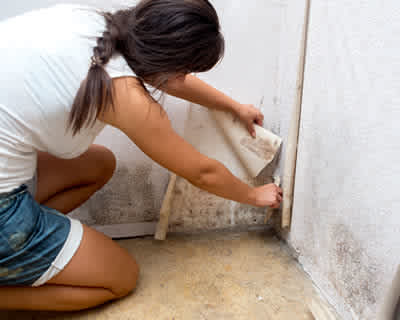
There are a few visible signs of damp, although it often goes undetected. However, in older or empty properties, this made become detectable through its smell. These include peeling paint and wallpaper, crumbling plaster, mould growth, black spots or spores on walls and ceilings, and rotting skirting boards and flooring.
You should make sure that all signs of damp have gone before you redecorate your walls. If you want to paint your walls with a water-permeable emulsion paint, you can usually do this after 1 or 2 months. For other types of decoration you should wait longer.
Damp is a serious problem, particularly if you live in an old property, because it can lead to structural damage. This will cost you big money and could be very dangerous, to yourself and the property. Take damp seriously and get it inspected and resolved as soon as you discover it!
Signs of rising damp tend to be close to the ground, usually no higher than a metre. It usually works its way up walls in horizontal lines. Penetrating damp usually develops in patches and can often be much higher up. For more advice, speak to a damp proofing professional.
We can help you get more damp proofing work with our qualified job leads and boost your business.
Join today