22 Aug
Block paving
Perth - PH1
Enquiry from: Shona H
Start Date: Immediate


Extension to driveway. 15sq m of permeable monoblock paving



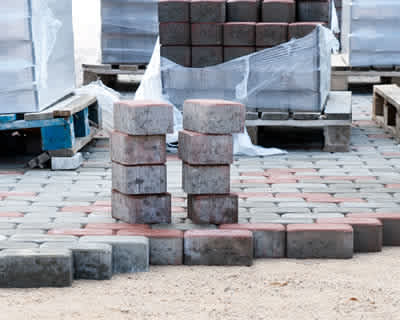
Block paving can look good as a driveway. It is a stylish and functional solution to your driveway and will give your home great kerb appeal. Whether you want a classic herringbone design or something a bit different, there are plenty of block paving materials and options available to you. The bricks found in block paving are most commonly manufactured from clay, but some are made up of different composite materials. One of the main advantages to block paving is that if some of the bricks get broken over time, they can be replaced easily. In addition, it means that it's easier to perform work under the top of paving without leaving a mark. The most frequent pattern that driveway companies lay is the herringbone pattern since it has the strongest interlock, which makes it a fantastic choice for driveways. The herringbone pattern is established by the tradesperson by setting the blocks at 45 degrees or 90 degrees to the perpendicular. Both types of herringbone pattern create a stylish and interesting look for your driveway that will make your home look fantastic to potential owners. Fill out our online form to get in touch with up to 4 driveway companies who can give you a quote for a block-paved driveway.
The typical cost for a block paving project is about £4,000. For smaller areas of paving, or if you live in a cheaper area of the country, expect to pay approximately £3,000, but for larger areas or within the London area, costs may be as much as £4,600-£5,000.
| Avg. price low | Avg. price low |
|---|---|
| Avg. price | Avg. price |
| Avg. price high | Avg. price high |
£4700
£3525
£2350
£1175
£0
| Labour cost | £2,800 | |
| Material cost | £1,000 | |
| Waste removal | £200 |
Searches that showed one of our pages for Aberargie, all services
Searches that showed our page for Crieff
Aberargie is a village in the south east of Perth and Kinross, Scotland. It is situated on the western edge of the old Abernethy Parish along the River Farg, which is where it gets its name from. Aberargie is around 1.6 miles west of Abernethy and 2.2 miles south-east of Bridge of Earn.
Aberargie can be dated back to at least 460AD, as this was when the Pictish Chronicle listed it as part of Nechtan's land grant. It's highly likely that it has been in existence for a lot longer. At one time, the community flourished by utilising the River Farg to power water mills for sawing timber and milling flax and meal. The mills stopped production by the early 20th century and the most complete mill was destroyed in the 1950s.
Archaeologists have found neolithic flints in the village and Scottish Medieval pottery. They have also found flintlock rifle and pistol flints, indicating that there has been a settlement at Aberargie for an extensive amount of time.
If your property in Aberargie needs a replacement boiler, ensure that you compare and contrast quotes from a minimum of three reliable businesses.
Perth - PH1
Enquiry from: Shona H
Start Date: Immediate
Extension to driveway. 15sq m of permeable monoblock paving
Kinross - KY13
Enquiry from: Andy L
Start Date: Immediate
Patio and path way paved and edged
Auchterarder - PH3
Enquiry from: Allison G
Start Date: Immediate
2 car driveway and path ways front and rear
Answer a few quick questions, so we can match you with local driveway installers who can help.
Get free, no-obligation local block paving quotes from 4 verified driveway installers working in Aberargie.
Compare customer reviews, services and prices, and choose the right tradesperson for you.


Brilliant website. My drive was completed by professionals
Easy service to use A quick and efficient quote service.
Posted a job at 10 in the morning for a new patio. By 12 me and my partner were choosing paving types from a brochure from a local professional, all thanks to quoatis
How To Lay Block Paving
Do you wish to know how to install block paving? We’ve got you covered! Here, you’ll find a useful step by step guide that’ll provide you with all the necessary information to lay a wide range of block paving products available in the market today. You must, however, note that the installation of block paving can be a tricky affair and should not be attempted unless you have undergone a proper training or have a good experience in the field. If otherwise, we’d advise you to leave the task for a reliable block laying professional to guarantee the best results and also avoid making costly mistakes.
lDesign
• Draw up a design to perfectly suits your needs.
• Decide on the type of block as well as colour.
lExcavation
• Use a mini excavator or a JCB ( depending on the size of the job) to excavate the driveway.
• Identify and mark out the area to be excavated.
• Dug out the area until you reach a suitable level
• Ensure that the proposed finish level is 150mm underneath the damp proof course in any of the adjoining building’s brick.
lEdge Restraints
• Build a 100mm depth-thick concrete foundation with the help of a concrete mixer, 1 part cement and 6 parts ballast.
• Position the kerb unit on top of the level with a string line and spirit level.
• Use a trowel and rubber mallet to mortar the kerb unit to the foundation.
• Haunch the back of the kerb units in such a way that the concrete reach half way up the kerb’s rear.
lSubbase
• Put the crushed concrete in the edge restraints and ensure it’s at the desired level of 50mm.
• Use a vibrating plate to compact and level
lScreeding
• Apply a layer of sharp sand (to 50mm depth) and campact it using a vibrating plate.
• Apply second layer of sharp sand (to 20mm depth) on top of the first layer.
• Level the second layer to the correct falls.
lInstallation Of Paving
• Lay the block paving starting from the bottom of a slope.
• Ensure the blocks are placed at about 10mm to 15mm above the required finish level.
• Make sure the blocks used are between 3-5 packs as you proceed with your desired pattern. You may need to cut smaller block pieces to fill smaller gaps.
lFinishing Touches
• Clear out the area to ensure no debris is left on the blocks.
• Put kiln dried sand and brush across the whole of the area, ensuring the sands falls between the blocks’ joints.
• Compact the drive with the vibrating plate.
• Brush more kiln dried sand over the area and compact again
• Repeat the process until the joints are full of sand.
Driveway work is usually done in the warmer half of the year. This is partly to avoid bad weather. If you want to get ahead and avoid waiting for a contractor to be free, you should try getting in touch with a professional in the early spring so a date can be booked for install as soon as practically possible.
Is Block Paving Permeable?
Back in 2008, there was a regulation introduced which comes with a requirement guiding the pavement of front gardens. It requires homeowners to incorporate the conventional impermeable driveways which makes for an uncontrolled run off of rainwater into sewers, roadways, local watercourses etc. However since then, new systems have been established which complies with the legislation and permit driveway laying of block paving without requiring planning permission while still providing the same visually appealing features as the conventional systems. Therefore, a short and simple answer to whether block paving is permeable is yes.
A permeable paving driveway (unlike the conventional ones which quickly diverts rainwater towards the edges to local drains) purposefully diverts rainwater into the built paving structure which oversees a controlled release of the rainwater into the environment. Permeable block paving comes with a wide range of benefits which includes the following:
• No Planning Permission Required
Unlike the traditional system, permeable block paving requires no planning permission as it oversees the driveway draining by ensuring that the surface water passes directly through the joints which makes sure the drains are not over worked and minimizing the risk of flood.
• Puddles Reduction By Natural Drainage
A permeable block paving minimizes puddles as well as standing water which helps to boost natural drainage. This is due to the laying process which features little voids that permits the passage of water.
• Natural Filtration
A natural filtration occurs when water is allowed to return to the ground by permeable block paving which helps assists in getting rid of any pollutants from the rain water.
• Flood Prevention
Permeable paving can help to prevent flooding as it absorbs water rather than directing it to the local drains or leaving it to build up on the surface’s top.
• Natural & Sustainable Materials
Natural and recyclable materials can be incorporated in producing permeable paving which is an excellent choice especially if you’re seeking a more sustainable driveway.
The most commonly used driveway surfacing materials are gravel, asphalt, concrete and paving - which can be block, slabbed or patten imprinted. Take a look at our product information pages to help you decide which one to use and which one will look best for your driveway.
We can help you get more block paving work with our qualified job leads and boost your business.
Join today