
Choice of materials
The four basic materials used for conservatories ensure that there is something to meet every taste – and every pocket.
PVCu Conservatories
PVCu, uPVC, PVC-U, and PVCU all essentially refer to the same substance. The most popular choice, this is an excellent material which has the advantage of needing little or no maintenance. The least expensive of all the available materials, it is most popular in white but is also available in mahogany and oak wood-grain styles.
Problems with discoloration are negligible and most suppliers will provide warranties against this. The design of the windows varies from company to company but points to look for include:
Internal or externally-glazed windows – an option offered by most PVCu systems. Internally-beaded windows, where the glass is held in from the inside, are generally deemed more secure and burglar-resistant. However, there are also perfectly satisfactory externally beaded PVCu systems on the market. Many feature either internal wedge gaskets or a double-sided tape that firmly fixes the external bead.
Thickness of PVCu wall – most PVCu systems for window and door
construction are ‘multi-walled’ with internal reinforcement provided by either aluminium or galvanised steel box section. Wall thickness can vary from system to system, most being around 3mm or 3.5mm. In general the thicker the walling, the stronger the section. Ask your supplier to show you a sample section and establish whether the frames are fully reinforced. Be aware, too, that the greater the number of internal walls, the greater the strength of the building.
Depth or thickness of frame – the depth of frame extrusion can vary from as low as 50mm to more than 70mm, although most are in the 60-65mm range. This, too, has an effect on the structural strength of the conservatory – the thicker the frame, the stronger the conservatory section.
Note that PVCu is unacceptable to planners for use on listed buildings, nor is it popular with planners in conservation areas.
Hardwood Conservatories
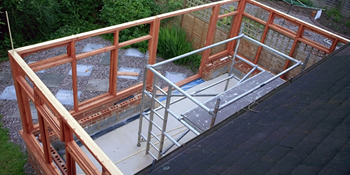
A more expensive material, hardwood is the choice of those seeking a traditional design with an authentic look and is a particular favourite for use in listed buildings or period properties. It has the twin benefits of being suitable for the recreation of virtually any traditional design or feature, while incorporating the contemporary advantages of double-glazing.
Hardwood is available in a variety of stains such as mahogany and light oak, as well as various painted finishes and, while it does require periodic maintenance, this is not an onerous task thanks to modern paints and stains. As with PVCu, the frame thickness will affect the structural strength. It is also important to ascertain which jointing method is used – most suppliers use a traditional mortise and tenon joint but other systems do exist.