
Aluminium Conservatories
This shares many of the features of PVCu, although aluminium is more expensive and does not provide such efficient insulation. However, it is an excellent choice for commercial locations and any circumstances in which strength is an important factor.
Many conservatories, although clad in PVCu, use aluminium in the roof structure because of its superior strength.
Oak – Green and Seasoned Oak Conservatories
Despite the higher cost, oak has become the most sought-after European hardwood for conservatories. It is used in two forms – green or seasoned.
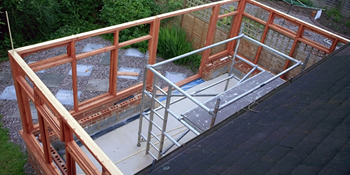
When trees are first felled, the wood – known as green oak – is softer, full of sap and easier to cut. Conservatories using green oak are built from large pieces of oak held together by beech pins. As the wood dries and shrinks, the beech pins tighten and pull the building together. Green oak conservatories are often recommended for use in period properties as these tend to be single-glazed and riddled with nooks and crannies – natural airflow is part of the appeal. Seasoned oak, which is dried before the manufacturing process, is recognised as the superior material for conservatories. Huge slices of wood are racked in the open air until the oak has weathered, shrunk and hardened, at which point the wood is ready to be carved, if required.
Seasoned oak is used for all styles of conservatory, from simple contemporary designs to the more traditional, complete with intricate carvings. The wood can be painted or stained – a popular solution is to paint the exterior to blend with the house while using a natural stain on the interior to accentuate the wood grain.
See www.almostimpartialguide.co.uk/conservatories/what_style.htm for more details.