
If you were asked about your energy bills you’d probably say they were expensive and you’d like to reduce them in some way. And to do this is actually much easier than you probably would have thought.
The key is turning to green technology to help you produce your own power, rather than relying on the ever-expensive National Grid prices.
By far the most popular renewable product is solar panels. So why not have a look at our solar panel guide below, to give you a better understanding at what exactly is at your disposal.
What is renewable energy?
Renewable energy products have been heavily backed by the Government over the last five years or so, mostly in an effort to meet stringent EU carbon reduction targets. Instead of burning fossil fuels for energy, renewables instead use a natural energy source.
These natural sources, whether it’s solar rays or heat stored in the Earth, are free to harness. This means you’ll slash your energy bills by taking advantage and carbon dioxide emissions won’t be created.
And even better news for those thinking of taking advantage of renewables, is that there are a series of incentives to help you get onboard.
So what renewable energy could you harness?

Solar power
Solar power technologies use the sun’s natural energy rays to generate heat or electricity for your home.
How do solar panels work?
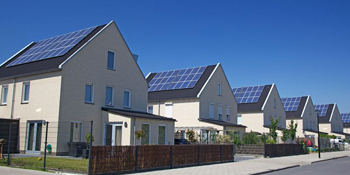
Solar Panels are fitted to the rooftop of your home, typically facing south whereby they capture the most natural energy. PV systems that produce electricity are by far the most popular option and convert the energy harnessed.
You won’t need brilliant sunshine throughout the day for them to work effectively either, and natural daylight will be enough.
How will I benefit?
With a solar PV system your first benefit is a reduced electricity bill. In fact you can save over £100 a year, which will only increase as National Grid prices rise.
Then there’s the feed-in tariff, a Government incentive which pays you for every unit of power you generate. At current rates you’ll earn over £500 annually, but to take advantage of these rates you’ll have to install quickly. Payments are then guaranteed for 20 years.
On top of this there’s also the Export Tariff. For any electricity not used in the home, it’ll be automatically sent to the National Grid and you’ll be paid 4.5p/kWh. This means every unit of power you generate will benefit you in some way.
How much does do solar panels cost?
[tweetable]Solar panels have come down in price considerably over the years and now you can pick up a 3.5kW system for £5,000[/tweetable]. It may sound like a lot, but with return rates of around £10% you’ll be able to make a profit over the lifetime of the product.
If you sell your home in the future, solar panels will make it a more desirable option for buyers. In fact a recent survey shows solar panels as being the most desired non-essential for potential buyers.

Download the Quotatis guide to Solar Panels and find out exactly how much you could save each year
Facts & Figures You’ll Love To Share
- [tweetable alt=””]The cost of solar panels has been slashed over the last few years, now being priced at an average of just £5,000.[/tweetable]
- [tweetable alt=””]You can save and earn around £700 each year with solar panels, providing an annual return rate of over 10%.[/tweetable]
- [tweetable alt=””]The feed-in tariff linked with solar panels is guaranteed for two decades.[/tweetable]