30 Sep
Plastering
Bradford - BD13
Enquiry from: Irvin H
Start Date: Immediate
Too small holes repaired in ceiling need skinning over



Searching for plasterers within Leeds? Our plastering companies in Leeds can offer the very best quotations for having plastering finished in your home.
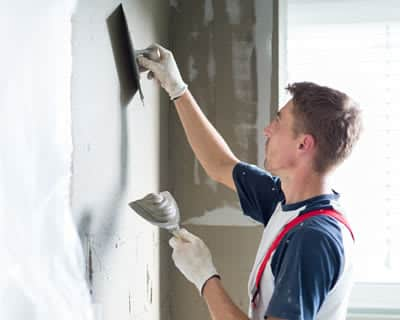
Plastering a wall or ceiling is definitely an effective way of changing the appearance to make sure a smooth and appealing finish. When the plaster has dried out, the wall could then be painted, wallpapered or tiled quickly.
One of many important benefits to plastering walls is the simplicity of decoration after. Often after getting rid of old wallpaper, the surface beneath might be rough and bumpy. Merely painting or wallpapering over this can have a inferior visual effect.
We're able to supply you with as many as 4 plastering companies in your town, who'll give quotations for the work you wish carried out. You'll receive a property visit from professionals in Leeds who will complete the plastering for a great price.
Plastering in your home can take one or two hours to a few days. It can all depend on how big and how many rooms you are planning to plaster. Have a very smooth finish to your interior walls with reliable plasterers to get the best prices today.
The regular cost of Plastering is £750. Costs fluctuate based on the materials and the firm hired. The upper price range can be as high as £862.5. The material costs are typically about £187.5
| Avg. price low | Avg. price low |
|---|---|
| Avg. price | Avg. price |
| Avg. price high | Avg. price high |
£900
£675
£450
£225
£0
| Labour cost | £525 | |
| Material cost | £188 | |
| Waste removal | £38 |
Searches that showed one of our pages for Leeds, all services
Searches that showed our Plastering page for West Yorkshire
Searches that showed our page for Pudsey
The West Yorkshire city of Leeds contains the second largest populace in England and is also the UK's biggest centre for a number of industrial sectors such as business, legal and financial services outside London. Leeds has been through radical regeneration within the last six decades, with the clearance of slums and addition of thousands of brand new properties. With the university and modern-day appeal it's a city on the rise and if you've got any work required for your Leeds home, you'll want to look for reputable specialists.
Bradford - BD13
Enquiry from: Irvin H
Start Date: Immediate
Too small holes repaired in ceiling need skinning over
Leeds - LS25
Enquiry from: Syephen B
Start Date: Immediate
Deluxe window surround plastering, & small area wall skimmed
Wakefield - WF4
Enquiry from: Andrew B
Start Date: Immediate
Skimming stairs walls and ceiling
Pudsey - LS28
Enquiry from: Lee T
Start Date: Immediate
I need some rendering doing on the rear of the property on the first level
Answer a few quick questions, so we can match you with local plasterers who can help.
Get free, no-obligation local plastering quotes from 4 verified plasterers working in Leeds.
Compare customer reviews, services and prices, and choose the right tradesperson for you.

It's always difficult finding a tradesman that comes recommended so having a recommendation service solves this problem
good service
this is the first time I have used this service and found it easy and cost effective
Plastering will fix small cracks in walls. Very small cracks may be fixed by simply reskimming plaster. More serious cracks will usually mean that you need to use new plasterboard or backing plaster. Larger jobs or deep cracks may need an experienced plasterer to come in.
How To Plaster A Ceiling
Generally, plastering is a very tricky and time consuming job which usually require lots of efforts and practice to get right - with that in mind it gets even a lot trickier when it comes to ceiling plastering.
However, when you’re able to acquire the right know-how as well as tools, ceiling plastering can be completed by any confident DIYer enthusiast without the need to call in a professional. However, if you lack the needed confidence to pull off this task, then we’d recommend you get in touch with a trustworthy professional who can guarantee the best results for help. In this guide, we’ll take you through the ceiling plastering process.
You’ll need the following materials to get started: plaster, mixing bucket and paddle, plasterer’s float, plasterer’s towel, bucket trowel, protective gear, bucket of clean water and wide brush.
✓ Prepare the area. When it comes to plastering a ceiling it’s almost unavoidable to leave a mess around and no matter how you do it, your plaster will drop on the floor. Therefore you have put drop sheets on the floor, cover the furniture and put thing you don’t want to get dirty out of the way.
✓ Prepare the ceiling to be plastered. Sand down the uneven patches on the ceiling. Once done, wash the ceiling with a sponge and warm soapy water while also removing all cobwebs as well. Leave the surface to dry once completed.
✓ Mix the plaster or buy a premix plaster. To mix the plaster, simply use equal parts of plaster and water for mixing the plaster,
✓ Plaster the ceiling. Apply a little quantity of plaster to the edge of your trowel and try to spread it in rows to do the job without much hassle. Ensure that the thickness of the coat is thin and even throughout the application. The rough edge of the trowel should be used for the spreading as it’ll help you create scrapes or scratches in the plaster.
✓ Sand the surface
How Much To Plaster A Room?
Generally, the standard of plastering in older houses leaves a lot to be desired. Having settled for so many years, there is a lot of tendency that anything brittle will break or crumble with the movement. And this is exactly where plasters fall.
Plaster provides a wide range of functions in your home and as a result, has grown to become very popular amongst several homeowners. So if you want to plaster a room, you might just wish to estimate the cost so you can set a budget and start to plan. However, there’s no short and simple answer to this as the cost of plastering is based on a number of factors. These factors include the dimensions of the room, the accessibility of the surface, the condition of the existing plaster as well as the size of the company.
So if you want to paster your room, you can either remove the old plaster or skim a 3mm plaster coat over the existing one. In respect to the two options, the prices will also vary. However, several plastering experts will charge either on the average room size or a daily rate. This is due to the fact that they know approximately the number of area they can cover in a day’s work. You can, however, request a quotation which specifies the costs per square metre in order to allow you compare with other contractors. In reality, several plastering professionals use either small, medium or large sized room as the yard stick for providing a quote.
Generally, for a small sized room, you’ll have to pay about £600 to £700, a medium sized will cost within the range of £650 to £1000, while a large sized room will cost between the range of £1000 to £1500.
How To Plaster A Wall
In order to plaster your wall successfully, you’ll firstly need to get the appropriate tools and materials for the job in place. The tools you’ll need to have includes a trowel and bucket trowel, plasterer’s float, corner trowel, hawk board, two buckets, mixing stick or a paddle, adequate plaster, PVA , dust sheets, clean water, sandpaper, stilts or step ladder as well as a dust mask.
✓ Prepare the wall. You’d have to make sure that you lay down a dust sheet so as to protect your floor and also gather any possible spillage or debris of plaster, before you start working on the walls. Get rid of all the dirt, dust and debris as this is very important for the success of your project if you’re going to be plastering on a worn out and old wall. Also, cover the holes and cracks in the walls with a screen tape
✓ Apply PVA to the wall. This will help ensure the layer you’re using will not dry out at the same time.
✓ Mix the paster. Mix the plaster according to the instructions given in the manufacturer’s manual.
✓ Apply the plaster onto the wall. Upon cleaning of the walls and successful mixture of the plaster, the next step is to apply the mixture to the wall using the hawk board, trowels and a floating tool.
✓ Skim and smooth. After the the first coat has dried after waiting for about 30 minutes, the next step will be to wipe out the bumps and lumps using a trowel to smooth over the surface. Once this is done you can then scrape the wall with a devilling float.
✓ Apply the second coat of plaster
✓ Apply the finishing touches. This includes polishing your work by adding some water to the surface with a spray gun and using the trowel to further smoothen out the surface.
✓ Painting and wallpapering.
We can help you get more plastering work with our qualified job leads and boost your business.
Join today