10 Dec
Solar Hot Water
Oldham - OL8
Enquiry from: Frank B
Start Date: Immediate
Not in a Conservation Area



Are you looking for Solar thermal in North West? Our network of installers are can aid with your project. Every one of our Renewable Energy in North West are examined so you can see local testimonials, when the business was founded, rankings, approval as well as rate allowing you to make the best choice on who to work with. Allow us take the hassle out of locating up to 4 experts for your Solar thermal job.
Would certainly you like to discover a method to lower your power bills and become a lot more eco-friendly? After that consider a thermal panels setup on your roof as well as contrast quotations from services within North West to find the best bargain. Solar thermodynamic panels are extremely prominent and also once set up onto your roofing there'll right away begin producing complimentary power from the sun's all-natural rays. Solar energy thermal panels offer you with an chance to lower your expenses by thousands of pounds yearly. As well as solar thermal panels will operate efficiently throughout the year, even working at temperatures as low as -10 degrees. You do not have to rely upon highly-priced gas and electrical energy rates for your energy supply. If solar power panels attract your rate of interest, then contrast and contrast around 4 complimentary costs today.
We will give up to 4 Solar thermal pros in your area, that will use quotes for the work you desire done. You'll get a home visit from specialists in North West who'll assist you to pick the best Solar thermal for your home before carrying out the setup. Enter your postcode to begin looking now.
The typical cost of Solar thermal is £4000. Costs fluctuate based upon the materials and the organisation hired. The upper price range can be as high as £4600. The material costs are commonly around £1000
| Avg. price low | Avg. price low |
|---|---|
| Avg. price | Avg. price |
| Avg. price high | Avg. price high |
£4700
£3525
£2350
£1175
£0
| Labour cost | £2,800 | |
| Material cost | £1,000 | |
| Waste removal | £200 |
Searches that showed one of our pages for North West, all services
Searches that showed our Solar thermal page for the UK
Oldham - OL8
Enquiry from: Frank B
Start Date: Immediate
Not in a Conservation Area
Manchester - M24
Enquiry from: Lauren F
Start Date: Immediate
Not in a Conservation Area
Chorley - PR7
Enquiry from: Mike B
Start Date: Immediate
I have an Alpha system with a cd28 boiler and would like the solar part serviced, and maybe the boiler replaced
Northwich - CW8
Enquiry from: Dewi M
Start Date: Immediate
Need to add oil to system to top up! All working well !
Answer a few quick questions, so we can match you with local electricians who can help.
Get free, no-obligation local solar thermal quotes from 4 verified electricians working in North West.
Compare customer reviews, services and prices, and choose the right tradesperson for you.

I wish you won the shopping prizes thank you
Great at any approach
I did find the number of emails coming in confusing as they seemed to be all asking the same questions - were they from different companies? I am think I may have missed responding to some. Phones r ...
Are you thinking about installing a solar thermal system in your home? If yes, the you’d most likely be wondering the exact amount the system is going to cost. Well, you’re not alone. This is one of the most common question when it comes to solar thermal systems and we aim to answer that in this article. So let’s get started!
Unfortunately, the cost of a solar thermal system can’t be given in a single, accurate answer as they vary widely. However, when getting a new solar thermal system, you can expect to pay a sum within the range of £3000 to £6000 ( this includes a lowered VAT rate of 5 percent). The figures provided takes into account the installation costs as well as all the parts ( such as control panel, solar collectors, hot water tank and pipes).
To determine the price of your system, the quality and type of the panels matter. For instance, according to the Solar Trade Association, a properly insulated twin coil cylinder system would be priced at around £4500. in the same tone, it’s also possible to get DIY solar thermal kits that includes all the required hardware which will cost within the range of £1500 to £250. This however, may not be eligible for government support. In order to benefit from the RHI, your system must be fitted by a MCS accredited installer.
The varying prices of the solar thermal system’s initial cost is based on the specification of each individual house. For example, in situations where the building is having complicated water system, the plumbing cost is expected to increase which will have a serious impact on the overall cost of the solar thermal power system.
Are you thinking of installing solar thermal systems in your home or property and wondering exactly how it works to generate electricity? Regardless of your motive, in this article you’ll learn in simple details how solar thermal is how solar thermal doesn't provide electricity for your home.
If you are looking to generate electricity for your home then Solar PV are able to generate electricity simply by absorbing and focusing sunlight in such a way to create a temperature level that’s high enough to generate the much needed electricity. There are two main components that comes with the solar energy collectors of each. These two components include, the reflectors ( mirrors), which works to absorb and concentrate the sunlight onto a receiver. In several types of the solar thermal power systems, a heat transfer fluid is then heated and distributed in the receiver so as to generate steam. Once the steam as been produced, it’s then transported to the turbine where it’s turned into a mechanical energy, which in turn powers the generator to produce electricity.
Solar thermal power or electric systems are usually embedded with a tracking system which keeps the sunlight concentrated on the receiver all day long as the sun changes position in the sky. They also come with a wide array of collectors which works of distribute the heat absorbed to a turbine as well as the generator. A lot of solar thermal power facilities will gave two or more plants with different arrays and generators.
Solar thermal power systems can also have a thermal energy storage system component whose work is to permit the solar collector system to heat an energy storage system during the day while energy storage system’s generated heat is incorporated in the production of electricity at night or during a cloudy weather when there’s not much sunlight.
There are two different types: flat plate, where lots of thin tubes carry water through a flat absorber panel, and evacuated tube, where vacuum glass tubes capture the sun’s energy directly. There is little difference in performance between the two but evacuated tube panels do more obviously extrude from the roof.
Unlike the photovoltaic (PV) power which works to turn a part of the electromagnetic radiation of the sun directly to electrons and electricity, a solar thermal can simply be referred to as the absorption of the sun’s heat for human use. As a result, the solar thermal has a wider range of uses than the PV does in several ways. This is due to the fact that the sun’s heat can be absorbed and transported via a medium and the stored energy incorporated for several great purposes such as to heat water, to heat and cool a home or living space, to prepare a meal as well as to generate electricity. All these functions are useful for both residential and commercial spaces.
There are generally three different ranges of solar thermal energy that are being used which includes the low temperature ( for heating, cooling as well as ventilation), the mid temperature ( used for preparing meals, heating hot water and the likes) as well as the high temperature ( used for generating electricity). To focus more on generating electricity, there are a wide array of ways through which the sun’s heat can be directed at creating electricity via a heat exchanger which operates to super heat water or inert gas to power an electricity- generating plant or to produce electricity via a Stirling engine.
In order to increase their output or make them more efficient, evacuated glass tubes are used to encircle the tubes which in turn helps them to collect more heat energy while also protecting them from re-radiating the heat energy absorbed. The trough are normal positioned north to south as well as to keep tabs on the travels of the sun throughout the day.
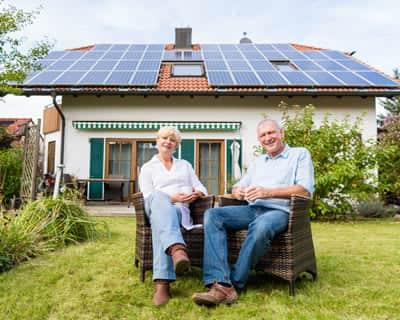
We can help you get more solar thermal work with our qualified job leads and boost your business.
Join today