09 Sep
Air Conditioning
Kidderminster - DY11
Enquiry from: Lynda E
Start Date: Immediate
Supply and fit air conditioning in upstairs bedroom


Over 205 reviews & an average rating of 4.5/5 stars, you'll find the right pro
Use the shortlist button to select up to 4 tradespeople, enter your project details and press send
Get up to 4 quotes from local Air Conditioning Engineers near you





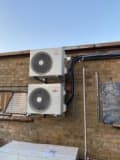



Kidderminster - DY11
Enquiry from: Lynda E
Start Date: Immediate
Supply and fit air conditioning in upstairs bedroom
Leominster - HR6
Enquiry from: Stan D
Start Date: Immediate
Air con installation
Kidderminster - DY11
Enquiry from: Lynda E
Start Date: Immediate
An air conditioning unit for bedroom
Ludlow - SY8
Enquiry from: Stephen L
Start Date: Immediate
Submit your free quote for rated tradespeople
Tenbury Wells - WR15
Enquiry from: Robert H
Start Date: Immediate
Air con unit fitted to park home
Leominster - HR6
Enquiry from: Janet W
Start Date: Immediate
Submit your free quote for rated tradespeople
How much do Air Conditioning Engineers in Tenbury Wells charge?
Prices for Air Conditioning Engineers around Tenbury Wells can differ relying on the sort of service that you need to have actually done in your residence. It's the inquiry we are asked a whole lot "how much do Air Conditioning Engineers in Tenbury Wells charge?". It's always good to have an idea of how much a Air Conditioning Engineer are going to likely charge for their work. Prices will vary based upon the products and the tradesperson picked. The list reveals the kinds of task that Air Conditioning Engineers typically do as well as the typical price range of these tasks. Some jobs take longer to complete than others so prices do be very different by project.
Tasks that Air Conditioning Engineers in Tenbury Wells will do:
| Air Conditioning Engineer job | Air Conditioning Engineer cost in 2026 |
|---|---|
| Air conditioning in Tenbury Wells | £1,163-£1,613 |
| Commercial Air Conditioning in Tenbury Wells | £2,100-£5,250 |
| Office Air Conditioning in Tenbury Wells | £2,100-£5,250 |
| Server Room Air Conditioning in Tenbury Wells | £2,100-£5,250 |
| Shop Air Conditioning in Tenbury Wells | £2,100-£5,250 |
| Conservatory Air Conditioning in Tenbury Wells | £1,163-£1,363 |
| Air Conditioning Service in Tenbury Wells | £630-£800 |
Are you planning to install a new climate control in your home or property? If yes, then there are a number of things you’d have to consider before making a financial commitment and that’s related to air conditioning planning permission. It’s crucial to equip yourself with the facts so as to avoid any hiccups along the ways and end up with an AC system that works well and complies with all relevant air conditioning regulations. In this post, we’re going to give you a good insight into planning permission for air conditioning in homes. Let’s take a look!
In general, majority of small air conditioning installations do not need planning permission. In other words, you don’t have to submit a planning permission application to install an air conditioning system in your home or property – if you want to, simply go ahead with it. However, there’s a need to ensure that your external air conditioning units meet some regulations. These regulations include:
In addition, you’d have to ensure that there isn’t a wind turbine on the property. For a more accurate information, it’s more advisable to reach out to your local authority for advice on air conditioning planning permission before installing your air conditioning unit. They’re in a much better position to advise you on how to ensure that your air conditioning complies with the relevant regulations as well as whether or not you’ll need a planning permission.
In several parts of the UK, air conditioning systems are a must especially in the warmer summer months. Fortunately, if your AC system isn’t functioning the way it’s supposed to, suffers frequent system breakdowns when overworked mostly during the hot summer days or perhaps you’re just tired of just having to manage with window units, the latest air conditioning units offers both features and performance that’s superior to the earlier models. And as you would have expected, each facet comes with a cost.
There are a number of factors that can determine the cost of an air conditioning unit. Out of all these factors, the size of your home happens to be the most significant factor that influences an air conditioning unit’s cost. Air conditioning systems are measured in tons, which is a measure of the amount of heat they’re able to remove from a home within an hour. As a rule of thumb, you’ll require about 1 ton of cooling per 500 to 600 square feet. Unfortunately, the square footage alone can’t be used to determine the tonnage. Other factors that’ll also play a significant role includes the efficiency of your most preferred AC unit, how well the home is insulated as well as the thermal nature of your home. On the average, a new air conditioning system for an average home should be within the range of £1000 to £3000 for a unit as well as the installation costs which can vary largely depending on the condition of your ducts. These figures may seem quite expensive, but when the hot summer days come, you’d be glad to have had one installed in your home.
When it comes to air conditioning, there’s nothing like a one-size-fits-all approach as different buildings have different needs. As a result, there are various types of air conditioners to address unique building requirements. Having a full grasp of the differences between a commercial air conditioner and a residential air conditioner can go a long way to help you in choosing the most appropriate system for your building to ensure all occupants can enjoy the high air quality at the perfect temperature.
Now, while both commercial and residential HVAC systems serve the same purpose of heating, cooling as well as ventilating, they are largely varied in terms of the parts and mechanisms. This is due to the fact that tackling the need for comfort in a home or residential space is very different when compared to a work environment.
First and foremost, there’s usually a distinct physical difference between commercial and residential air conditioners. The residential ones are usually central systems which are linked to a series of ducts, with the evaporator and condenser in separate areas of the property. On the other hand, the commercial systems normally combines both heating and cooling units in one rooftop package that prevents the noise it produces from disturbing the work of the occupants. Having the package on the roof also goes a long way to help the companies free up some physical space.
The main difference between a commercial air conditioner and a residential air conditioner, however, is the amount of power which the system consumes to cool off a space. This is partly because a work environment usually takes up more space than residential environments. As a result, heating and cooling systems that are intended for use in commercial spaces are usually built to be a lot more powerful.
Air conditioning filters can get dirty over time, especially through heavy use. This can have a major impact on how efficient a unit is, increasing how much energy it uses and reducing how effective it is.
This is why it’s a good idea to service your air conditioning system regularly. Part of this should involve checking, cleaning and replacing your filters, to help your units run as efficiently as possible.
NO - as air conditioning systems use fluorinated gases as refrigerants, all work on them must be done by professionals holding valid F-Gas certification. There is a range of different qualifications and certifications that apply for this, so it's always best to ask someone who is qualified to do this.
As the heat start to come up especially during the summer months, the swelter will mercifully be kept in check by air conditioning. The technology has made a significant impact on modern life and it can now be considered a norm for all new and modern homes. So if you’re also planning to fit new HVAC air conditioning systems in your home or property, you may also be interested in knowing exactly how it works. In this article, we aim to provide you with an in depth insight into how air conditioning operates. Now let’s take a closer look at the process!
✓ A grille at the bottom of the machine absorbs warm air from the room
✓ The warm air is transmitted over some chiller pipes through which a coolant fluid is circulating. Working in a similar fashion as the chiller cabinet in a refrigerator, this part cools down the transmitted warm air and any excess moisture is duly removed by a dehumidifier.
✓ The air is then transmitted over a heating element which is quite similar to the one present in a fan heater. On a cold day, this part of the unit can be turned up in order to allow the HVAC works as heater.
✓ A fan which is positioned at the top blows the air back through another grilled into the room.
✓ Coolant flows through the the chiller pipes. In the process, it carries heat from the air blowing past the pipes and then it evaporates - converting the cool liquid into a hotter gas. This heat is then transported to the outside of the building from inside the room.
✓ With time, the heat inside the building slowly blows away into the outside air.
Featured in the 2022 Springtime Statement, Rishi Sunak, Chancellor of the Exchequer, revealed that from April 1st, 2022, 0% VAT would certainly be launched to the setup of Central air conditioning products.
With Air Conditioning being included in the 0% VAT, the moment to mount a Domestic Central air conditioning product can not be much better, and also due to the system including products that have the options to introduce both cool and also hot air into the atmosphere that they are mounted in, the financial savings that could be attributed to them in comparison to Air Source Warm Pumps, might make them one of the cheapest methods to keep your house at optimum temperature.
For the last couple of years, with more of us spending even more time at home, the leading central air conditioning producers have all prolonged their domestic central air conditioning ranges. LG's Art Cool Mirror, Mitsubishi's Zen, Daikin's Stylish & Emura and the Panasonic Etherea are simply a few of the systems that supply a variety of heating and cooling down advantages to property owners.
Many domestic air conditioning systems are smaller, they can be wall, floor or ceiling mounted, are available in a large range of colours, some have actually constructed in Wi-Fi and picked models have added attributes including air cleansers.
Homeowners are currently saving when buying domestic air conditioning units with no VAT.
With the UK’s climate which can be harsh sometimes, getting an air conditioner is simply the best bet. Over here the summer months can get overbearingly hot, which does not stop the winter months from getting quite chilly. With a heating and cooling system installed in your home or property, you can easily lessen the effect of both situations, ensuring that your structure is relaxing and comfortable all year round. If you have also decided to get one and ready to take the plunge, then you’ve come to the right place. With a wide range of choices out there, there’s a need to have a checklist before you purchase a unit, in order to get one that’ll be just right for you. Let’s take a look!
Answer a few quick questions to help us match you with the right Air Conditioning Engineer
Receive no-obligation quotes from 4 Air Conditioning Engineers working in Tenbury Wells.
Compare prices, customer reviews and services, and hire the right Air Conditioning Engineer.
View our open Air Conditioning Engineer jobs near you
Join today