24 Feb
Asbestos Survey
Aberystwyth, Llanon, Llanrhystud - SY23
Enquiry from: Gavin J
Start Date: Immediate
I need an asbestos management survey


Over 105 reviews & an average rating of 4.5/5 stars, you'll find the right pro
Use the shortlist button to select up to 4 tradespeople, enter your project details and press send
Get up to 4 quotes from local Asbestos Removal Contractors near you





Aberystwyth, Llanon, Llanrhystud - SY23
Enquiry from: Gavin J
Start Date: Immediate
I need an asbestos management survey
Machynlleth - SY20
Enquiry from: Susannah C
Start Date: Immediate
Asbestos survey and possible removal
If you're thinking about having your asbestos surveyed or eliminated, you have 2 options - either you tackle the job on your own or you hire a trusted asbestos expert for help. If you do not have enough time on your plate or probably, you're not positive sufficient to execute this task by yourself, after that you would certainly have to connect to an specialist and also naturally, it includes a cost. .
The last cost billed by asbestos professionals is, nonetheless, not taken care of as it depends on several variables. These factors work to reduce or increase the price of taking out asbestos. The elements consist of the type of asbestos material that needs to be disposed of, if the product can be enveloped rather than eliminated, if the material has actually been experienced and tested, the place where the works would be carried out, size of the area, the accessibility of the asbestos, if various other websites users or neighbours will be affected as well as the kind of the structure be it property, industrial, industrial.
With a plethora of essential things to put into consideration, it's consequently vital to contact a qualified, experienced and professional asbestos removal company to give a affordable quote for your special job. Usually, in the UK, you can anticipate to pay the approximate expense of around £1000 or less for smaller areas. Nonetheless, for bigger locations the expense of disposing of such an asbestos will certainly cost you significantly much more. The expense can be within the variety of £2500 as well as above in the UK.
These fees might seem high at first but it's definitely worth it when you look at it's feasible result on the health of you as well as your loved ones.
View our Asbestos Removal Contractor cost guide View our Asbestos Removal Contractor advice| Asbestos Removal Contractor job | Asbestos Removal Contractor cost in 2026 |
|---|---|
| Asbestos removal in Bow Street | £600-£920 |
| Asbestos survey in Bow Street | £150-£230 |
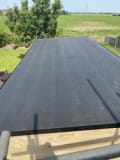
Are you planning to remove or renovate your garage? Before proceeding with the intended project, it’s usually essential to firstly determine whether or not your garage contains asbestos. However, asbestos isn’t the easiest material to identify and even more so when you’re unsure of what it looks. The fibres on the other hand are not visible to the eye and can’t be smelt as it’s odourless. In this article, we’ll provide you some helpful tips to spot an asbestos garage roof. Let’s take a closer look!
✓ Figure out when the building was constructed. In the year 1999, a ban was placed on the use of asbestos in the UK, both to manufacture and supply of asbestos materials. As a result, if your garage was built before this period, then it’s very likely that an asbestos containing material was used. It’s also important to note that several garage roofs that contain asbestos are constructed with the help of flat or corrugated sheets of cement.
✓ Check the surface. When cement contains asbestos its usually fairly thin with visible fibres running through it. Also, the surface of the cement will have a texture and also some craters. If you an older cement sheets is incorporated, there’s a high chance that it contains asbestos.
✓ How it’s built. Asbestos materials are usually joined together by aluminium runners and help in position with nails that are blunt-ended. Take a look at the joints, if the sheets inside is held together by wooden or plastic runners then there’s danger.
Finally, roofs made from asbestos cement has a good chance of becoming very brittle.
If your house is built before the 1980’s it’s likely to contain some form of asbestos material which when disturbed can release some harmful fibres whose inhalation can lead to a number of fatal diseases and health issues like lung cancer and asbestosis. If you suspect that your house contains some asbestos materials, the best step to take is to call in a qualified asbestos consultant to carry out a thorough inspection of the area so as to identify the potential asbestos containing materials in your property.
The result of the testing done will bring a peace of mind as it’ll confirm whether or not the material actually contains asbestos. In the event whereby the testing result shows that the material does not contain asbestos, this will significantly reduce your renovation or demolition cost. So if you’re wondering how asbestos testing can be done, simply continue reading.
Identifying asbestos is as simple as just looking at the material with the naked to check if it contains the harmful substance. The presence or otherwise of a potential asbestos containing material can only be confirmed by laboratory testing. A qualitative identification of asbestos in a bulk sample is the best method for testing for asbestos. This asbestos testing process involves taking a look at the fibres under a polarized light microscope and under varying conditions to determine the kind of asbestos it is, if present. The result of the testing, if positive, will identify the type of the asbestos discovered and this can be either white or chyrsotile asbestos, brown or amosite asbestos or, blue or crocidolite asbestos. However in the event whereby the sample doesn’t contain any asbestos, the test result will show NAD or No Asbestos Detected.
Asbestos is basically a naturally occurring fibre which, until the 1990s, has been a commonly used material in construction and other industries. There are three major kinds of asbestos fibres in the UK and they include crocidolite or blue, amosite or brown as well as chrysotile or white.
Before it’s life threatening potentials were exposed, asbestos was commonly used across the globe in buildings and structures as a means of insulation, roofing, flooring and was also sprayed on ceiling as well as walls. Upon the discovery of its hazardous features however, it has been swiftly banned in the UK but it may still be discovered in buildings and structures that have been erected before the year 2000.
In the event whereby a building or structure possesses asbestos within them, it can pose only a little risk but only if they remain undisturbed. It’s only when they’re disturbed or damaged that the tiny asbestos fibres are usually discharged into the air and can be easily inhaled into the lungs. Breathing in of asbestos is a very harmful thing as the fibres can have a terrible impact on your lungs and their linings. What’s more? Asbestos-related health conditions’ symptoms normally takes several years to surface which means that an exposure to the deadly substance many years ago may only start to show symptoms today. Therefore, if you’ve worked in a building or construction industry especially within the time period of 1970s to 1990s, there is a real chance that you’ve been exposed to asbestos. This type of jobs include ship building, construction and insulation projects, but this doesn’t necessarily imply that asbestos exposure can not occur in other jobs as well.
Asbestos is very dangerous if inhaled. It can cause a variety of lung-related diseases. Asbestos will generally not be released into the air unless it is disturbed. You should be very careful if you suspect there may be asbestos in your home and have a survey carried out to check that it is not being released into the air.
Asbestos refers to a group of minerals made up of tiny fibres. If you become exposed to these fibres and breathe them in, you’re at risk of contracting a dangerous lung-related disease.
Asbestos is strong and a good insulator, which means it was previously used to insulate and reinforce parts of buildings, like ceilings, roofs and guttering. Its use has been banned in the UK since 2000, but it is still present in lots of domestic and commercial buildings today.
Asbestos usually only poses a health risk if the material it’s contained in is damaged and its fibres are released into the air.
Can I Remove Asbestos Myself?
If you’re an individual who owns or control buildings, you’re required by the law to carry out asbestos management and reasonably so. Asbestos is a very dangerous and life threatening material which comes with a host of potential diseases related to exposure and therefore, it’s required to be removed from any building once discovered.
Majority of these diseases are not treated and in the UK alone, there has been about 4,500 deaths per year that has been attributable to asbestos exposure. Hence, this explains why this topic is considered crucial to the legislators.
When it comes to asbestos containing materials removal, this should only be done if necessary and ultimately, only by a person who possesses the skills, knowledge and expertise to make sure that the removal is done safely and to the highest possible standards. Exposure to asbestos poses great health risks. And although when left alone the material can only cause little harm, but the real threat comes when disturbed which implies that asbestos removal is a gravely dangerous process if not handle with skill and care.
Due to this fact, the law has taken a very serious stance that only skilled specialist are allowed to handle the task. Therefore, if you want to know if you can undertake this task by yourself, it’s important to consult your local authority to know the stance of the law in your state. We’d however recommend that you do not attempt this by yourself as the dangers are simply too much. The cost of asbestos containing materials removal can be somewhat costly, but when you look at the threat it poses to both you and your loved ones, you’d realize that it’s worth the price.
By now, every homeower should be fully aware of the dangers of asbestos due to the fact that it can be found in a wide range of building products from the roofs and walls and right down to the floor tiles. An exposure to asbestos especially when disturbed can be life threatening as it can lead to a plethora of health issues which includes lung cancer, mesothelioma, asbestosis and lots more.
Asbestos are more dangerous when damaged or disturbed, but if they’re found in a great shape and are left undisturbed, then asbestos containing materials poses little to no threats. This dangerous material can be found in a large variety of insulation. And when compared to batt insulation, loose-fill insulation can be highly dangerous when it’s not installed in the right way. When poorly done, several particles of the asbestos can be released inside the wall or around pipes. As a result, insulation becomes a big worry that most homeowers will face down the road.
Homes that were constructed before the 1980’s commonly features steam pipes, hot water pipes as well as furnace ducts insulated with asbestos containing materials. And this is primarily because there’s no other fire retardant, thermal as well as acoustic insulator like asbestos that’s as effective and affordable as it is. However to really know if your building’s insulation is made with asbestos containing materials, you can take the following steps:
✓ Find out when your house was built. If it was constructed or renovated before the 1980’s then it’s likely to contain some asbestos materials.
✓ Although this is not advisable, but if you plan on checking the insulation by yourself, you should ensure to put on protect equipment such as goggles, gloves, masks and a safety suit.
✓ Check for insulation available in the building. The asbestos containing insulation in both batt and loose-fill types are grey-coloured so this shouldn’t be too hard to spot.
✓ Examine the pipe coverings especially the blanket type and cardboard coverings.
An asbestos survey is a property inspection to check for the presence of asbestos. A professional will go around your building and look at and take samples of any materials that they think may contain asbestos. These will then be tested to see if asbestos is present.
There are two types of asbestos survey, a Management Asbestos Survey and a Refurbishment and Demolition Asbestos Survey. A Management Asbestos Survey is mainly conducted to check if any materials containing asbestos pose a risk to inhabitants during everyday use of a building. A Refurbishment and Demolition Asbestos Survey is designed to check for any asbestos exposure risks before building work is started on a property.
Answer a few quick questions to help us match you with the right Asbestos Removal Contractor
Receive no-obligation quotes from 4 Asbestos Removal Contractors working in Bow Street.
Compare prices, customer reviews and services, and hire the right Asbestos Removal Contractor.
View our open Asbestos Removal Contractor jobs near you
Join today

