27 Sep
Asbestos Removal
Monmouth - NP25
Enquiry from: Jason P
Start Date: Immediate
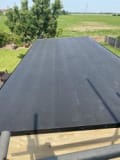
13x 140litre bags of artex ceiling panels to be removed from residential property. All are double bagged in hazardous material bags


Over 91 reviews & an average rating of 4.6/5 stars, you'll find the right pro
Use the shortlist button to select up to 4 tradespeople, enter your project details and press send
Get up to 4 quotes from local Asbestos Removal Contractors near you






Monmouth - NP25
Enquiry from: Jason P
Start Date: Immediate
13x 140litre bags of artex ceiling panels to be removed from residential property. All are double bagged in hazardous material bags
Monmouth - NP25
Enquiry from: William S
Start Date: Immediate

Remove Chrysotile from cavity wall via hole from removed brick
Gloucester - GL2
Enquiry from: Richard A
Start Date: Immediate
I have a Garage constructed with asbestos corrugated sheets that requites dismantling and disposing Quote
Bristol - BS35
Enquiry from: Michael M
Start Date: Immediate
Disposing of roughly 40 sheets 3metre x 1metre and some 3 metre angle flashing
Dymock, Newent - GL18
Enquiry from: ANDREW R
Start Date: Immediate
Ac stamped roofing sheets on four barns to be removed and dispossed and guttering channels and down pipes on two of the barns also to be removed. total area app 400m2 one barn 3m by 3m, 10 m by 10m, 1
Blakeney, Lydney - GL15
Enquiry from: Pam S
Start Date: Immediate
Garage ceiling contains asbestos - needs removing and disposing
Coleford - GL16
Enquiry from: Roxana H
Start Date: Immediate
Collection of old asbestos roof tiles
Drybrook, Longhope, Lydbrook, Mitcheldean, Ruardean - GL17
Enquiry from: Andy G
Start Date: Immediate
Removal of asbestos sheets from property as selling house
Chepstow - NP16
Enquiry from: Ron M
Start Date: Immediate


4 sheets app***et x 4 feet under the eaves of a single story stable. i would like a quote to have asbestos removed in my other property
Dymock, Newent - GL18
Enquiry from: Tim R
Start Date: Less than one month
Fibre cement in bulk bags removal i would like a quote to have asbestos removed in my commercial property
Ross-on-Wye - HR9
Enquiry from: William R
Start Date: Immediate
Collect and dispose of 2 low grade asbestos garage roof panels aprox measures 8' x 4' from outdoor location in a garden in ross-on-wye
Gloucester - GL2
Enquiry from: Al W
Start Date: Immediate
Disposal of corrugated Roof panels
Drybrook, Longhope, Lydbrook, Mitcheldean, Ruardean - GL17
Enquiry from: John W
Start Date: Immediate
Remove 34 square metres of asbestos cement roofing sheets
Bristol - BS35
Enquiry from: IAN K
Start Date: Immediate
TAKE AWAY ASBESTOS GUTTERS AND SHEETS AROUND 1 TON
If you're thinking of having your asbestos tested or removed, you have 2 choices - either you handle the job yourself or you employ a trusted asbestos expert for aid. If you do not have adequate time on your plate or perhaps, you're not positive sufficient to accomplish this project on your own, then you would certainly have to connect to an expert and naturally, it includes a expense. .
The last fee charged by asbestos professionals is, however, not repaired as it depends upon numerous variables. These aspects work to reduce or enhance the expense of taking out asbestos. The factors consist of the type of asbestos product that needs to be taken out, if the material can be encapsulated rather than taken out, if the material has been experienced and examined, the area where the jobs would be executed, size of the area, the ease of access of the asbestos, if other websites users or neighbours will certainly be impacted along with the kind of the structure be it household, commercial, commercial.
With a plethora of essential points to put into consideration, it's as a result vital to call a qualified, skilled and professional asbestos elimination company to give a affordable quote for your unique job. Typically, in the UK, you can expect to pay the approximate cost of around £1000 or less for smaller sized areas. Nonetheless, for larger areas the expense of disposing of such an asbestos will certainly cost you substantially a lot more. The price can be within the variety of £2500 and also above in the UK.
These prices might appear high initially but it's most definitely worth it when you look at it's possible result on the health and wellness of you and your loved ones.
View our Asbestos Removal Contractor cost guide View our Asbestos Removal Contractor advice| Asbestos Removal Contractor job | Asbestos Removal Contractor cost in 2026 |
|---|---|
| Asbestos removal in Coleford | £600-£920 |
| Asbestos survey in Coleford | £150-£230 |
How To Remove Asbestos
Asbestos are naturally occurring fibrous material that used to be incorporated into fabrics or mixed with cement for insulation purposes be it electrical or building. As it’s highly dangerous and life threatening if disturbed, the material has been in the UK since 1999, however there are some exceptions. If you happen to reside in a house that has been in existence prior to 1980, then there is a chance your house contains some asbestos. You may discover it in your home when carrying out some DIY tasks or renovation. And once you do, you should waste no time in having it removed as the longer you’re exposed to it, the more life threatening it becomes.
Removal of asbestos is a task you should never try to do by yourself as it becomes harmful when disturbed. In an event whereby you suspect something to be asbestos, do not touch but rather have it isolated and call in a specialist for help. So it’s therefore not recommended to attempt asbestos removal as a DIY project unless you’re are experienced in the techniques below:
✓ Before you get started, it’s crucial to wear the necessary protective gear. These include wearing a respirator, a disposable coverall, disposable rubber gloves, rubber boots as well as safety eye goggles. And ensure that you remove all protective gear clothing and gear before exiting the containment area.
✓ Remove the materials and place in asbestos waste disposal bags
✓ Ensure to remove the asbestos without breaking it up.
✓ Make use of double bag and seal all debris containing asbestos.
✓ Wipe down all surfaces with a damp cloth
✓ Fold and roll the polyethylene sheeting on the floor and dispose them same way as the debris - double bag and seal.
✓ Clean all tools and equipments used.
✓ When done, ensure to wash face, hands and bathe thoroughly.
It’s a legal requirement to get an asbestos survey done on non-domestic buildings and public areas of domestic buildings if they were built before 2000. So, if you’re responsible for maintaining one of these types of building, you must find out if an asbestos survey has been conducted, and get one done if it hasn’t.
For domestic properties, you only need to get an asbestos survey done if your home was built before 2000 and you want to do some building work. This is because if any materials containing asbestos are damaged during the work, they could pose a serious health risk, so might need removing first.
However, if you’re worried about asbestos in any parts of your home that are deteriorating, you might want to get an asbestos survey done anyway.
How Much To Remove Asbestos Garage Roof?
Asbestos is a hazardous material that was commonly used before the 1990’s as a popular material for both insulation and construction. Due to the oversight form authoritative boards, this harmful material was not identified as such during the time it was being incorporated. Ever since this period, many studies are now on ground to prove that asbestos fibres can lead to several health conditions like lung cancer and mesothelioma. Hence, the need to have it removed as soon as possible if discovered in your house because the longer your exposure to the dangerous asbestos fibres, the more harmful it becomes. Due to the danger involved, asbestos removal is strongly recommended to be carried out by a seasoned specialist.
The cost of asbestos garage roof removal is based on a plethora of influencing factors such as the size of the garage, the accessibility, the location of the garage, if the material is damaged, if the fixing is to the timber or steel supporting structures as well as other factors like boundary disputes or neighbouring properties. As a result, when hiring a specialist, it is vital for the asbestos removal professional to fully understand the works required as well as its various unique features prior to visiting the site. This is due to the fact that the more the information they are given, the easier it becomes to come up with a reasonable price for the asbestos removal project.
The average cost of removing asbestos garage roof is within the range of £650 to £1000 ( VAT inclusive). It should be noted that this is just a rough estimate. For a more accurate asbestos garage roof cost estimate, you’d have to call in a reliable professional for a quote.
What Does Asbestos Cause?
The perfect example of a silent killer is asbestos. Wonder why? From the day of exposure, you might not see any symptoms of the asbestos containing material disease till years later and more often than not, these disease are not treatable. And as dangerous at it is, it’s most likely not something you’d think about on a daily basis unless you’ve been affected by this harmful material or probably someone you know has.
Found in rocks and soils, asbestos have been an important material for manufacturers across the globe for numerous reasons. Not only are they exceptional insulation materials in both electrical and buildings, but they’re also flexible and resistant to heat, chemicals as well as electricity. And due to this fact, they represent a very common material that’s used in automotive parts, construction materials as well as textiles.
Asbestos when disturbed and inhaled for a long period of time can significantly increase your risk for diseases such as lung cancer, mesothelioma as well as asbestosis. Smokers are more likely feel a greater impact as cigarette smoke irritates lung passages which makes it a lot more difficult for the lungs to remove asbestos fibres.
Mesothelioma. This is a form of cancer that affects the lining of the lungs as well as the lining surrounding the lower digestive tract. By the time diagnosed, it’s almost always fatal.
Lung Cancer. This asbestos related lung cancer is almost the same with that caused by smoking and other causes.
Abestosis. This is a serious scarring condition of the lung which usually occurs after exposure to asbestos after a lengthy period. It can lead to shortness of breath, and in some cases, can be fatal.
By now, every homeower should be fully aware of the dangers of asbestos due to the fact that it can be found in a wide range of building products from the roofs and walls and right down to the floor tiles. An exposure to asbestos especially when disturbed can be life threatening as it can lead to a plethora of health issues which includes lung cancer, mesothelioma, asbestosis and lots more.
Asbestos are more dangerous when damaged or disturbed, but if they’re found in a great shape and are left undisturbed, then asbestos containing materials poses little to no threats. This dangerous material can be found in a large variety of insulation. And when compared to batt insulation, loose-fill insulation can be highly dangerous when it’s not installed in the right way. When poorly done, several particles of the asbestos can be released inside the wall or around pipes. As a result, insulation becomes a big worry that most homeowers will face down the road.
Homes that were constructed before the 1980’s commonly features steam pipes, hot water pipes as well as furnace ducts insulated with asbestos containing materials. And this is primarily because there’s no other fire retardant, thermal as well as acoustic insulator like asbestos that’s as effective and affordable as it is. However to really know if your building’s insulation is made with asbestos containing materials, you can take the following steps:
✓ Find out when your house was built. If it was constructed or renovated before the 1980’s then it’s likely to contain some asbestos materials.
✓ Although this is not advisable, but if you plan on checking the insulation by yourself, you should ensure to put on protect equipment such as goggles, gloves, masks and a safety suit.
✓ Check for insulation available in the building. The asbestos containing insulation in both batt and loose-fill types are grey-coloured so this shouldn’t be too hard to spot.
✓ Examine the pipe coverings especially the blanket type and cardboard coverings.
Asbestos is a perfect example of a silent and hidden killer. The harmful fibre it releases is not only totally invisible to the eye, but also absolutely odourless, therefore can’t be smelt. As a result, you can walk into a room completely filled with asbestos and you still won’t suspect a thing. If you live in an old building ( built before the 1980’s) in the UK, it’s very possible that there’s some asbestos in the house.
Asbestos causes up to 5000 deaths in the UK on a yearly basis. When asbestos materials are disturbed, they release asbestos fibres, which when inhaled can result in lung cancer, asbestosis as well as mesothelioma which are all painful and fatal diseases. And perhaps even more importantly, you won’t notice any symptoms of having these diseases until after several years after your first exposure to asbestos fibres.
Therefore, to reduce these numbers, there’s a crucial need to to know how to identify asbestos so as not to put both ourselves and loved ones at risk.
There are three types of asbestos which includes blue or crocidolite, brown or amosite, and white or chrysotile. So they can easily be identified by their respective colour names, right? Wrong! Asbestos fibres can not be seen with the eye, it can only be detected under a microscope. They’re very tiny and light, and once disturbed and in the air, they can float can days. Asbestos are commonly found in several building materials such as cement products, floor tiles, paints, adhesive, partitions, cladding, insulation, doors and lots more. With its wide acceptability in the past, any building product you can probably think of could contain asbestos.
A typical Homebuyer Report or Building Survey Report doesn’t usually involve checking for asbestos. Your surveyor may let you know that there are certain parts of the property that are likely to contain asbestos, but they won’t do any testing. This means that, if you want to be sure about whether a property contains asbestos, you need to get an asbestos survey.
In some situations, it is possible to remove asbestos from your home without holding a licence. However, unless you’ve had training on working with asbestos, it’s not a good idea to do the work yourself. In these cases, you’ll need to make sure you wear complete protective clothing, including a face mask and overalls, and disturb the material as little as possible. You’ll also need to find out the best place to dispose of your asbestos here [https://www.gov.uk/asbestos-in-home], and get rid of your protective clothing in the same place.
However, in many cases you’ll need a licence to do an asbestos removal job, so will need to call in a professional. This is also almost always the safest way to remove your asbestos too, so is generally the best option to go for.
Answer a few quick questions to help us match you with the right Asbestos Removal Contractor
Receive no-obligation quotes from 4 Asbestos Removal Contractors working in Coleford.
Compare prices, customer reviews and services, and hire the right Asbestos Removal Contractor.
View our open Asbestos Removal Contractor jobs near you
Join today

