
13 Oct
Asbestos Removal
Ellesmere Port - CH66
Enquiry from: John R
Start Date: Immediate
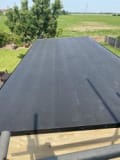
Disposal of 3x1mt asbestos sheet


Over 95 reviews & an average rating of 4.6/5 stars, you'll find the right pro
Use the shortlist button to select up to 4 tradespeople, enter your project details and press send
Get up to 4 quotes from local Asbestos Removal Contractors near you



Ellesmere Port - CH66
Enquiry from: John R
Start Date: Immediate
Disposal of 3x1mt asbestos sheet
Prenton - CH43
Enquiry from: William E
Start Date: Immediate
Old garage roof. Removed and wrapped in heavy duty plastic. In front garden for pickup and removal
Ellesmere Port - CH65
Enquiry from: Damian S
Start Date: Immediate
Some asbestos has been found within my gas cupboard, and i need it to be removed
St. Helens - WA9
Enquiry from: Claire J
Start Date: Immediate
Some sheets was left in my garden, about 20
Wirral - CH48
Enquiry from: Emma D
Start Date: Immediate
Property, which requires a fair bit of rennovation. I would like a quote for an asbestos survey please. There is a lot of artex-style coverings on ceilings and walls, and probably something dodgy in t
Prescot - L34
Enquiry from: Marc G
Start Date: Immediate
Remove asbestos materials around boiler ac textured coating, encapsulated aib and enclosed lagging/sprayed coatings
Liverpool - L25
Enquiry from: Mark J
Start Date: Immediate
Removal of garden shed - concrete structure with (we believe) asbestos in the roof. Full removal and disposal required
St. Helens - WA11
Enquiry from: Garry K
Start Date: Immediate
We want a survey done on the artexing in our home
Liverpool - L33
Enquiry from: David A
Start Date: Immediate
4m2 ceiling removed, bathroom artex
Liverpool - L32
Enquiry from: Lee M
Start Date: Immediate
Three bedroom, terraced house. Asbestos survey quote. (Standard survey)
Ellesmere Port - CH66
Enquiry from: Kyle T
Start Date: Less than one month
I am just reaching out as we had our asbestos survey results back and we have 3 asm's we are looking to remove - kitchen tiles, concrete garage wall and roof. please see attached the report, can you p
Liverpool - L17
Enquiry from: Stacey W
Start Date: Immediate
Asbestos report for our property
Wirral - CH63
Enquiry from: Norman B
Start Date: Immediate
I need to have four pieces of old style guttering and a drain pipe (app***) from a shed out building which are no longer in situ removed and disposed of as I'm moving house shortly. The pieces are too
Wirral - CH63
Enquiry from: Norman B
Start Date: Less than one month
I have a few small pieces of old guttering and pipe from an outbulding no longer in situ for disposal as moving home soon. i would like a quote to have asbestos removed in my terrace property
St. Helens - WA9
Enquiry from: Steve E
Start Date: Immediate
Asbestos paper and debris Chrysotile
Wirral - CH62
Enquiry from: Patrizio M
Start Date: Immediate
Removal and disposal of asbestos roof. Do you replace roofing?
Liverpool - L17
Enquiry from: Yazan K
Start Date: Immediate
Removal of possible asbestos (textured ceilings) in 3 bedrooms. The sizes of the bedrooms are 2.7m x 2.5m , 3m x 4.1m, and 3.5m x 3.3m
St. Helens - WA11
Enquiry from: Ian F
Start Date: 1 to 3 months
Old shed (1.5 m by 3 m) with chrysotile asbestos needs removing i would like a quote to have asbestos removed in my terrace property
Wirral - CH60
Enquiry from: Victoria B
Start Date: Immediate
A large shed approx 5 x 2 m i would like a quote to have asbestos removed in my other property
If you're thinking about having your asbestos tested or taken out, you have 2 choices - either you handle the project yourself or you hire a dependable asbestos company for help. If you do not have adequate time on your plate or possibly, you're not certain adequate to execute this project on your own, after that you 'd need to connect to an expert as well as naturally, it includes a cost. .
The last price billed by asbestos professionals is, nevertheless, not repaired as it depends on several factors. These elements work to decrease or enhance the price of taking out asbestos. The aspects include the type of asbestos material that needs to be disposed of, if the product can be encapsulated rather than taken out, if the product has been tested and examined, the area where the jobs would be carried out, dimension of the area, the accessibility of the asbestos, if various other sites users or neighbours will certainly be influenced along with the sort of the building be it domestic, industrial, commercial.
With a huge selection of vital things to take into consideration, it's therefore necessary to contact a certified, proficient as well as expert asbestos removal company to offer a practical quote for your unique task. Normally, in the UK, you can anticipate to pay the approximate cost of around £1000 or less for smaller areas. However, for larger locations the expense of taking out such an asbestos will certainly cost you considerably extra. The cost can be within the range of £2500 as well as above in the UK.
These prices may appear high at first however it's absolutely worth it when you check out it's feasible result on the health of you and your loved ones.
View our Asbestos Removal Contractor cost guide View our Asbestos Removal Contractor advice| Asbestos Removal Contractor job | Asbestos Removal Contractor cost in 2026 |
|---|---|
| Asbestos removal in Merseyside | £600-£920 |
| Asbestos survey in Merseyside | £150-£230 |
Asbestos is basically a naturally occurring fibre which, until the 1990s, has been a commonly used material in construction and other industries. There are three major kinds of asbestos fibres in the UK and they include crocidolite or blue, amosite or brown as well as chrysotile or white.
Before it’s life threatening potentials were exposed, asbestos was commonly used across the globe in buildings and structures as a means of insulation, roofing, flooring and was also sprayed on ceiling as well as walls. Upon the discovery of its hazardous features however, it has been swiftly banned in the UK but it may still be discovered in buildings and structures that have been erected before the year 2000.
In the event whereby a building or structure possesses asbestos within them, it can pose only a little risk but only if they remain undisturbed. It’s only when they’re disturbed or damaged that the tiny asbestos fibres are usually discharged into the air and can be easily inhaled into the lungs. Breathing in of asbestos is a very harmful thing as the fibres can have a terrible impact on your lungs and their linings. What’s more? Asbestos-related health conditions’ symptoms normally takes several years to surface which means that an exposure to the deadly substance many years ago may only start to show symptoms today. Therefore, if you’ve worked in a building or construction industry especially within the time period of 1970s to 1990s, there is a real chance that you’ve been exposed to asbestos. This type of jobs include ship building, construction and insulation projects, but this doesn’t necessarily imply that asbestos exposure can not occur in other jobs as well.
A typical Homebuyer Report or Building Survey Report doesn’t usually involve checking for asbestos. Your surveyor may let you know that there are certain parts of the property that are likely to contain asbestos, but they won’t do any testing. This means that, if you want to be sure about whether a property contains asbestos, you need to get an asbestos survey.
Can I Remove Asbestos Myself?
If you’re an individual who owns or control buildings, you’re required by the law to carry out asbestos management and reasonably so. Asbestos is a very dangerous and life threatening material which comes with a host of potential diseases related to exposure and therefore, it’s required to be removed from any building once discovered.
Majority of these diseases are not treated and in the UK alone, there has been about 4,500 deaths per year that has been attributable to asbestos exposure. Hence, this explains why this topic is considered crucial to the legislators.
When it comes to asbestos containing materials removal, this should only be done if necessary and ultimately, only by a person who possesses the skills, knowledge and expertise to make sure that the removal is done safely and to the highest possible standards. Exposure to asbestos poses great health risks. And although when left alone the material can only cause little harm, but the real threat comes when disturbed which implies that asbestos removal is a gravely dangerous process if not handle with skill and care.
Due to this fact, the law has taken a very serious stance that only skilled specialist are allowed to handle the task. Therefore, if you want to know if you can undertake this task by yourself, it’s important to consult your local authority to know the stance of the law in your state. We’d however recommend that you do not attempt this by yourself as the dangers are simply too much. The cost of asbestos containing materials removal can be somewhat costly, but when you look at the threat it poses to both you and your loved ones, you’d realize that it’s worth the price.
In some situations, it is possible to remove asbestos from your home without holding a licence. However, unless you’ve had training on working with asbestos, it’s not a good idea to do the work yourself. In these cases, you’ll need to make sure you wear complete protective clothing, including a face mask and overalls, and disturb the material as little as possible. You’ll also need to find out the best place to dispose of your asbestos here [https://www.gov.uk/asbestos-in-home], and get rid of your protective clothing in the same place.
However, in many cases you’ll need a licence to do an asbestos removal job, so will need to call in a professional. This is also almost always the safest way to remove your asbestos too, so is generally the best option to go for.
How To Remove Asbestos
Asbestos are naturally occurring fibrous material that used to be incorporated into fabrics or mixed with cement for insulation purposes be it electrical or building. As it’s highly dangerous and life threatening if disturbed, the material has been in the UK since 1999, however there are some exceptions. If you happen to reside in a house that has been in existence prior to 1980, then there is a chance your house contains some asbestos. You may discover it in your home when carrying out some DIY tasks or renovation. And once you do, you should waste no time in having it removed as the longer you’re exposed to it, the more life threatening it becomes.
Removal of asbestos is a task you should never try to do by yourself as it becomes harmful when disturbed. In an event whereby you suspect something to be asbestos, do not touch but rather have it isolated and call in a specialist for help. So it’s therefore not recommended to attempt asbestos removal as a DIY project unless you’re are experienced in the techniques below:
✓ Before you get started, it’s crucial to wear the necessary protective gear. These include wearing a respirator, a disposable coverall, disposable rubber gloves, rubber boots as well as safety eye goggles. And ensure that you remove all protective gear clothing and gear before exiting the containment area.
✓ Remove the materials and place in asbestos waste disposal bags
✓ Ensure to remove the asbestos without breaking it up.
✓ Make use of double bag and seal all debris containing asbestos.
✓ Wipe down all surfaces with a damp cloth
✓ Fold and roll the polyethylene sheeting on the floor and dispose them same way as the debris - double bag and seal.
✓ Clean all tools and equipments used.
✓ When done, ensure to wash face, hands and bathe thoroughly.
What Does Asbestos Cause?
The perfect example of a silent killer is asbestos. Wonder why? From the day of exposure, you might not see any symptoms of the asbestos containing material disease till years later and more often than not, these disease are not treatable. And as dangerous at it is, it’s most likely not something you’d think about on a daily basis unless you’ve been affected by this harmful material or probably someone you know has.
Found in rocks and soils, asbestos have been an important material for manufacturers across the globe for numerous reasons. Not only are they exceptional insulation materials in both electrical and buildings, but they’re also flexible and resistant to heat, chemicals as well as electricity. And due to this fact, they represent a very common material that’s used in automotive parts, construction materials as well as textiles.
Asbestos when disturbed and inhaled for a long period of time can significantly increase your risk for diseases such as lung cancer, mesothelioma as well as asbestosis. Smokers are more likely feel a greater impact as cigarette smoke irritates lung passages which makes it a lot more difficult for the lungs to remove asbestos fibres.
Mesothelioma. This is a form of cancer that affects the lining of the lungs as well as the lining surrounding the lower digestive tract. By the time diagnosed, it’s almost always fatal.
Lung Cancer. This asbestos related lung cancer is almost the same with that caused by smoking and other causes.
Abestosis. This is a serious scarring condition of the lung which usually occurs after exposure to asbestos after a lengthy period. It can lead to shortness of breath, and in some cases, can be fatal.
Is Asbestos Dangerous?
The short and simple answer to this question is yes, asbestos is absolutely dangerous. Exposure to asbestos fibres and dust can lead to cancer, lung disease and lots more. It’s known to be so dangerous that no level of exposure to asbestos is considered safe. It has been banned in the UK since 1999 but exposure is till rampant due to the exceptions to the ban and there’s a good chance that you’ll find it in several older buildings and homes. And despite the ban in most countries, asbestos related health issues are still on the rise across the globe. People that are mostly exposed to this risk are those who’re exposed on the job as well as those who simply like to take on projects around the house containing asbestos insulation by themselves.
Furthermore, there’s a need to observe safety precautions when working with asbestos. If not, you’ll be exposing both you and your family to long term health risks. Below are some of the things you need to know about the dangers of asbestos.
✓ Exposure to asbestos fibres has no safe level. So it’s best to avoid exposure at all costs.
✓ Breathing in asbestos dust can lead to lung cancer, asbestosis and mesothelioma.
✓ If disturbed, asbestos can release dangerous particles of dust containing asbestos fibres.
✓ Mesothelioma is a type of cancer which mostly affects the lung’s lining. It has no cure.
✓ If you smoke, then the risk of inhaling asbestos is greatly increased.
✓ The number of fibres inhaled as well as the length of time that you’ve been exposed to it increases the risk of contracting asbestos related diseases.
✓ The symptoms of asbestos dust related diseases do not commonly come out until its about 20 to 30 years after the first exposure.
Asbestos is very dangerous if inhaled. It can cause a variety of lung-related diseases. Asbestos will generally not be released into the air unless it is disturbed. You should be very careful if you suspect there may be asbestos in your home and have a survey carried out to check that it is not being released into the air.
Answer a few quick questions to help us match you with the right Asbestos Removal Contractor
Receive no-obligation quotes from 4 Asbestos Removal Contractors working in Merseyside.
Compare prices, customer reviews and services, and hire the right Asbestos Removal Contractor.
View our open Asbestos Removal Contractor jobs near you
Join today

