06 Oct
Asbestos Removal
Stoke-on-Trent - ST6
Enquiry from: Saleem M
Start Date: Immediate
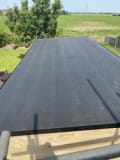
Garage roof 10-15 foot long asbestos removal


Over 633 reviews & an average rating of 4.5/5 stars, you'll find the right pro
Use the shortlist button to select up to 4 tradespeople, enter your project details and press send
Get up to 4 quotes from local Asbestos Removal Contractors near you





Stoke-on-Trent - ST6
Enquiry from: Saleem M
Start Date: Immediate
Garage roof 10-15 foot long asbestos removal
Stafford - ST21
Enquiry from: Ann P
Start Date: 1 to 3 months
I need an asbestos garage removed i would like a quote to have asbestos removed in my semi detached property
Stoke-on-Trent - ST10
Enquiry from: Charlotte H
Start Date: Immediate
The roof space is insulated with a shallow layer of Vermiculite chippings. The roof is not ventilated. The roof space is not insulated to modern standards. Vermiculite materials have been associated w
Stoke-on-Trent - ST6
Enquiry from: Kenneth W
Start Date: Immediate
Asbestos removal from a garage roof
Stone - ST15
Enquiry from: STEVE J
Start Date: Immediate
We have aprox 12 bags of asbestos pipe we need to dispose of. they are double bagged in marked asbestos bags
Lichfield - WS13
Enquiry from: Keith S
Start Date: Immediate
I need an asbestos survey of a roof on a workshop building, approx 20 feet off the ground. Can you survey, identify the roof covering ?
Stafford - ST17
Enquiry from: Bonnie H
Start Date: Immediate
I have an artex ceiling and want to check it contains asbestos
Uttoxeter - ST14
Enquiry from: Maxime R
Start Date: Immediate
A board fitted behind an electrical meter. The engineer who would like to install a new meter thinks a piece of board maybe asbestos
Tamworth - B77
Enquiry from: Gary J
Start Date: Immediate
We are having trench dug for cable install and have come across what seems to be a sheet of asbestos which has been used as shuttering for concrete footings
Stoke-on-Trent - ST7
Enquiry from: Jason M
Start Date: Immediate
A sheet in the loft to be removed
Stafford - ST16
Enquiry from: Claudia W
Start Date: Immediate
(address removed) asbestos check. 3 bed semi detached with a single garage
Newcastle - ST5
Enquiry from: Stephen L
Start Date: 1 to 3 months


There are pipe works in our storage cupboard which is boxed in the material used may be asbestos
Stone - ST15
Enquiry from: Joanne M
Start Date: Immediate
Asbestos survey 1 bedroom property
Stafford - ST17
Enquiry from: Leanne G
Start Date: Immediate
R&D asbestos survey in the 2 floor building in the stairwell walls so a stair lift can be installed
Leek - ST13
Enquiry from: Alison B
Start Date: Immediate
Removal of artex in all rooms ((address removed) ), floor tiles and possibly a sheet of asbestos in the garden. 1960s/70s property
Lichfield - WS13
Enquiry from: Richard S
Start Date: Immediate
I have purchased a historical Gas Mask on Etsy, compete with filter. My friend insists that the filter will be full of asbestos, so I would like you to take a look at it for me
Tamworth - B79
Enquiry from: Lee H
Start Date: Immediate
Remove asbestos from hardcore track i would like a quote to have asbestos removed in my other property
Tamworth - B77
Enquiry from: Mr T
Start Date: Immediate
Asbestos in part of ceiling in the entrance to our home, which travels part way down the stairs
Stoke-on-Trent - ST2
Enquiry from: Leroy W
Start Date: Immediate
Removal of a shed made of panels 320cm x 555cm or 10ft x 18ft along with the asbestos roof. i would like a quote to have asbestos removed in my detached property
If you're thinking about having your asbestos surveyed or taken out, you have 2 options - either you handle the job on your own or you contact a dependable asbestos professional for aid. If you do not have enough time on your plate or probably, you're not certain sufficient to accomplish this job on your own, after that you would certainly need to connect to an professional and also certainly, it includes a price. .
The last cost charged by asbestos licensed contractors is, nevertheless, not taken care of as it depends on numerous factors. These elements work to lower or enhance the expense of disposing of asbestos. The aspects include the type of asbestos product that needs to be taken out, if the material can be encapsulated as opposed to eliminated, if the product has actually been tested as well as checked, the area where the works would be executed, size of the location, the accessibility of the asbestos, if other sites individuals or neighbours will be affected along with the sort of the building be it domestic, industrial, industrial.
With a huge selection of essential things to put into factor to consider, it's as a result vital to call a certified, qualified as well as specialist asbestos elimination firm to provide a sensible quote for your special project. Normally, in the UK, you can expect to pay the approximate expense of around £1000 or much less for smaller sized locations. Nevertheless, for larger areas the cost of removing such an asbestos will certainly cost you significantly a lot more. The cost can be within the range of £2500 and above in the UK.
These prices may seem high at first but it's definitely worth it when you take a look at it's feasible result on the health of you and your loved ones.
View our Asbestos Removal Contractor cost guide View our Asbestos Removal Contractor advice| Asbestos Removal Contractor job | Asbestos Removal Contractor cost in 2026 |
|---|---|
| Asbestos removal in Staffordshire | £600-£920 |
| Asbestos survey in Staffordshire | £165-£290 |
Asbestos is very dangerous if inhaled. It can cause a variety of lung-related diseases. Asbestos will generally not be released into the air unless it is disturbed. You should be very careful if you suspect there may be asbestos in your home and have a survey carried out to check that it is not being released into the air.
Asbestos is a perfect example of a silent and hidden killer. The harmful fibre it releases is not only totally invisible to the eye, but also absolutely odourless, therefore can’t be smelt. As a result, you can walk into a room completely filled with asbestos and you still won’t suspect a thing. If you live in an old building ( built before the 1980’s) in the UK, it’s very possible that there’s some asbestos in the house.
Asbestos causes up to 5000 deaths in the UK on a yearly basis. When asbestos materials are disturbed, they release asbestos fibres, which when inhaled can result in lung cancer, asbestosis as well as mesothelioma which are all painful and fatal diseases. And perhaps even more importantly, you won’t notice any symptoms of having these diseases until after several years after your first exposure to asbestos fibres.
Therefore, to reduce these numbers, there’s a crucial need to to know how to identify asbestos so as not to put both ourselves and loved ones at risk.
There are three types of asbestos which includes blue or crocidolite, brown or amosite, and white or chrysotile. So they can easily be identified by their respective colour names, right? Wrong! Asbestos fibres can not be seen with the eye, it can only be detected under a microscope. They’re very tiny and light, and once disturbed and in the air, they can float can days. Asbestos are commonly found in several building materials such as cement products, floor tiles, paints, adhesive, partitions, cladding, insulation, doors and lots more. With its wide acceptability in the past, any building product you can probably think of could contain asbestos.
The ability to identify exactly what an asbestos looks like can possibly save you from deadly health conditions that can arise as a result of a prolonged exposure to the dangerous material. It is one of the most frequent questions asked by homeowners in the UK and for a good reason. However, this question is not as simple or straightforward as it sounds because asbestos can actually take on a number of forms. As a result, this makes it a lot difficult to identify asbestos just by visual analysis or comparing an area which you suspect to be an asbestos to an example online. Therefore, the best way to truly identify if the area you suspect is really asbestos, then you’d have to send away a sample of the material to a certified asbestos testing lab in a safe way.
This happens to be the most effective way to verify if there’s a presence of asbestos in your home or property. Legally speaking, commercial properties are necessitated to undergo a total asbestos audit which involves carrying out lab tests on each and every material that’s suspected to include the deadly asbestos fibre substance. From these tests, you’ll get to know whether the asbestos present are friable or non friable which can go a long way to help identify the level of risk that’s posed by various building materials.
Upon the reception of the suspected asbestos-contained material, a certified asbestos testing laboratory will incorporate a form of transmission electron microscopy to reveal as well as determine the type of asbestos fibres that are in the sample. In the event whereby you discover a material you suspect to be an asbestos in your home, do not just go ahead to remove it. It’s strongly recommended to call in a specialist who can help to safely remove and send the suspected material to the lab for verification before further actions would be taken.
Asbestos fibres are very small, so they’re not possible to identify with the naked eye. However, they’re common in particular materials of a certain age, so you can work out if there are any parts of a building that are likely to contain asbestos.
Start by checking the date that the material you suspect contains asbestos was installed. If it was in 2000 or after then you don’t need to worry, it definitely doesn’t contain asbestos. However, if it was fitted before 2000 it may contain asbestos, particularly if this was between 1940 and 1980.
Materials that used to commonly contain asbestos include ceiling tiles, guttering, soffits, fascia, external cladding and facades, vinyl flooring, artex, cement roofs and insulation.
Being a commonly used building material in the 1950’s to about 1990’s, asbestos is very popular back in the days and used for almost every roofing project because of it fire resistant properties. They’re mostly mixed with cement and are known to last for over 4 decades.
Due to the harmful properties found in asbestos, the material was totally banned in the UK since the year 1999. It’s found that when disturbed, asbestos releases some fibres which when inhaled can result in some deadly health conditions such as lung cancer and asbestosis, which are all fatal. These diseases are mostly not detected until several years after the first exposure to the asbestos fibres, which makes them even more deadly. Hence, it’s crucial to know how to identify asbestos roof tiles so you can have them removed by a professional immediately. In this article, we’ll show you what you can look out for to identify asbestos roof tiles. Let’s take a look!
Asbestos roof tiles are typically square shaped and they also generally possess a combination of grey and black colour. Although asbestos can feature a number of colours based on the kind of material you mix with it. In truth, asbestos can be very tricky to identify, when disturbed not only are their fibres totally invisible to the naked eye but they’re also completely odourless. This implies that you may not even be aware that you’re exposed to such harmful material for a prolonged period of time. In order to accurately identify asbestos roof tiles, the only thing you can possibly do is to call in a UKAS accredited laboratory to have them tested. This way, you’ll have a peace of mind knowing the result will point you in the right direction.
Asbestos is basically a naturally occurring fibre which, until the 1990s, has been a commonly used material in construction and other industries. There are three major kinds of asbestos fibres in the UK and they include crocidolite or blue, amosite or brown as well as chrysotile or white.
Before it’s life threatening potentials were exposed, asbestos was commonly used across the globe in buildings and structures as a means of insulation, roofing, flooring and was also sprayed on ceiling as well as walls. Upon the discovery of its hazardous features however, it has been swiftly banned in the UK but it may still be discovered in buildings and structures that have been erected before the year 2000.
In the event whereby a building or structure possesses asbestos within them, it can pose only a little risk but only if they remain undisturbed. It’s only when they’re disturbed or damaged that the tiny asbestos fibres are usually discharged into the air and can be easily inhaled into the lungs. Breathing in of asbestos is a very harmful thing as the fibres can have a terrible impact on your lungs and their linings. What’s more? Asbestos-related health conditions’ symptoms normally takes several years to surface which means that an exposure to the deadly substance many years ago may only start to show symptoms today. Therefore, if you’ve worked in a building or construction industry especially within the time period of 1970s to 1990s, there is a real chance that you’ve been exposed to asbestos. This type of jobs include ship building, construction and insulation projects, but this doesn’t necessarily imply that asbestos exposure can not occur in other jobs as well.
The deposits of asbestos are commonly found in both rocks and soil throughout the globe. Historically, this material has been incorporated for more than 4,500 years for a number of purposes by our ancestors. However, mining of asbestos in large scale started only in the 1870’s in Quebec, Canada. It only took about a decade after this commencement before other countries picked the trail and also began the production of asbestos for industrial uses as asbestos rapidly grew to become an ubiquitous phenomenon across many nations of the world such as the USA, Russia, Italy as well as South Africa.
Today, several countries have placed a total ban on the production as well as exportation of asbestos as a result of the harmful fibre it contains. Asbestos has been discovered to be a life threatening material which when disturbed, it releases a harmful fibre that can lead to a number of serious health issues if inhaled over a long period of time. Most recently in 2019, the material was popularly banned in Canada, who for several years has operated the world’s largest mine of asbestos in Quebec.
Despite how harmful the material is, it’s however still being mined in some countries with some of its exporters being Russia, Kazakhstan, China as well as Brazil, with Russia taking the lead, covering for over 53 percent of the world’s total production.
Contrary to many beliefs, asbestos is not a man made material but a group of six types of naturally occurring fibrous minerals that are commonly found in rock and soil which are collectively known as asbestos. These minerals are primarily composed of both silicon and oxygen but also includes other minor elements.
It’s a legal requirement to get an asbestos survey done on non-domestic buildings and public areas of domestic buildings if they were built before 2000. So, if you’re responsible for maintaining one of these types of building, you must find out if an asbestos survey has been conducted, and get one done if it hasn’t.
For domestic properties, you only need to get an asbestos survey done if your home was built before 2000 and you want to do some building work. This is because if any materials containing asbestos are damaged during the work, they could pose a serious health risk, so might need removing first.
However, if you’re worried about asbestos in any parts of your home that are deteriorating, you might want to get an asbestos survey done anyway.
Answer a few quick questions to help us match you with the right Asbestos Removal Contractor
Receive no-obligation quotes from 4 Asbestos Removal Contractors working in Staffordshire.
Compare prices, customer reviews and services, and hire the right Asbestos Removal Contractor.
View our open Asbestos Removal Contractor jobs near you
Join today

