25 Oct
Asbestos Removal
Haywards Heath - RH17
Enquiry from: Ted B
Start Date: 1 to 3 months
I need the whole roof of my garage removed so i can convert it safely i would like a quote to have asbestos removed in my semi detached property


Over 215 reviews & an average rating of 4.5/5 stars, you'll find the right pro
Use the shortlist button to select up to 4 tradespeople, enter your project details and press send
Get up to 4 quotes from local Asbestos Removal Contractors near you





Haywards Heath - RH17
Enquiry from: Ted B
Start Date: 1 to 3 months
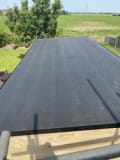
I need the whole roof of my garage removed so i can convert it safely i would like a quote to have asbestos removed in my semi detached property
Tunbridge Wells - TN2
Enquiry from: Jon B
Start Date: Immediate
I have about 35m2 of tiles in my sitting room, dining room, hall and understairs cupboard. I want them taken up and removed from site please
Coulsdon - CR5
Enquiry from: Philip O
Start Date: Immediate
To remove 12 sheets*** y 3 ft each
Warlingham - CR6
Enquiry from: James H
Start Date: Immediate
End of an old ironing board needs to be disposed of safely
Oxted - RH8
Enquiry from: Steve G
Start Date: Immediate
Our garage ceiling is constructed of Amosite boarding covering an area of approximately 7m by 2.6m. I would like quotes for the removal and disposal of this material please
Haywards Heath - RH17
Enquiry from: Matthew H
Start Date: Immediate
Remove ceiling in garage and dispose of materials - 8m x 5m
Crawley - RH10
Enquiry from: Ratnajothy M
Start Date: Immediate
Remove asbestos roof and replace with a corrugated roof
Hassocks - BN6
Enquiry from: Colin K
Start Date: Immediate
Collect Double bagged asbestos slates from a Lewes address Approx 1.5 -2 tonnes in total
Godstone - RH9
Enquiry from: Nikki R
Start Date: Immediate
Remove corrugated roofing sheets from a barn roof
Haywards Heath - RH16
Enquiry from: HANNAH H
Start Date: Immediate
I'd like to arrange a full asbestos survey to check for any other asbestos-containing materials in the property. Could you let me know your earliest availability and the cost?
Redhill - RH1
Enquiry from: William A
Start Date: Immediate
I have a fence consisting of 10 or so panels of corrrugated asbestos app*** by 3 ft lying on their sides which need to be removed and disposed of
Crawley - RH10
Enquiry from: Jason R
Start Date: Immediate
The lease is being transfer and we need an updated asbestos survey and management plan
Crawley - RH10
Enquiry from: Alina R
Start Date: Immediate
In the Survey it is mentioned "possible presence of asbestos in the water, drainage and ceiling. I would like to know what are the chances for that to be possible and if it is, what would be the cost
Mayfield - TN20
Enquiry from: Adrian B
Start Date: Immediate
I have a pre-1980 property in Mayfield, East Sussex. There is a small former boiler cupboard area with suspect grey fibrous material around a removed water tank. I would like asbestos sampling only (1
Horley - RH6
Enquiry from: Prakash S
Start Date: Less than one month
One asbestos sample of ceiling for a residential property of total floor area 40 sq-m
Tonbridge - TN10
Enquiry from: Mike S
Start Date: Immediate
Check attic for asbestos
Hartfield - TN7
Enquiry from: Michelle D
Start Date: Immediate
Single asbestos garage roof removal price
East Grinstead - RH19
Enquiry from: Stuart P
Start Date: Less than one month
8 sheets of asbestos taken off of a roof and disposed of i would like a quote to have asbestos removed in my semi detached property
East Grinstead - RH19
Enquiry from: Steve F
Start Date: Immediate
Old corrugated garage roof it is bagged up to be removed
East Grinstead - RH19
Enquiry from: Dannielle S
Start Date: Immediate
To have some asbestos roof tiles taken away
If you're thinking about having your asbestos tested or eliminated, you have two options - either you take on the project on your own or you contact a dependable asbestos licensed contractor for assistance. If you do not have enough time on your plate or probably, you're not confident adequate to execute this job by yourself, then you 'd need to connect to an professional and certainly, it features a expense. .
The last cost billed by asbestos licensed contractors is, however, not repaired as it relies on several variables. These factors function to reduce or enhance the expense of eliminating asbestos. The factors include the kind of asbestos product that requires to be eliminated, if the product can be encapsulated rather than removed, if the material has actually been tested and also tested, the place where the jobs would be executed, size of the area, the availability of the asbestos, if various other sites customers or neighbours will be affected along with the sort of the building be it property, industrial, commercial.
With a wide variety of crucial points to take into factor to consider, it's consequently important to hire a certified, skilled and also specialist asbestos removal company to offer a sensible quote for your one-of-a-kind project. Generally, in the UK, you can expect to pay the approximate expense of around £1000 or less for smaller locations. Nonetheless, for bigger areas the cost of removing such an asbestos will certainly cost you considerably extra. The price can be within the range of £2500 as well as above in the UK.
These costs might seem high in the beginning but it's absolutely worth it when you check out it's possible effect on the health and wellness of you as well as your loved ones.
View our Asbestos Removal Contractor cost guide View our Asbestos Removal Contractor advice| Asbestos Removal Contractor job | Asbestos Removal Contractor cost in 2026 |
|---|---|
| Asbestos removal in East Grinstead | £475-£2,960 |
| Asbestos survey in East Grinstead | £175-£570 |
In recent times, when about to purchase or renovate a building that was constructed before the 1980’s, most homeowners will be particular about knowing whether or not asbestos containing materials are present. Also when a property is being checked, a lot of individuals would want to know the peak years for asbestos to be used in homes.
Modern asbestos production started in the 1800s during the time of industrial revolution, but after some regulation were made to ban some asbestos products and uses in the late 1970’s, the production witnessed a significant drop. The United States was the foremost users of asbestos according to the USGS but this lasted until the 1960’s when it was overtaken by the Soviet Union. In this article, we’ll look at the years of use for asbestos containing materials like pipe insulation, vermiculite as well as wall systems.
✓ Insulation. Asbestos insulation was commonly used in homes with lots of focus on both piping and ductwork. This was started in the year 1908 but was ended between 1915 and 1920 by Air-Cell pipe insulation.
✓ Vermiculite. This refers to a mineral that’s popular for its insulating properties and mostly used as insulation for attics. It possesses a gold to brown kind of appearance and it’s also a pebble material that shimmers in the light. According to the EPA, if this material is suspected in a home it should be assumed to contain asbestos.
✓ Wall Systems. Plaster and drywall are very common wall types that are asbestos containing. And until asbestos was banned both wall systems are said to have asbestos. For example the drywall sheets as well as it’s joint compound both features asbestos from the 1930s to the 1980s.
If your house is built before the 1980’s it’s likely to contain some form of asbestos material which when disturbed can release some harmful fibres whose inhalation can lead to a number of fatal diseases and health issues like lung cancer and asbestosis. If you suspect that your house contains some asbestos materials, the best step to take is to call in a qualified asbestos consultant to carry out a thorough inspection of the area so as to identify the potential asbestos containing materials in your property.
The result of the testing done will bring a peace of mind as it’ll confirm whether or not the material actually contains asbestos. In the event whereby the testing result shows that the material does not contain asbestos, this will significantly reduce your renovation or demolition cost. So if you’re wondering how asbestos testing can be done, simply continue reading.
Identifying asbestos is as simple as just looking at the material with the naked to check if it contains the harmful substance. The presence or otherwise of a potential asbestos containing material can only be confirmed by laboratory testing. A qualitative identification of asbestos in a bulk sample is the best method for testing for asbestos. This asbestos testing process involves taking a look at the fibres under a polarized light microscope and under varying conditions to determine the kind of asbestos it is, if present. The result of the testing, if positive, will identify the type of the asbestos discovered and this can be either white or chyrsotile asbestos, brown or amosite asbestos or, blue or crocidolite asbestos. However in the event whereby the sample doesn’t contain any asbestos, the test result will show NAD or No Asbestos Detected.
The legal requirement to have an asbestos survey carried out applies to non-domestic properties. If you own or operate a non-domestic property such as an office, shop, or warehouse, an asbestos survey and management plan must be in place. For domestic properties, there is no legal requirement to have an asbestos survey.
Asbestos is basically a naturally occurring fibre which, until the 1990s, has been a commonly used material in construction and other industries. There are three major kinds of asbestos fibres in the UK and they include crocidolite or blue, amosite or brown as well as chrysotile or white.
Before it’s life threatening potentials were exposed, asbestos was commonly used across the globe in buildings and structures as a means of insulation, roofing, flooring and was also sprayed on ceiling as well as walls. Upon the discovery of its hazardous features however, it has been swiftly banned in the UK but it may still be discovered in buildings and structures that have been erected before the year 2000.
In the event whereby a building or structure possesses asbestos within them, it can pose only a little risk but only if they remain undisturbed. It’s only when they’re disturbed or damaged that the tiny asbestos fibres are usually discharged into the air and can be easily inhaled into the lungs. Breathing in of asbestos is a very harmful thing as the fibres can have a terrible impact on your lungs and their linings. What’s more? Asbestos-related health conditions’ symptoms normally takes several years to surface which means that an exposure to the deadly substance many years ago may only start to show symptoms today. Therefore, if you’ve worked in a building or construction industry especially within the time period of 1970s to 1990s, there is a real chance that you’ve been exposed to asbestos. This type of jobs include ship building, construction and insulation projects, but this doesn’t necessarily imply that asbestos exposure can not occur in other jobs as well.
An asbestos survey is a property inspection to check for the presence of asbestos. A professional will go around your building and look at and take samples of any materials that they think may contain asbestos. These will then be tested to see if asbestos is present.
There are two types of asbestos survey, a Management Asbestos Survey and a Refurbishment and Demolition Asbestos Survey. A Management Asbestos Survey is mainly conducted to check if any materials containing asbestos pose a risk to inhabitants during everyday use of a building. A Refurbishment and Demolition Asbestos Survey is designed to check for any asbestos exposure risks before building work is started on a property.
Asbestos is a perfect example of a silent and hidden killer. The harmful fibre it releases is not only totally invisible to the eye, but also absolutely odourless, therefore can’t be smelt. As a result, you can walk into a room completely filled with asbestos and you still won’t suspect a thing. If you live in an old building ( built before the 1980’s) in the UK, it’s very possible that there’s some asbestos in the house.
Asbestos causes up to 5000 deaths in the UK on a yearly basis. When asbestos materials are disturbed, they release asbestos fibres, which when inhaled can result in lung cancer, asbestosis as well as mesothelioma which are all painful and fatal diseases. And perhaps even more importantly, you won’t notice any symptoms of having these diseases until after several years after your first exposure to asbestos fibres.
Therefore, to reduce these numbers, there’s a crucial need to to know how to identify asbestos so as not to put both ourselves and loved ones at risk.
There are three types of asbestos which includes blue or crocidolite, brown or amosite, and white or chrysotile. So they can easily be identified by their respective colour names, right? Wrong! Asbestos fibres can not be seen with the eye, it can only be detected under a microscope. They’re very tiny and light, and once disturbed and in the air, they can float can days. Asbestos are commonly found in several building materials such as cement products, floor tiles, paints, adhesive, partitions, cladding, insulation, doors and lots more. With its wide acceptability in the past, any building product you can probably think of could contain asbestos.
Being a commonly used building material in the 1950’s to about 1990’s, asbestos is very popular back in the days and used for almost every roofing project because of it fire resistant properties. They’re mostly mixed with cement and are known to last for over 4 decades.
Due to the harmful properties found in asbestos, the material was totally banned in the UK since the year 1999. It’s found that when disturbed, asbestos releases some fibres which when inhaled can result in some deadly health conditions such as lung cancer and asbestosis, which are all fatal. These diseases are mostly not detected until several years after the first exposure to the asbestos fibres, which makes them even more deadly. Hence, it’s crucial to know how to identify asbestos roof tiles so you can have them removed by a professional immediately. In this article, we’ll show you what you can look out for to identify asbestos roof tiles. Let’s take a look!
Asbestos roof tiles are typically square shaped and they also generally possess a combination of grey and black colour. Although asbestos can feature a number of colours based on the kind of material you mix with it. In truth, asbestos can be very tricky to identify, when disturbed not only are their fibres totally invisible to the naked eye but they’re also completely odourless. This implies that you may not even be aware that you’re exposed to such harmful material for a prolonged period of time. In order to accurately identify asbestos roof tiles, the only thing you can possibly do is to call in a UKAS accredited laboratory to have them tested. This way, you’ll have a peace of mind knowing the result will point you in the right direction.
If you find out there’s asbestos in your property, it’s not always necessary to remove it. Asbestos is relatively low-risk if it’s contained in a material. This means that, if the material it’s in is in good condition, it shouldn’t be a problem.
However, if a material containing asbestos is damaged, or you want to remove, sand or drill into it, it’s best to have it removed by a licensed professional.
Answer a few quick questions to help us match you with the right Asbestos Removal Contractor
Receive no-obligation quotes from 4 Asbestos Removal Contractors working in East Grinstead.
Compare prices, customer reviews and services, and hire the right Asbestos Removal Contractor.
View our open Asbestos Removal Contractor jobs near you
Join today

