23 Feb
Building Maintenance
Dumfries - DG1
Enquiry from: Susan P
Start Date: Immediate
Hi I need somone to do concreting in a shed 14m x 7.5m, membrane down and floor ready for concreting


Over 11 reviews & an average rating of 4.9/5 stars, you'll find the right pro
Use the shortlist button to select up to 4 tradespeople, enter your project details and press send
Get up to 4 quotes from local Builders near you





Dumfries - DG1
Enquiry from: Susan P
Start Date: Immediate
Hi I need somone to do concreting in a shed 14m x 7.5m, membrane down and floor ready for concreting
Dumfries - DG1
Enquiry from: Ruth B
Start Date: Immediate
Submit your free quote for rated tradespeople
Dumfries - DG1
Enquiry from: Jodie M
Start Date: Immediate
Front porch installation and new windows in house
Dumfries - DG1
Enquiry from: Maria B
Start Date: Immediate
Submit your free quote for rated tradespeople
Dumfries - DG2
Enquiry from: Martin B
Start Date: Less than one month

Move sandstone pillar to widen driveway
Annan - DG12
Enquiry from: Edward C
Start Date: Immediate
Attic roof insulation for annan old manse
How much do Builders cost? Prices for Builders in 2026 can fluctuate relying on the sort of work that you need to have carried out in your residence.
Are you planning to erect a new house or structure? If yes, then you’d probably want to know just how much it’ll take to get the project over the line to help you set a budget and start to plan. Building a new house is requires huge financial investment and as a result, there’s the need to carry out your due diligence before you proceed. In this post, we’re going to give you an insight into the prices charged by builders to erect a new home or structure.
First and foremost, like every other home project, the price charged by builders to construct a new house or structure depends on a wide range of factors. These factors include the size, location, accessibility as well as qualifications of the builders you wish to employ just to mention a few. For instance, you’d expect the cost of building two-storey in London to be a lot more expensive than the price of a one-story building in Scotland. However, we’ll try our best to give you an idea of the price range you can expect to incur to complete your project.
In general, a builder will charge within the range of £10 to about £15 per hour on the average. For small building projects which includes wall and foundations repairs, a builder will typically charge about £11 per hour. However, the price charge will depend on the extent of the job due to the fact that simple tasks such as repointing only costs about £10 per hour, while laying new foundations can cost up to £15 per hour.
The table shows the types of work that Builders typically do and the average cost range of these tasks. Some tasks take longer to finish than others so prices do fluctuate by job.
View our Builder cost guide View our Builder adviceIn some cases, it’s possible to convert a basement into an apartment. This can be a great way to incorporate an additional dwelling into your property and increase its value. However, converting a basement into an apartment can be quite expensive and time-consuming.
As with any type of dwelling, you’ll need to think about basic things like access, damp proofing, ventilation, insulation, heating, electrics, plumbing, lighting and décor. If you’re planning on extending your basement, then you’ll also need to ensure that your property is sufficiently supported.
It’s a good idea to consult a professional, like a basement conversion building specialist, to find out how feasible your project is before you go ahead with it.
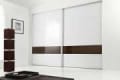
If you’re planning to acquire Sharps fitted wardrobes, one of the first few things that comes to mind is the cost to make such an acquisition. Generally, prices of these items can vary significantly. However, you should note that the more affordable end of the spectrum is most likely going to be around £750 to £900 per lineal metre, while mid range Sharps fitted wardrobes are usually within the range of £1400 to about £1600 per lineal metre. And finally, the high end customized Sharps fitted wardrobe are possibly going to be within the range of £3000 to £3500 per lineal metre.
The price of the Sharps fitted wardrobes is mainly determined by the fitted wardrobe solution your opt for. So let’s look at the estimated price range of Sharps fitted wardrobes depending on the styles you want for your home or property.
✓ There are the stylish, mordern sliding doors Sharps fitted wardron=be with mirrors that’ll make your room feel a lot bigger. If the type you opt for possesses three sections, then you’ll should expect to pay a price within the range of £2800 to about £3600 to have it fitted depending on the size of the room as well as the chosen finishes.
✓ Handcrafted, bespoke fitted bedroom wardrobe. This will cost about £2500 to £2900 with simple design details but the price can increase with ornate features like mouldings etc.
✓ Large bedroom 3m 80ccm three sections six door. This normally features finishes on both the interior and exterior as well as hanging space for clothes. It’s usually around £4900 or more.
✓ Simple two section closet. The price of this fitted wardrobe is usually within the range of £3200 to about £3500, but it could also be more depending on the design details you wish to implement.
How To Put Up Plasterboard
Putting up a plasterboard is a vital process when it comes to home renovations. However as daunting as it may seem, with a good guide and regular practice you can master the skill within a small period of time. If you lack proper training and experience, we’d recommend you hire a seasoned professional plasterer for help so as to get the best result and also avoid additional costs due to possible damages.
Putting up plasterboard is way quicker than wet plastering and also significantly reduces the drying time that can slow down your renovation plans. With a plasterboard, you can delve straight into the decorating stage and achieve a smooth finish. Below are the steps required to put up a plasterboard.
• The first step is cutting the plasterboard to shape which be one of the most challenging parts of the process. This is because you’ll need to fit the board around things such as plug sockets and window sills. As a result, this involves cutting complex shapes rather than just a simple straight line. To get this done, simply mark out the cut required with the use of a tape measure, combination square and spirit level for a better precision. Once done, you can then use a plasterboard pad saw to cut along the marked spots.
• After you made the required cuts, the next step is putting up the plasterboard. And depending on where the boards are going to be put, this could be a very challenging task. If you’re going to put the boards on the ceiling or somewhere very high up, you’d probably need an extra pair of hands for help. To get this done, use the appropriate screws to secure the boards in place if you’re installing them directly on studs. However, if you’d be fixing them onto bricks or blocks, a drywall adhesive is your best bet.
So you’ve identified the type of garden room you’d like to construct in your property, chances are, you’ve already worked out where to put it and can’t wait wait to start spending valuable time on it. It’s very understandable to be a little impatient with the whole idea considering the numerous benefits provided by a garden, but just before you proceed with your plans there’s the need to first check whether or not you’re going to need a planning permission.
Factors determining whether you’ll need a planning permission includes where you intend to place it, the size of the room, how it’s going to be used as well as your location.
Generally, most garden rooms do not require a planning permission as they are categorized as outbuildings. In other words, you’re permitted to construct one so far you comply with some specific rules and have permitted development rights at your home or in your area.
If you want to build your garden room under permitted development, you have to comply with the following rules:
✓ The garden room shouldn’t be in front of your home or property.
✓ The total area of your extensions, sheds and outbuildings ( which includes your garden room), must not go beyond 50 percent of the total land area surrounding your property.
✓ It must be a single storey that’s less than 3 metres high ( 4 metres for a dual pitched roof). And it must not go beyond 2.5 metres in height if the structure is within 2 metres of your boundary.
✓ The eaves must not go beyond 2.5 metres above ground level.
✓ It must not feature a balcony, veranda or any raised platform
✓ It must not be a self contained living accommodation.
You should note that if your home is a listed building or you happen to live in a designated area, then you might not have permitted development rights.
Storage space is a major consideration for most home buyers and even more so, when there’s the presence of fitted wardrobes. Fitted wardrobes can be installed in just about any room in the house and even in rather obscure places such as under the stairs, inside a loft, around chimneys as well as into alcoves. As a result, they’re important assets to have as they can go a long way to increase the value of your home or property.
Fitted wardrobes are usually made from various types of woods as well as wood finishes. Typically, they’re installed with either sliding or hinged doors depending on the space as well as the styling you opt for. Fitted wardrobes can be personalized through the addition of elegant features such as custom lighting, mirrors as well as internal extras like pull out shoe racks and pull down hanging rails.
For high end customized fitted wardrobe like Sharps, the best quality, most practical and also robust materials are being incorporated. They make use of the following materials given below:
✓ Fibreboard. This is a modern material that’s used for its ability to produce a smooth routed and detailed design. It’s also very solid and robust which makes it perfect for large furniture pieces as they don’t warp or dent. What’s more? Fibreboards meets the European forestry sustainability standards and it also allows for the board to be profiled with a top notch finish.
✓ Particleboard. This material is used for the parts of the furniture which will normally be cut in your home like facings and side panels. Due to it’s lightweight, they’re very easy to cut and doesn’t produce as much dust as other materials. The material is also a highly controllable contemporary material which can be precisely cut arounf skirting boards, covings as well as period features to ensure a perfect fit.
The periods at which noisy work is permitted do vary across the nation because the Control of Pollution Act 1974 provided Local Authorities with the authority to regulate noise from construction sites and similar areas. At the same time as these do differ across unalike councils, the average hours throughout which noisy work is tolerable is usually between 8 am and 6 pm from Monday to Friday. This is usually based on the impression of ‘noisy work’ being carried out, so labours could start earlier to prepare things for the day but then not start carrying out their work until 8 am.
On Saturday’s builders are usually allowed to work between 8 am and 1 pm, but this can differ to some extent with different councils. It does mean that workers can start at the identical time as the rest of the week, but they are generally required to finish a lot prior. On Sundays and Bank Holidays there is not as much of detailed direction on hours, but most councils say that there should be no noisy work taking place. Although these are decent strategies, it is worth examining your Local Authority website as they can change slightly. Noisy work is commonly described as ‘noise audible at the site boundary’ and it may be the case that workers are there outside these hours but are setting up before carrying out noisy work.
Local Authorities also recognise that now and then it is unescapable to work separately to these hours, such as work on railway tracks that must be done when trains are not running. Though, local councils do have the authority to serve an announcement on individuals carrying out building or demolition works and tell them how the work should be carried out to evade a possible lawful noise irritation.
Over the years, more and more home and property owners are beginning to realize the huge benefits that can be derived from loft insulation being a worthwhile investment. It’s quite worrisome the way in which energy bills have soared over the past 10 years and loft insulation is a considerable affordable energy efficiency measure that can go a long way to help increase your home’s energy savings.
As far back as the 1980’s, the standard when it comes to insulation thickness was 25 mm to 50 mm which was, at the time, considered to be sufficient. However, building regulations have changed the norm that now states that a new build needs to possess 270 mm of insulation in the loft in order to achieve the required u-value of less than 0.16/m2k based on the standard rock wool or sheep wool insulation.
Generally with loft insulation, there’s a law of depreciating returns which implies that the first couple of insulation centimetres will save you many times the cost of the installation, however an extra layer or centimetre is going to add less value to the point where it’ll no longer be wise or worthwhile to add any further centimetre. Therefore, with cheaper energy prices 30 years back, that additional couple of centimetres was not just worthwhile, but with the recent alarming rises in costs of fuel, that additional £10 savings per year has all of sudden changed to £30 which makes it become a lot more attractive.
If you already have 270 mm of loft insulation, regardless of the material you’re looking to add you’re most likely not going to benefit from a top up. The cost of the materials and installation will definitely be too high for the couple of pounds it’ll save you per year.
Adding a garden room to your property is a great way of creating an additional space within your home without having to invest heavily in large house extension projects. And not only does it expand your living space, but it’s also a way to add good value to your home or property. With the various benefits offered by a garden room, most individuals are usually surprised with just how affordable the living space can be. However, just like any other home improvement, the price of a garden room is influenced by a wide range of factors. These factors include the design you opt for whether standard or customized, the size of the garden room, the materials used, the number of fixtures and fittings you want as well as any other special design feature you require.
Asides from the money needed to put up the structure, there are also some common extra cost that’ll also be expended for both the interior and exterior of the living space. For instance, there are some furnitures and fittings that you’d like to put in your garden room and these will also form part of the overall cost. There’s also the electrical connections cost and this will vary depending on the distance of your room, the cables to be used as well as your electrician. For this part, you can expect to spend anything within the range of £850 to £1200 and since it’ll be used all year long, it’ll also require appliances for heating, insulation, electricity and ventilation.
Generally, the overall cost you should be expecting to pay for a modular build garden room will range between £10,000 to £40,000.
Answer a few quick questions to help us match you with the right Builder
Receive no-obligation quotes from 4 Builders working in Lockerbie.
Compare prices, customer reviews and services, and hire the right Builder.
View our open Builder jobs near you
Join today

