


02 Oct
Wall Rendering
Swansea - SA6
Enquiry from: David R
Start Date: Immediate
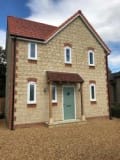
Front wall of house need checking and replastering below the front window


Over 9 reviews & an average rating of 4.5/5 stars, you'll find the right pro
Use the shortlist button to select up to 4 tradespeople, enter your project details and press send
Get up to 4 quotes from local Builders near you



Swansea - SA6
Enquiry from: David R
Start Date: Immediate
Front wall of house need checking and replastering below the front window
Swansea - SA8
Enquiry from: Ali R
Start Date: Immediate
We have a double garage attached to our house. We need it to be partitioned into two rooms, one kept as a garage/storage room and the other converted into a living area (plus bathroom if possible). Th
Carmarthen - SA31
Enquiry from: Gurpreet G
Start Date: Immediate
New Shutter fitting and stairs
Swansea - SA1
Enquiry from: Bernard D
Start Date: 1 to 3 months
Change small area of quarry tiles to match brick path
Ammanford - SA18
Enquiry from: Gareth T
Start Date: Immediate
Quote for loft insulation
Swansea - SA1
Enquiry from: PHILLIP J
Start Date: Less than one month
They are considering a couple of projects at the moment
Neath - SA10
Enquiry from: Web M
Start Date: Immediate
Hello we have some damp in an upstairs bedroom external wall would like to know if you can advise what issue is and quote for works
How much do Builders cost? Prices for Builders in 2026 can fluctuate relying on the sort of work that you need to have carried out in your residence.
Are you planning to erect a new house or structure? If yes, then you’d probably want to know just how much it’ll take to get the project over the line to help you set a budget and start to plan. Building a new house is requires huge financial investment and as a result, there’s the need to carry out your due diligence before you proceed. In this post, we’re going to give you an insight into the prices charged by builders to erect a new home or structure.
First and foremost, like every other home project, the price charged by builders to construct a new house or structure depends on a wide range of factors. These factors include the size, location, accessibility as well as qualifications of the builders you wish to employ just to mention a few. For instance, you’d expect the cost of building two-storey in London to be a lot more expensive than the price of a one-story building in Scotland. However, we’ll try our best to give you an idea of the price range you can expect to incur to complete your project.
In general, a builder will charge within the range of £10 to about £15 per hour on the average. For small building projects which includes wall and foundations repairs, a builder will typically charge about £11 per hour. However, the price charge will depend on the extent of the job due to the fact that simple tasks such as repointing only costs about £10 per hour, while laying new foundations can cost up to £15 per hour.
The table shows the types of work that Builders typically do and the average cost range of these tasks. Some tasks take longer to finish than others so prices do fluctuate by job.
View our Builder cost guide View our Builder adviceIf you’re currently experiencing some structural issues with your building or property and you’ve heard a thing or two about the several benefits associated with getting underpinning done, you may be wondering if underpinning might just be the answer to your worries. Well, one thing you should when it comes to underpinning is the fact that, while there are some structural issues that may actually warrant an underpinning job, there are also some situations that can not be fixed by underpinning. In this post, we’re going to consider the events whereby underpinning of your house will be required. Let’s take a look!
First and foremost, you should know that underpinning isn’t required for issues related to slab heave. Footing movements which are likely to reverse normally occur when the content of the soil moisture changes unevenly which gives rise to slab heave. This movement results for a reversible effect.
Generally, underpinning is done to remedy problems related with the movement of the footings of a building or property, but as stated above – not all movements require underpinning. So, when is underpinning required? More often than not, a situation that’s resolved by underpinning is the event whereby the footings of a building or structure drops or subside as a result of some reasons that are irreversible. For example, footing movements caused by a footing set on a soft or loose soil which may be irreversible.
In the event whereby the footings of your house haven’t been installed as deep as required during the initial construction, then you will need to have your building underpinned to make it more stable. If you’re also looking to increase the load on your foundation like adding another storey, you may also need to have your house underpinned to support the extra weight added.
Typically, loft conversions do not require planning permission except in certain situations. They’re usually covered under what’s known as Permitted Development. Certain building works like loft conversion, rear extension and conservatories are granted planning permission by local authorities. Permitted Development, however, gives you a free range to improve your home without having any issues from the councils or regulations. Before your planned loft conversion can be covered under Permitted Development, there are some certain criteria that must be met. This criteria includes the following:
✓ The extension must not go beyond the existing slope of the roof at the front of the house.
✓ The loft space converted must not go beyond 40 cubic metres in a terraced house.
✓ The roof’s height must not be increased by the extension.
✓ The loft space converted must not reach beyond 50 cubic metres in a detached or semi detached house.
✓ The plan for the extension mustn’t involve structures like balconies, verandas or anything other structures of this nature.
✓ The roof extension should be positioned as far back as possible or at least 20cm from the existing eaves.
✓ The side that faces the window openings should be at least 1.7m beyond the floor and the windows should also be obscured.
✓ The roof extension must not overhang the existing roof or wall of the house.
✓ The materials that are to be used must be similar or the same to the materials that has already been used on the house’s exterior.
However, you should bear in mind that there are some properties that are exempt from Permitted Development. Examples of these type of properties include conservation areas, Areas Of Outstanding Natural Beauty and World Heritage sites. Permitted Development does not also provide coverage for listed buildings.
Over the years, more and more home and property owners are beginning to realize the huge benefits that can be derived from loft insulation being a worthwhile investment. It’s quite worrisome the way in which energy bills have soared over the past 10 years and loft insulation is a considerable affordable energy efficiency measure that can go a long way to help increase your home’s energy savings.
As far back as the 1980’s, the standard when it comes to insulation thickness was 25 mm to 50 mm which was, at the time, considered to be sufficient. However, building regulations have changed the norm that now states that a new build needs to possess 270 mm of insulation in the loft in order to achieve the required u-value of less than 0.16/m2k based on the standard rock wool or sheep wool insulation.
Generally with loft insulation, there’s a law of depreciating returns which implies that the first couple of insulation centimetres will save you many times the cost of the installation, however an extra layer or centimetre is going to add less value to the point where it’ll no longer be wise or worthwhile to add any further centimetre. Therefore, with cheaper energy prices 30 years back, that additional couple of centimetres was not just worthwhile, but with the recent alarming rises in costs of fuel, that additional £10 savings per year has all of sudden changed to £30 which makes it become a lot more attractive.
If you already have 270 mm of loft insulation, regardless of the material you’re looking to add you’re most likely not going to benefit from a top up. The cost of the materials and installation will definitely be too high for the couple of pounds it’ll save you per year.
We all need a reliable place to keep our clothes or dresses, however in situations where a standard freestanding wardrobe just won’t cut it, there is the need to put into consideration a fitted wardrobe. For instance, if you have a bedroom with acloves and sloping ceilings, you’ll discover that the standard-size, freestanding wardrobe just won’t be suitable as they’ll appear strange and look very much out of place while also not being able to put the available space to efficient use. In this regard, a fitted wardrobe will do a much better job as it’s a lot more suitable for mostly all types of bedrooms. So if you’re thinking about having one fitted in your bedroom, you’d probably want to know the just how much it’ll cost. In this article, we’re going to provide you with a good insight on fitted wardrobes cost.
Generally, the prices of fitted wardrobes depend largely on a number of factors. These variables include both the quality as well as the type of included fittings. The types of fitted wardrobes with their estimated price range are given below:
✓ Bespoke fitted bedroom wardrobe. This type can range between £2500 to about £3000 depending on the design details. The extras include mouldings, columns and panels.
✓ Simple two section closet. This type can range between £2500 to about £3200 depending on the design.
✓ Large bedroom, three section, six doors. This type of fitted wardrobe features both interior and exterior finishes alongside drawers and hanging space. The cost normally ranges between £4400 to £4900.
✓ Contemporary, sliding door fitted wardrobe. This type usually features three sections alongside door mirrors to make the bedroom appear larger. The cost normally ranges between £2800 to £3600.
Well, just like many other team work, a bricklayer is only as good as his supporting cast. And a hard-working labourer should be able to keep three bricklayer gangs happy. But even when he gets to serve just one bricklayer, the site conditions and nature of the wall can also play a huge role in determining the number of bricks that can be laid within 24 hours.
With the best possible site condition, hard-working labourer and best scenario with no pillars, no face brick, long straight wall and no wall ties, a well trained bricklayer should be able to lay within a range of 800 to 1100 bricks all day long. However, you rarely get walls like this as there is always going to be some corner or curve somewhere which usually takes some time to get right. Furthermore, once the bricklayer has laid up to 5 feet, there’ll be a need to get some lift. From that point onwards, the job understandably gets slower and tougher - meaning there’ll most definitely be a face brick.
In addition, there are multiple other factors that can affect the number of bricks that can be laid in a day. Sometimes its the complex designs or weather that’ll determine the daily rate.
With the aforementioned factors and more realistically, on a good day and great site, an expert bricklayer should be able to lay about 500 to 800 bricks in a day. This is generally a very good target, but of course you never can tell with the reasons above and other factors that are simply beyond the control of the bricklayer. If you have a project and want it completed as soon as possible, you can pay the bricklayers based on the number of bricks laid to increase their efficiency.
It shouldn’t do. Most companies will do all the interior work first, and the last job to do will be creating the opening from the house to the conversion. A reputable company will make sure they cause as little disruption as possible during this time.
There are two main types of cladding. The first is material cladding, which refers to layers of a material that are attached to the external walls. The material used could be timber, PVC, stone, or other materials. The second type of cladding is rendering, where a coat of plaster is applied to the wall.
Rendering a house comes with a plethora of benefits. Not only is it able to brighten up houses that looks tired especially those with damaged brickwork or having discoloured render, but its also the final step of external wall insulation.
If you own a 3 bed house, you’ll probably want to know just how much it’ll cost to have it rendered. If yes, then you’ve come to the right place! In this article, we aim to look at the cost of rendering a house using the standard 3 bed house as an example. Firstly, it should be stated that there are numerous factors that affects the price of a rendering a house which includes the rendering type, the size of the house, the ease of access, the prep work required, whether or not scaffolding will be needed as well as your location and the quality of the contractor your hire. Out of all these factors, the most significant variables are probably the type of rendering you go for and the size of the house.
There are three types of render and the one you opt for will play a key role in the price of your 3 bed house. In this article, we’re basing our cost estimate for a 3 bed house (3 bed detached) on the size ranging from 110 per square metre to 160 per square metre. Now let’s look at the cost per square metre of each rendering type.
✓ The silicone or acrylic thin coat render is usually the most expensive option of the lot due to the fact that they’re the newest and also the best type of render. This rendering type usually costs within the range of £45 to about £75 per square metre.
✓ The monocouche modern through coloured rendering type are able to offer a decorative and waterproof finish for walls. They usually costs within the range of £35 to about £70 per square metre.
✓ Sand and cement render type is the traditional type which has been applied for several years. This rendering type usually costs within the range of £20 to about £45 per square metre.
Answer a few quick questions to help us match you with the right Builder
Receive no-obligation quotes from 4 Builders working in Llanelli.
Compare prices, customer reviews and services, and hire the right Builder.
View our open Builder jobs near you
Join today

