


23 Apr
Building Maintenance
Cardigan - SA43
Enquiry from: Colin L
Start Date: Immediate
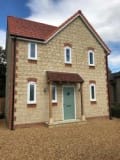
Repair to pebble dash on chimney and repainting


Over 3 reviews & an average rating of 4.1/5 stars, you'll find the right pro
Use the shortlist button to select up to 4 tradespeople, enter your project details and press send
Get up to 4 quotes from local Builders near you



Cardigan - SA43
Enquiry from: Colin L
Start Date: Immediate
Repair to pebble dash on chimney and repainting
How much do Builders cost? Prices for Builders in 2026 can fluctuate relying on the sort of work that you need to have carried out in your residence.
Are you planning to erect a new house or structure? If yes, then you’d probably want to know just how much it’ll take to get the project over the line to help you set a budget and start to plan. Building a new house is requires huge financial investment and as a result, there’s the need to carry out your due diligence before you proceed. In this post, we’re going to give you an insight into the prices charged by builders to erect a new home or structure.
First and foremost, like every other home project, the price charged by builders to construct a new house or structure depends on a wide range of factors. These factors include the size, location, accessibility as well as qualifications of the builders you wish to employ just to mention a few. For instance, you’d expect the cost of building two-storey in London to be a lot more expensive than the price of a one-story building in Scotland. However, we’ll try our best to give you an idea of the price range you can expect to incur to complete your project.
In general, a builder will charge within the range of £10 to about £15 per hour on the average. For small building projects which includes wall and foundations repairs, a builder will typically charge about £11 per hour. However, the price charge will depend on the extent of the job due to the fact that simple tasks such as repointing only costs about £10 per hour, while laying new foundations can cost up to £15 per hour.
The table shows the types of work that Builders typically do and the average cost range of these tasks. Some tasks take longer to finish than others so prices do fluctuate by job.
View our Builder cost guide View our Builder adviceThe periods at which noisy work is permitted do vary across the nation because the Control of Pollution Act 1974 provided Local Authorities with the authority to regulate noise from construction sites and similar areas. At the same time as these do differ across unalike councils, the average hours throughout which noisy work is tolerable is usually between 8 am and 6 pm from Monday to Friday. This is usually based on the impression of ‘noisy work’ being carried out, so labours could start earlier to prepare things for the day but then not start carrying out their work until 8 am.
On Saturday’s builders are usually allowed to work between 8 am and 1 pm, but this can differ to some extent with different councils. It does mean that workers can start at the identical time as the rest of the week, but they are generally required to finish a lot prior. On Sundays and Bank Holidays there is not as much of detailed direction on hours, but most councils say that there should be no noisy work taking place. Although these are decent strategies, it is worth examining your Local Authority website as they can change slightly. Noisy work is commonly described as ‘noise audible at the site boundary’ and it may be the case that workers are there outside these hours but are setting up before carrying out noisy work.
Local Authorities also recognise that now and then it is unescapable to work separately to these hours, such as work on railway tracks that must be done when trains are not running. Though, local councils do have the authority to serve an announcement on individuals carrying out building or demolition works and tell them how the work should be carried out to evade a possible lawful noise irritation.
If you’re planning on adding a house extension to your property, you’d probably be worried about whether or not your proposed extension would require a planing permission. Well, it may be relieving to know that not every house extension project would require a formal consent, and in fact, several extensions are covered by the permitted development rights. Not only can this save you a considerable amount of time especially at the project’s planning phase, but it’ll also save you money on the application fee. In the UK, single storey extensions to the house’s rear can be 3 metres deep for both semi detached houses and terraces or 8 metres deep for detached homes.
So how do you know when you’d require a planning permission for your home extension? Well, if your extension plan fits these criteria explained below, then your project is most likely going to be allowable as a permitted development.
• Extensions, which includes previous additions, must not go beyond half of the original house’s total surrounding land area.
• The main elevation, or side elevation where it fronts the highway, must not be extended forward.
• For single storeys, the rear additions must not extend more than the original house’s rear by more than 3 metres in both semi attached homes and terraces (4 metres for detached houses).
• Extensions to the side must be a single storey with a height not exceeding 4 metres and not going beyond 50% of the original house’s width.
• Extensions hat within 2 metres of a boundary should have a eaves height not more than 3 metres.
• Multi storey addition must not extend beyond the original house’s rear wall by a maximum of 3 metres or 7 metres of the boundary opposite the rear wall.
• Permitted development rights do not apply in listed buildings or designated areas.
In general, you won’t need planning permission to install soundproofing. If you are installing soundproofing against a shared wall, you will usually need to follow the rules and restrictions set out in the Party Wall Act. In listed buildings and conservation areas, there may be extra restrictions on soundproofing.
Some individuals who have been in the construction department for many years may not be qualified, that is, they may not have undergone an apprenticeship and/or trade certificate courses, but they might still be very skilled at their work. However, anybody can pick up a sledgehammer and demand themselves a builder lacking any skills or training. The wise thing would be to ask the builder coming to your house about what qualifications they have and what training they have undergone.
Licensing of building practitioners
You can now check if your builder or tradesperson is a licensed building practitioner by using an electronic public register which has a record of every registered builder. Being licensed provides you with an assurance that the builder who is about to do your work has proven his shill to the government and earned his right to be a practitioner. If you wish for certain important building and design work on your home it is imperative that you hire a licensed practitioner, the act is very common when you compare the scenario with when you have to call a plumber or an electrician regarding any work.
In order to become a builder in the UK, you must complete an apprenticeship or an NVQ. NVQ is another popular route to becoming a builder. You can also get your NVQ even when you are working as an apprentice. You can also make it based on any recognised overseas qualification.
All associates maintain a Code of Practice and Conduct which sets the standards for all stages of the building procedure. The Code requires builders to:
• Submit quotes on projects for which they have time.
• Securing the contract with a sufficient insurance cover.
• Maintain honesty and integrity at all times.
• Obey the law and industry standards of conduct.
All members of the construction association must also follow a code of conduct. As a consumer, if you think your builder has breached the Code of Conduct or the Code of Ethics, you can file a written against him or her.
Adding a garden room to your property is a great way of creating an additional space within your home without having to invest heavily in large house extension projects. And not only does it expand your living space, but it’s also a way to add good value to your home or property. With the various benefits offered by a garden room, most individuals are usually surprised with just how affordable the living space can be. However, just like any other home improvement, the price of a garden room is influenced by a wide range of factors. These factors include the design you opt for whether standard or customized, the size of the garden room, the materials used, the number of fixtures and fittings you want as well as any other special design feature you require.
Asides from the money needed to put up the structure, there are also some common extra cost that’ll also be expended for both the interior and exterior of the living space. For instance, there are some furnitures and fittings that you’d like to put in your garden room and these will also form part of the overall cost. There’s also the electrical connections cost and this will vary depending on the distance of your room, the cables to be used as well as your electrician. For this part, you can expect to spend anything within the range of £850 to £1200 and since it’ll be used all year long, it’ll also require appliances for heating, insulation, electricity and ventilation.
Generally, the overall cost you should be expecting to pay for a modular build garden room will range between £10,000 to £40,000.
So you’ve identified the type of garden room you’d like to construct in your property, chances are, you’ve already worked out where to put it and can’t wait wait to start spending valuable time on it. It’s very understandable to be a little impatient with the whole idea considering the numerous benefits provided by a garden, but just before you proceed with your plans there’s the need to first check whether or not you’re going to need a planning permission.
Factors determining whether you’ll need a planning permission includes where you intend to place it, the size of the room, how it’s going to be used as well as your location.
Generally, most garden rooms do not require a planning permission as they are categorized as outbuildings. In other words, you’re permitted to construct one so far you comply with some specific rules and have permitted development rights at your home or in your area.
If you want to build your garden room under permitted development, you have to comply with the following rules:
✓ The garden room shouldn’t be in front of your home or property.
✓ The total area of your extensions, sheds and outbuildings ( which includes your garden room), must not go beyond 50 percent of the total land area surrounding your property.
✓ It must be a single storey that’s less than 3 metres high ( 4 metres for a dual pitched roof). And it must not go beyond 2.5 metres in height if the structure is within 2 metres of your boundary.
✓ The eaves must not go beyond 2.5 metres above ground level.
✓ It must not feature a balcony, veranda or any raised platform
✓ It must not be a self contained living accommodation.
You should note that if your home is a listed building or you happen to live in a designated area, then you might not have permitted development rights.
Do you want to inject a new lease of life into your home or property, or transform it into a more modern style that better suits your taste? Or perhaps you’re only looking to add more value to your property to enable you sell for a profit in the nearest future. Regardless of your purpose, determining the cost of your home renovation can be incredibly difficult. However, you can still obtain a reasonable budget for the project with proper planning as well as preparation. It’s almost impossible to get an exact figure for any home renovation cost, however, this article aims to give you a good idea of cost range to enable you make informed decisions.
The cost of renovating a house can vary significantly depending on a wide range of factors. Some costs are fixed while others may vary greatly. As a result, if you want to have a more exact figure, you’ll have to call in a professional beforehand to give you an idea of how much they’ll charge. Below are some of the most significant costs you’ll most likely face during property renovation.
✓ Administrative cost. Asides from material and labour, the administrative costs is another important cost you’ll need to factor in. The first thing here is usually insurance, this is because all regular building insurance policies does not cover large scale renovation projects. So if what you’re planning is a huge structural change to your property, then it’s more likely that it won’t be covered by your buildings insurance policy. In this event, you’ll have to take out a specialist renovation insurance.
✓ Planning permission and property renovation. This is another potential cost you’ll have to factor in. Submitting a planning application in the UK usually ranges between £200 to £250.
✓ Adding an extension. Generally, a 4m by 5m extension would cost within the range of £30,000 to £40,000.
How To Repair A Pothole In Gravel Driveways
When the integrity of your gravel driveway is impaired not only does it have a negative impact on the curb appeal of your property, but also makes your driveway a danger zone. If your driveway needs to be repaired, you’d simply have to grab the bull by the horn and get it done - the sooner, the better to avoid the problem getting worse and to have your beautiful gravel driveway back as soon as possible.
The major cause of potholes in driveways is usually water, when it gets trapped beneath the surface of the driveway. Therefore, you may also want to enhance the drainage in the area as part of your repair. The repair process is quite simple for confident do-it-yourselfers, but if otherwise, then calling in a reliable professional will save you some time and extra money that can result from possible errors. So how do you repair gravel driveway potholes?
✓ Prepare the area. This involves removing all forms of debris from the pothole. To achieve this, you can rake, shovel or brush the loose stones, soil and other debris from the pothole.
✓ Fill the pot hole. Make use of a coarse gravel to fill up the pothole to a depth of about 3 inches beneath the driveway’s level. Upon the filling, simply tamp down the coarse gravel using a commercial tamper or any available homemade option. Once done, the final 3 inches to the surface of the gravel driveway should then be filled up with gravel which perfectly matches the colour and texture of the remaining driveway.
✓ Compact the patch. To achieve this in an easy and fast way, simply run your car’s wheel up and down over the repaired spot gently a couple of times. This will be enough to compact the patch and seal the pothole.
Answer a few quick questions to help us match you with the right Builder
Receive no-obligation quotes from 4 Builders working in Newport.
Compare prices, customer reviews and services, and hire the right Builder.
View our open Builder jobs near you
Join today

