

16 Oct
Insulation | External Wall
Pontypool - NP4
Enquiry from: Martin M
Start Date: Immediate
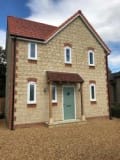
Advice and remedy to make water tight a stone clad Chimney breast and the whole front elevation of my house which is made from solid stone.


Over 28 reviews & an average rating of 4.7/5 stars, you'll find the right pro
Use the shortlist button to select up to 4 tradespeople, enter your project details and press send
Get up to 4 quotes from local Builders near you



Pontypool - NP4
Enquiry from: Martin M
Start Date: Immediate
Advice and remedy to make water tight a stone clad Chimney breast and the whole front elevation of my house which is made from solid stone.
Pontypool - NP4
Enquiry from: Martin M
Start Date: Immediate
mr requested quotes for house extension from a builder around pontypool. they are considering a couple of projects at the moment.call anytime to arrange appointment to discuss. the information below i...
Pontypool - NP4
Enquiry from: Alistair E
Start Date: Immediate
New front door and surround (1930s style arch)
Pontypool - NP4
Enquiry from: David P
Start Date: Immediate
Please would you give us a cost and lead-time for "Room in roof" trusses for our garage external dimensions 6.25M (w)x 6.45M (d) roof trusses to be 7.2M long (d) overhanging front of Garage by .75M ...
Pontypool - NP4
Enquiry from: Peter B
Start Date: Immediate
Loft and Roof insulations
Pontypool - NP4
Enquiry from: Sylvia D
Start Date: Immediate
Loft insulation and some boarding. Attic cleared already decontamination after pest infestation.
Pontypool - NP4
Enquiry from: Brian M
Start Date: Immediate
customer made enquiry for loft conversion quotes online. homeowner lives in pontypool area. please call to arrange appointment are you the property owner: owner of the property property type: detache...
Pontypool - NP4
Enquiry from: Fe'ao V
Start Date: Less than one month
customer made an enquiry for house extension and confirmed on the quotatis site they would like quotes from a builder.mr lives in the pontypool area and would like a call to discuss options.see below ...
Pontypool - NP4
Enquiry from: Johanna R
Start Date: 1 to 3 months
customer in the pontypool area made an enquiry a couple of projects including building maintenance.call anytime and arrange an appointment to discuss. below is some details about this project: are you...
Pontypool - NP4
Enquiry from: Ashley W
Start Date: Immediate
Price on joist and roof trusses
Pontypool - NP4
Enquiry from: Danielle T
Start Date: Immediate
customer has a insulation project they are looking to have done, specially they want quotes for cavity wall insulation. they are unsure of options so would like to discuss with a builder.confirmed int...
Pontypool - NP4
Enquiry from: Danielle T
Start Date: Immediate
insulation on outer walls and internal walls either side of neighbours are you the property owner: owner of the property property type: terrace how many bedrooms do you have: 1-2 do you currently have...
Pontypool - NP4
Enquiry from: Brian A
Start Date: Immediate
Customer visited the mygardeningprices.co.uk site and submitted an enquiry. Property type: Detached, Work description: Patio repair and repointing
Pontypool - NP4
Enquiry from: Elspeth S
Start Date: Immediate
I need an epc cert for another 2 bed house I am renting out in Blaenavon
Pontypool - NP4
Enquiry from: Kris W
Start Date: Immediate
external wall insulation are you the property owner: owner of the property property type: terrace how many bedrooms do you have: 3-4 bedrooms property age: 1930-70 please call to appoint
Pontypool - NP4
Enquiry from: Ruth E
Start Date: Immediate
Loft insulation update current
Pontypool - NP4
Enquiry from: Lester P
Start Date: Immediate
I need the flue swept on my log burning stove. Haven't had it cleanedsinceit was installed
Pontypool - NP4
Enquiry from: Louise T
Start Date: 1 to 3 months
Customer is currently in the process of looking for quotes to add a Single storey extension to their property. Are you the property owner: Owner of the property Property Type: Other Looking For: Singl...
Pontypool - NP4
Enquiry from: Louise T
Start Date: 1 to 3 months
Are you the property owner: Owner of the property Have you considered getting your windows replaced to match a new conservatory: Yes How many windows are you looking for: 5+ Windows Other Forms: House...
Pontypool - NP4
Enquiry from: Kirstin M
Start Date: Immediate
Would like to build a 3 bed flat pack home and would like some quotes or advise regarding costs. I don’t want to spend over £90,000 as I can buy a 3 bed home for that in my area. Thanks.
How much do Builders cost? Prices for Builders in 2026 can fluctuate relying on the sort of work that you need to have carried out in your residence.
Are you planning to erect a new house or structure? If yes, then you’d probably want to know just how much it’ll take to get the project over the line to help you set a budget and start to plan. Building a new house is requires huge financial investment and as a result, there’s the need to carry out your due diligence before you proceed. In this post, we’re going to give you an insight into the prices charged by builders to erect a new home or structure.
First and foremost, like every other home project, the price charged by builders to construct a new house or structure depends on a wide range of factors. These factors include the size, location, accessibility as well as qualifications of the builders you wish to employ just to mention a few. For instance, you’d expect the cost of building two-storey in London to be a lot more expensive than the price of a one-story building in Scotland. However, we’ll try our best to give you an idea of the price range you can expect to incur to complete your project.
In general, a builder will charge within the range of £10 to about £15 per hour on the average. For small building projects which includes wall and foundations repairs, a builder will typically charge about £11 per hour. However, the price charge will depend on the extent of the job due to the fact that simple tasks such as repointing only costs about £10 per hour, while laying new foundations can cost up to £15 per hour.
The table shows the types of work that Builders typically do and the average cost range of these tasks. Some tasks take longer to finish than others so prices do fluctuate by job.
View our Builder cost guide View our Builder adviceIf you’re about to start your house extension project and wondering how long it’ll take to complete, you’re not alone! This is one of the most common questions that’s asked by homeowners in the UK and across the globe. However, there’s no single precise answer for this as there are multiple factors that’ll affect the length of time it’ll take to complete your home extension. These factors include the size of the construction work as well as whether you’re planning to live in the house after completion or otherwise.
For a single extension, the length of time it’ll take to complete the home extension is normally up to 3 months. So let’s break this down:
As you would have expected, the first step to be taken is the preparation of the site. You start by digging out the footing and preparing the foundation which should take about 2 weeks. This is then followed by the damp course installation as well as the fitting of any drains needed around the extension which will also take a further 2 weeks.
The 5th week will be for the construction of the external walls as well as putting the blockwork in place for the provision of the cavity wall insulation. A further 2 weeks after this, will be dedicated to the installation of the roof structure and the internal walls.
It’s at this junction that you’ll call on your weather proof installer to fit in your uPVC windows and doors. Once done, the gas fitters and electricians will have to be on site to connect power to your new extension building. Subsequently, this will be followed by internal wall plastering as well as breaking through your main house. Once the plaster is dried, decorations completed and all the required furniture and units installed, the extension is ready for use.
Render serves two basic functions. One is it’s protective qualities as render acts as waterproof for the wall which enables them breathe by allowing water vapour move from the inside to the outside of the structure while also working to prevent water or rain from finding its way inside the structure. While the second function is the decorative qualities as render is able to provide the structure with a fine finish and colour to make the building a lot more appealing and correcting faults in line and level in the masonry.
If you wish to apply render on your external wall, you’d probably be wondering just how thick the render should be to perfectly serve both of functions. In this article, we’re going to take a look at just that!
For a render thickness, the British Standard Wind Driven Rain Index has come up with 4 ratings which include Sheltered, Moderate, Severe as well as Very Severe. An area with Very Severe rating include South West England. This rating implies that the thickness of the render in this area should be increased to at least 20mm for a direct one coat render applications as well as 5 to 6 external wall insulation base coat applications. And if you happen to reside within one mile of the coast, it’s strongly recommended you incorporate an extra repellent protection like Paraguard AG from Parex.
In general, render that’s prepared on site with cement and sand should be have a minimum of 20mm to 25mm thickness. Although, it should be noted that the quality of the render is based on quality of the sand incorporated, the design mix as well as being largely dependent on how good the mixing technique from the applicator is. The most common reasons why traditional renders fails is due to both poor mixing ratios and low quality materials used.
It’s a fact that a garage conversion can go a long way to add a resale value to a home or property. Therefore, in the event whereby your home already has parking facilities in place you can put into consideration converting your garage into a habitable space which will add to the sales price of the house by adding an extra room or increasing the floor space. So exactly how much does a garage conversion add to your home’s resale value?
Garage conversions can be seen as a cost effective means of adding more space to your house. However, not only does it add space, but can also add up to 20 percent to the value of your home. It’s also a way of adding an extra living space to your home that’s not under strict planning complication unlike the alternatives. Generally, if your garage happens to be connected to your house, the cost of converting it to another room should between £10,000 to £20,000. As a home owner, converting your garage into an extra room can help increase the value of your home by up to £45,000. And if you’re to comply with the set rules under permitted development rights, you may not even require to submit a planning application.
In the event whereby your garage is detached from your house or perhaps you live in a flat ( or maisonette) or a listed building , you’ll need to apply to the local authority before commencing your project. It’s always wise to check if there aren’t any planning conditions attached to your home or property.
The answer is yes! Houses whose external walls have been insulated are more valuable than their uninsulated counterparts. And not only does it add to the value of a home, but also significantly reduces the amount of electricity consumption. This is a major turn on for potential investors which implies a greater demand and ultimately, a higher price. The real estate market is a very dynamic one which can be hard to predict at any particular time. The frequent changes in price are usually down to factors beyond the owners’ control, but if you’re looking to put up your house for sale in the near future, it would be a wise decision to consider ways in which you can increase its value. While renovating each room can be on the expensive side, a great solution would be insulate the external walls.
An insulated house is one that is well secured against the harmful impact of extremely high or low temperature, humidity and other atmospheric factors. Hence, the reason why a house with external wall insulation has a greater value which you would not want to miss out on. What’s more? You’ll get a great thermal insulation with the top notch materials like foamed polystyrene, high quality renders, mineral wool or polyurethane.
With an external wall insulation, you know the transaction will always be favourable on both ends. You get to smile to the bank, while the buyer also gets to enjoy great value for every penny spent. To employ the services of a reliable external wall insulation expert, simply conduct an in depth research from family and friends, online and other sources. Go through their online reviews and ask questions to become more familiar with the process and its value-adding potentials.
Many types of loft are suitable for a loft conversion. In general, you will need at least 2.3 metres of headroom in your existing loft. This is to make sure there is enough headroom after the conversion. Speak to a conversion specialist about the probability and possibility of doing this in your house.
If you want to install an external wall, it is only wise to consider whether or not a planning permission is required in order to avoid a hefty fine. In a great kudos to the government and a welcome relief to home and property owners, the installation of external wall insulation is seen as an “improvement to the house and not an “extension or an “enlargement. Ultimately, this implies that external wall insulation fitting is to be done under permitted development and a planning application may not be required. However, like many other regulations, there are also exceptions to this rule and the main one is if the activity changes the appearance of your property. Properties such as a listed building having tighter regulations may pose some issues. As a result, we’d advise you to consult your local authority to ensure that there’s no fast rule to this topic before commencement of the external wall insulation project.
At the moment, according to the Government Building Regulations, the surface of the entire wall is to be improved to existing standards if the area to be insulated exceeds 25 percent of the wall. In normal situations this is usually the typical case, however to prevent avoidable fines and other possible punishments, it is always best to reach to your local authority and check out the rules guiding external wall insulation in your constituency. Furthermore, since external wall insulation is not a task that’s recommended to be done by yourself, you can also ask the professional external wall insulation fitting company for the applying rules before proceeding. As a good professional, the company should have a better knowledge of the rules and regulation guiding its activities.
Are you considering converting your garage into a more usable space in your home? If yes, then you’d probably want to know if you’ll require building regs before converting the garage. The answer to this question is yes. Although you may not require planning approval to convert your garage into a more usable space, but you’d usually need approval under the Building Regulations.
When re-structuring your garage into a habitable space, the following should be taken into consideration: structural alterations, ventilation, moisture proofing, insulation, fireproofing, escape routes as well as the submission of a building building notice or full plan application to the local council in order to inform them about the planned project.
• Walls
You’ll require an approval if you plan to infill the garage door with a window and a new wall. This is because the garage may have been built of a shallow slab which implies that a new foundation would be needed for the new wall construction.
• Floor
Even though there’s a high possibility that the garage floor is strong enough for domestic use since its designed to withstand the weight of vehicles, you may however need to upgrade to make sure it suitable for both thermal insulation and damp proofing. In addition, there may also be the need to to alter the floor level in such a way that it matches that of the remaining parts of the house.
• Ventilation
According to the Building Regulations requirements, there’s a need for adequate ventilation for each individual rooms which includes garage conversions for general health purposes. What’s going to determine the ventilation level that’ll be required is the frequency at which the room is used. Ventilation can be provided through purge or simply opening the window or via trickle ventilation.
The short and simple answer is yes, fitted wardrobes add value to any home or property. Owning a home is mostly the single most expensive asset that a person can possess. And as a result, your home is a very special asset that you’d want to make conducive and maintain to the best of your ability. To retain the value of your home or even add to it, you have to learn how to maximize its potentials using different means. In the UK, a big issue for most households is usually the lack of storage space and most especially, the quickly shaped bedrooms which is really affected with storage problems. It almost always seems like there isn’t enough space to keep our clothes as well as the never-ending portfolio of accessories, devices and gadgets. Therefore, an extra or excess usable room inside a home is always a premium.
In other words maximizing the space you have, especially the unused ones, is a great way to add value to your property. Custom made fitted wardrobes are a great means to making the most out of the space within your home and are also designed to last for several years. Unlike the freestanding wardrobes, modern and fitted wardrobes are not only visually appealing, but they’re also customizable to fully maximize every inch of space within the room. As a result, they’re the ideal solution especially for loft rooms where the bedroom may be slope or oddly shaped to make the best out of the space available.
Potential investors are always eager to invest in homes with enough space that are well maximized. Therefore, a fitted wardrobe will not only help you create a better demand for your home at the point of selling, but it’ll also go a long to increase its value in so many ways.
Answer a few quick questions to help us match you with the right Builder
Receive no-obligation quotes from 4 Builders working in Abersychan.
Compare prices, customer reviews and services, and hire the right Builder.
View our open Builder jobs near you
Join today

