


02 Oct
Wall Rendering
Swansea - SA6
Enquiry from: David R
Start Date: Immediate
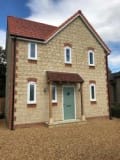
Front wall of house need checking and replastering below the front window


Over 12 reviews & an average rating of 4.6/5 stars, you'll find the right pro
Use the shortlist button to select up to 4 tradespeople, enter your project details and press send
Get up to 4 quotes from local Builders near you



Swansea - SA6
Enquiry from: David R
Start Date: Immediate
Front wall of house need checking and replastering below the front window
Port Talbot - SA13
Enquiry from: Jennie W
Start Date: Immediate
Foundation for conservatory
Swansea - SA8
Enquiry from: Ali R
Start Date: Immediate
We have a double garage attached to our house. We need it to be partitioned into two rooms, one kept as a garage/storage room and the other converted into a living area (plus bathroom if possible). Th
Swansea - SA1
Enquiry from: Bernard D
Start Date: 1 to 3 months
Change small area of quarry tiles to match brick path
Ammanford - SA18
Enquiry from: Gareth T
Start Date: Immediate
Quote for loft insulation
Swansea - SA1
Enquiry from: PHILLIP J
Start Date: Less than one month
They are considering a couple of projects at the moment
Neath - SA10
Enquiry from: Web M
Start Date: Immediate
Hello we have some damp in an upstairs bedroom external wall would like to know if you can advise what issue is and quote for works
Port Talbot - SA12
Enquiry from: Richard C
Start Date: Less than one month
Submit your free quote for rated tradespeople
How much do Builders cost? Prices for Builders in 2026 can fluctuate relying on the sort of work that you need to have carried out in your residence.
Are you planning to erect a new house or structure? If yes, then you’d probably want to know just how much it’ll take to get the project over the line to help you set a budget and start to plan. Building a new house is requires huge financial investment and as a result, there’s the need to carry out your due diligence before you proceed. In this post, we’re going to give you an insight into the prices charged by builders to erect a new home or structure.
First and foremost, like every other home project, the price charged by builders to construct a new house or structure depends on a wide range of factors. These factors include the size, location, accessibility as well as qualifications of the builders you wish to employ just to mention a few. For instance, you’d expect the cost of building two-storey in London to be a lot more expensive than the price of a one-story building in Scotland. However, we’ll try our best to give you an idea of the price range you can expect to incur to complete your project.
In general, a builder will charge within the range of £10 to about £15 per hour on the average. For small building projects which includes wall and foundations repairs, a builder will typically charge about £11 per hour. However, the price charge will depend on the extent of the job due to the fact that simple tasks such as repointing only costs about £10 per hour, while laying new foundations can cost up to £15 per hour.
The table shows the types of work that Builders typically do and the average cost range of these tasks. Some tasks take longer to finish than others so prices do fluctuate by job.
View our Builder cost guide View our Builder adviceIs your driveway damaged or starting to show some signs of cracks and gaps? If yes, then you’d probably be thinking of repairing it before it gets even worse. Repairing a driveway is largely an unknown process but also a very tedious task as well. So if you’re looking to hire a professional for help, just how much is the repair going to cost? In this article, we’re going to look at the various factors that can determine the cost of a driveway repair.
In the UK, the average price of repairing a driveway is usually within the range of £1,400 to £1,800, where as the normal price of a driveway repair will range between £700 to £2,400. although some small repairs tasks can be as low as £250, while huge driveway repairs can skyrocket to about £4,200.
However, in general, the overall cost of repair a driveway can not be determined as each driveway is unique with their special repair needs. The factors that can influence the price of a driveway repair includes the material used, the perimeter of the driveway as well as the condition of the foundation. The only factor that’s not unique to any one driveway is the materials used, so let’s take a look at the differences in price using the based on the various types of materials available.
✓ Concrete. The average cost of repairing a concrete driveway is usually between £250 to £3,200. Have it in mind at most times the price of fixing an overly damaged driveway can be more than the cost of buying a new one.
✓ Asphalt. The average cost of repairing an asphalt driveway is usually between £750 to £2,800.
✓ Brick. The average cost of repairing a brick driveway is usually between £700 to £1,700.
✓ Cobblestone. The average cost of repairing a cobblestone driveway is usually between £500 to £1,600.
The simple answer to this question is... they can be! Although there are many types of porch designs that are available in the market, the uPVC porch happens to be one of the most loved and cost effective. Most home and property owners prefer the installation of a uPVC porch for a number of reasons. These includes:
• Value for money
It’s no coincidence the uPVC is widely accepted across the building industry with a plethora of uses. Not only is it relatively inexpensive to manufacture, but even the recycled uPVC is now becoming more and more useful. UPVC’s main rivals are wood and aluminium, and both are way more expensive to incorporate for frame profiles. Therefore, making use of uPVC is going to make your initial costs relatively low.
• Life Span
Although the main rivals in both hardwood and aluminium can also boast a lengthy lifespan just as uPVC. However, considering the price that you can get a uPVC, the lifespan is just incredible as it can be measured in decades.
• Aesthetic Appeal
UPVC gives you a wide range of foil colours that’ll fit your home perfectly well while also enhancing it’s visual appeal. You can actually get a porch that looks exactly like it’s manufactured from timber frames. To achieve this, all you need to do would be to make use of a wood grain surface finish. This is also long lasting, strong and resistant to fade.
• Little Maintenance
This is a very common feature of uPVC that makes it even more advantageous when used in making a porch. Unlike timber or wood which swells due to absorption of water or shrinks, you’ll never need to worry about all these distortions and more with uPVC. No painting, no sanding and ultimately, low maintenance required.
How To Repair A Pothole In Gravel Driveways
When the integrity of your gravel driveway is impaired not only does it have a negative impact on the curb appeal of your property, but also makes your driveway a danger zone. If your driveway needs to be repaired, you’d simply have to grab the bull by the horn and get it done - the sooner, the better to avoid the problem getting worse and to have your beautiful gravel driveway back as soon as possible.
The major cause of potholes in driveways is usually water, when it gets trapped beneath the surface of the driveway. Therefore, you may also want to enhance the drainage in the area as part of your repair. The repair process is quite simple for confident do-it-yourselfers, but if otherwise, then calling in a reliable professional will save you some time and extra money that can result from possible errors. So how do you repair gravel driveway potholes?
✓ Prepare the area. This involves removing all forms of debris from the pothole. To achieve this, you can rake, shovel or brush the loose stones, soil and other debris from the pothole.
✓ Fill the pot hole. Make use of a coarse gravel to fill up the pothole to a depth of about 3 inches beneath the driveway’s level. Upon the filling, simply tamp down the coarse gravel using a commercial tamper or any available homemade option. Once done, the final 3 inches to the surface of the gravel driveway should then be filled up with gravel which perfectly matches the colour and texture of the remaining driveway.
✓ Compact the patch. To achieve this in an easy and fast way, simply run your car’s wheel up and down over the repaired spot gently a couple of times. This will be enough to compact the patch and seal the pothole.
Storage space is a major consideration for most home buyers and even more so, when there’s the presence of fitted wardrobes. Fitted wardrobes can be installed in just about any room in the house and even in rather obscure places such as under the stairs, inside a loft, around chimneys as well as into alcoves. As a result, they’re important assets to have as they can go a long way to increase the value of your home or property.
Fitted wardrobes are usually made from various types of woods as well as wood finishes. Typically, they’re installed with either sliding or hinged doors depending on the space as well as the styling you opt for. Fitted wardrobes can be personalized through the addition of elegant features such as custom lighting, mirrors as well as internal extras like pull out shoe racks and pull down hanging rails.
For high end customized fitted wardrobe like Sharps, the best quality, most practical and also robust materials are being incorporated. They make use of the following materials given below:
✓ Fibreboard. This is a modern material that’s used for its ability to produce a smooth routed and detailed design. It’s also very solid and robust which makes it perfect for large furniture pieces as they don’t warp or dent. What’s more? Fibreboards meets the European forestry sustainability standards and it also allows for the board to be profiled with a top notch finish.
✓ Particleboard. This material is used for the parts of the furniture which will normally be cut in your home like facings and side panels. Due to it’s lightweight, they’re very easy to cut and doesn’t produce as much dust as other materials. The material is also a highly controllable contemporary material which can be precisely cut arounf skirting boards, covings as well as period features to ensure a perfect fit.
With cavity walls being very similar to other type of brick works, it can be quite confusing to figure out the type of wall your property possesses. If your house was constructed after the 1920s, then its highly likely the you have cavity walls, while older houses (houses before the 1920s) are likely to have solid walls. What’s more? If you happen to own a home that was built in the last decade, then it’s very possible that it was built with insulation installed during construction.
An effective way to determine whether or not your property is built with cavity wall is to examine the brickwork on your home’s exterior. The bricks will typically possess a regular pattern if it features cavity walls. In the event whereby the brick work is covered by render, you can also figure it out by taking a measurement of the wall’s width. If the brick wall is beyond 3000mm in thickness ( from the exterior wall to the interior wall), then it probably features a cavity. Meanwhile, a wall that’s narrower is very likely to be solid. Stone walls, on the other hand, may actually be thicker but are most times solid.
In a situation whereby your house is built using steel frame or timber frame, or made using pre-fabricated concrete, there are varying rules that applies when it comes to insulation and should be examined by an expert before any insulation is installed. More often than not, most contractors will have installed special air vents, which can also be a good indicator that a cavity wall insulation has been done.
If you’re planning to construct a kitchen extension on your property, one of the first things that comes to mind is whether or not you’ll require a planning permission before you proceed. Generally, kitchen extensions are normally classified as permitted development which allows you to carry out your project without any interruptions from the law or your local authority. In other words, if your extension is meets up with the guidelines of the permitted development rights, you won’t have to apply for a planning permission. However if otherwise, you’ll have to apply for a planning permission to your local council and may require additional reports. And regardless of your position, you’ll always need building regulations approval before you can carry out any kitchen extension project. It may also be required that you’ll have to issue a part wall notice if you’re to build on or close to the boundary with a neighbour.
If you don’t want to go through the hassle and stress involved in applying for a planning permission with your local council, then you must ensure the following:
✓ Your kitchen extension must not be over half of the area of land around your main house.
✓ The kitchen extension must not be side elevation onto a highway or forward of the principal elevation.
✓ The extension must not be taller than the highest part of the roof.
✓ The height of your kitchen extension must not go beyond four metres.
✓ Kitchen extension that’s more than one storey must not go exceed the rear wall of the main house by more than three metres.
✓ Two storey kitchen extensions must not be closer to rear boundary by anything less than seven metres.
✓ The kitchen extension must not include balconies, verandas or any raised platforms.
A dormer loft conversion is a type of loft conversion that’s built making use of a roof’s existing slope. In other words, it’s an existing roof’s extension which is constructed in such a way that allows for an additional floor as well as head room especially suitable for lofts lacking good amount of usable space. The dormer loft conversion is simply an addition to the existing roof looking much like a box-like build constructed onto a pitched roof as it creates walls that are vertical to the slope while also being 90 degrees to the floor.
This type of loft conversion is the most common amongst homeowners in the UK mainly because it represents a cost effective means through which you can add an additional usable space to your home or property. The structure extends for the slope of the existing roof and can easily be altered to suit various tastes or styles. Furthermore, if you’re looking for a type of loft conversion that aids to foster reduced disruption to work, then dormer loft conversion is also your best bet. This is due to the fact that the structure is built from a scaffolding made outside a home.
There are different types of dormer loft conversion and the one which will best suit your property will depend on the property type, be it detached, semi detached or terraced as well as the existing roof shape and size. The dormer loft conversion is a popular choice for a lot of homeowners for a variety of reasons. Let’s have a look!
✓ It’s very cost effective
✓ The dormer loft conversion does not require planning permission so far it complies with certain conditions and limitations
✓ It adds an extra headspace as well as floor space.
Adding a garden room to your property is a great way of creating an additional space within your home without having to invest heavily in large house extension projects. And not only does it expand your living space, but it’s also a way to add good value to your home or property. With the various benefits offered by a garden room, most individuals are usually surprised with just how affordable the living space can be. However, just like any other home improvement, the price of a garden room is influenced by a wide range of factors. These factors include the design you opt for whether standard or customized, the size of the garden room, the materials used, the number of fixtures and fittings you want as well as any other special design feature you require.
Asides from the money needed to put up the structure, there are also some common extra cost that’ll also be expended for both the interior and exterior of the living space. For instance, there are some furnitures and fittings that you’d like to put in your garden room and these will also form part of the overall cost. There’s also the electrical connections cost and this will vary depending on the distance of your room, the cables to be used as well as your electrician. For this part, you can expect to spend anything within the range of £850 to £1200 and since it’ll be used all year long, it’ll also require appliances for heating, insulation, electricity and ventilation.
Generally, the overall cost you should be expecting to pay for a modular build garden room will range between £10,000 to £40,000.
Answer a few quick questions to help us match you with the right Builder
Receive no-obligation quotes from 4 Builders working in West Glamorgan.
Compare prices, customer reviews and services, and hire the right Builder.
View our open Builder jobs near you
Join today

