
29 Dec
Conservatory Base
Narberth - SA67
Enquiry from: Kevin B
Start Date: Immediate
A BRICK BASE CONSERVATORY


Over 45 reviews & an average rating of 4.6/5 stars, you'll find the right pro
Use the shortlist button to select up to 4 tradespeople, enter your project details and press send
Get up to 4 quotes from local Conservatory Installers near you


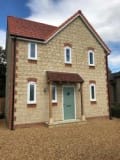



Narberth - SA67
Enquiry from: Kevin B
Start Date: Immediate
A BRICK BASE CONSERVATORY
Carmarthen - SA33
Enquiry from: Glan T
Start Date: Immediate
Submit your free quote for rated tradespeople
Carmarthen - SA33
Enquiry from: Alison Eves (
Start Date: 1 to 3 months
We have a hardwood (iroko) conservatory which sometimes leaks where the panes meet in the roof. Most of the double glazed panels need replacing as they have failed. It also needs repainting. It has s
Carmarthen - SA31
Enquiry from: Vidhya M
Start Date: Immediate
UPVC Supply and install
Llanfyrnach - SA35
Enquiry from: Betty S
Start Date: Immediate
Submit your free quote for rated tradespeople
Carmarthen - SA31
Enquiry from: Ranjith R
Start Date: Immediate
Looking at various options Supply and install
Carmarthen - SA33
Enquiry from: Nick A
Start Date: Immediate
What would you like quoted? glass roof are you a home owner? yes do you live in a conservation area or listed building? no
How much do Conservatory Installers charge? Costs for Conservatory Installers in 2026 can vary depending upon the kind of work that you require to have actually performed in your house. It's the question we get asked a whole lot "how much do Conservatory Installers cost?". It's generally better to have an idea of how much a Conservatory Installer will likely charge for their assistance. Rates will change based on the products and the tradesperson chosen. The table shows the sorts of task that Conservatory Installers generally do as well as the regular cost series of these tasks. Some projects take longer to complete than others so prices do differ by project.
View our Conservatory Installer cost guide View our Conservatory Installer advice| Conservatory Installer job | Conservatory Installer cost in 2026 |
|---|---|
| Wooden conservatories in Glogue | £45,000-£69,000 |
| Conservatory in Glogue | £6,000-£9,200 |
| Orangery in Glogue | £15,000-£23,000 |
| Diy wood conservatories in Glogue | £9,200-£13,800 |
| Diy conservatories in Glogue | £2,320-£3,480 |
| Aluminium conservatories in Glogue | £4,500-£6,900 |
| Diy aluminium conservatory in Glogue | £2,320-£3,480 |
| Conservatory base in Glogue | £675-£1,035 |
| Conservatory repairs in Glogue | £1,125-£1,725 |
| Pool enclosures in Glogue | £6,000-£9,200 |
| Sunroom in Glogue | £15,000-£23,000 |
| Conservatory roof in Glogue | £3,750-£5,750 |
| Lean-to Conservatory in Glogue | £3,900-£20,000 |
How Much Is A Conservatory Roof?
If you’re setting a budget for your new conservatory structure or perhaps you already have one and thinking about replacing the roof, knowing how much a new conservatory roof will cost from the onset can save you a lot of headache. However, knowing the correct cost won’t be easy as this is determined by a plethora of factors which is unique to each individual. In this article, we’re going to give a rough estimate of a conservatory roof cost so as to help you make an informed decision moving forward. Let’s have a look!
In order to determine the cost of your conservatory roof, the type of roof you go for must firstly be determined. This is because there is a wide array of conservatory roof types with each having its own unique price. You can opt for the uPVC glass roof, a tiled roof or a glass roof.
With so many other factors to consider, we’ll not be able to give you an exact amount. However, in general, a conservatory roof can cost anywhere within the range of £2500 to £8500. You may also quoted for more or less depending on your roof type as well as the specifications you opt for including the size and type of your conservatory. For instance, if you own a Lean-To conservatory with a size of 3.1m by 3.1m, for a glass conservatory roof, you can expect to spend anywhere within the range of £3000 to £3500. Meanwhile for a Victorian conservatory roof with a size of 5.1m by 5.1m, the cost will range between £5000 to £8000.
Therefore the type as well as size of your conservatory really does greatly impacts the cost of your conservatory roof.
If you’re conservatory leaks every time it rains, has degraded roof or is apparently worn, then it’s high time some repair and maintenance work is carried out. However, several home and property owners tend to overlook this type of repair work because they believe it’s going to cost them a lot of money. In reality, this need not be the case when you work with any of the accredited tradespeople or companies in your local area as they’re always able to provide quotes that’ll suit your budget. If you’re wondering what the cost of repairing your conservatory is, then you’ve come to the right place! In this post, we’re going to give you an idea of a conservatory repair cost range. Let’s take a look!
First and foremost, it must be stated that there’s no single and straightforward answer to this question as there are multiple factors that influences the repair cost of a conservatory. These factors include the type of damage(s) involved, the materials used, the experience of company hired, your location and many more.
Generally, for conservatory fixtures and fittings repair jobs, we have a lot of parts to consider. For replacement roof panels, the cost you should expect to incur is within the range of £30 to £50 per panel. For sealed glazing unit replacement, you’re likely to incur within the range of £17 to £19 per unit. For door re-hung, you should expect to incur about £19 to £22 per door leaf. For leak tracing and repairs, you’re likely to spend within the range of £18 to £22 per hour, while call out charges will possibly range from £30 to £50 per visit.
With the ability of orangeries to create additional space in your home as well as altering the appearance of your property completely, it’s very likely you’ll require a planning permission to construct an orangery. However, with the lengthy and complicated application process, you might want to consider the few exemptions before getting started.
If you’re considering to build an home extension such as an orangery, the obvious first step would be to consider whether or not you’ll need planning permission. And while you tend to get carried away in the thought of adding new beautiful living space, you should never forget to take into account your area’s planning regulation as well as the planning process realities. However, the application process is not one of the most exciting activities any homeowner would like to pass through and even more so when they live in a conservation area or possess a listed property that can even make the process a lot more challenging.
It’s recommended that you consult your plans and ideas with a professional such as an architect, building design company or a chartered surveyor, but there are some options you can put into consideration if you want to avoid the applying for a planning permission.
If you’re sure about not wanting to apply for a planning permission, you’d have to check your area to identify the possible local planning implications and determine whether or not your home has permitted development right which allows for some building works that can be made without the need to apply for a planning permission. To do this, simply check the government’s planning portal to determine whether your project is covered by the permitted development rights or applying for a planning permission would be required. What’s more? You need to determine if your building is listed especially if you live in a period property. For listed building, it can be much more difficult to get a planning permission as you must comply with some very specific regulations.
After being in the shadows of conservatories for so long, Orangeries are now pulling a great comeback into the scenes. They were quite popular back in the 17th and 18th century, but went into the drawers with the advent of conservatories. In recent times, Orangeries are now becoming more and more popular with several homeowners now looking to have one constructed in their homes.
Like many other home improvements or extensions, orangery prices can vary based on a number of factors. However, you can expect to incur within the range of £15,000 to £20,000 for a basic orangery design and build. If you wish to build orangeries with more distinctive features, this price can jump up to £50,000 or more depending on your preferences. Generally, orangeries are more likely to be a bit cheaper when compared to their conventional extension counterparts and add more value to your home than a conservatory in terms of a resale.
For the best results, it’s advisable to investing good money to ensure a solid build and save money in the fittings. Do not look to cut costs by going for cheaper building materials like poor quality vines. Generally, interior design will always depreciate in value, but its the solid structure that command great value for resale purposes. Also, when the structure is solid and of a great quality, you’ll get to save a lot of repair money down the line as the cheaper frames will always give way with time. However, if you have the money, you can also consider spending huge bucks on both the structure as well as the fittings because its only through this you truly maximize the benefits from your orangery. When the fittings are of great quality, repairs won’t come often which ultimately saves you some money as well.
The main features of a lean to conservatory is a flat angled roof which is backward sloping. This type of conservatory is best added to houses which do not have height or possesses only a small space. If you’re looking to install a lean to conservatory in your home or property, one of the first things you’d have to consider is the cost of getting it done so you can set a budget and start planning. In this article, we’ll give you an idea of how much a lean to conservatory price is, so you can have a rough estimate for your conservatory requirements.
Generally, the average cost of conservatory can be within the range of £5000 to £20000 and of course this depends on both the design and home. There are a number of influencing factors that can play a key role when it comes to determining how much you’ll be paying for your conservatory. Some of these factors include the size, style, material, colour as well as the roof type. All of these factors can greatly determine the overall price of your lean to conservatory, so you’d most likely have to approach the acquisition process as a multi-staged concept so as to get the perfect fit for your home in every level.
So with these factors in mind, a lean to conservatory style with a polycarbonate roof material will range between £8100 to £11900. A lean to conservatory style with a glass roof material will range between £9000 to £13200. Overall, the lean to style prices usually ranges from £3900 to £20000 depending on the size of the structure.
Modern conservatories are well insulated and have double glazing. This means that you can use them in winter, as well as in the warmer seasons. Different roof options such as a glass roof or a titled roof will allow a conservatory to become simply another room in the home.
Are you considering extending your living space into a visually appealing orangery? However, before you go ahead with the project, you may want to know exactly what you’re getting yourself into. It is rather important to let you know calling on a seasoned professional for help when it comes to building an orangery is the best bet especially if you lack proper training or experience. This way, you get to avoid costly errors while also saving yourself some time and money. Here, we’ll give you the needed information on how to go about building an orangery.
• Orangery Planning
This is, perhaps, the most important step when it comes to orangery building. There is a need to conduct a proper planning to ensure everything goes right and exactly the way you want it. The first thing to do is to perform the required planning permission checks to determine whether or not your orangery covered under the “permitted development. In some areas, there may be some strict restrictions as the structure’s size. So you just might want to consult your local planning development before taking any step forward.
You can contact any architect for help with the acquisition of the right planning permission. While doing this, also have it in mind that your plans will need to be approved before you can proceed. Once done, it can be very challenge to alter the plans without extra delays or additional costs.
• Construction of Orangery
Do you have any builder in mind? If yes, make sure you inform your architect to be sure he’s happy to work with them. The selected builder will take your plan and build the orangery to your taste as given in the plan. The fitter will put the doors and windows in place as well as the roof lantern.
Answer a few quick questions to help us match you with the right Conservatory Installer
Receive no-obligation quotes from 4 Conservatory Installers working in Glogue.
Compare prices, customer reviews and services, and hire the right Conservatory Installer.
View our open Conservatory Installer jobs near you
Join today

