


15 Jan
uPVC Door
Sidmouth - EX10
Enquiry from: Claire B
Start Date: Immediate
New back door and installation and removal of current door


Over 33 reviews & an average rating of 4.6/5 stars, you'll find the right pro
Use the shortlist button to select up to 4 tradespeople, enter your project details and press send
Get up to 4 quotes from local Door Fitters near you
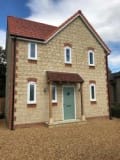




Sidmouth - EX10
Enquiry from: Claire B
Start Date: Immediate
New back door and installation and removal of current door
Exeter - EX4
Enquiry from: Clare W
Start Date: Immediate
Submit your free quote for rated tradespeople
Exeter - EX1
Enquiry from: Sheira G
Start Date: Immediate
Submit your free quote for rated tradespeople
Ottery St. Mary - EX11
Enquiry from: Kevin W
Start Date: Immediate
What material do you require, upvc? - upvc. what colour do you want them to be? - white. do you require doors if so how many? - 1. i assume you require them to be supplied and fitted? - yes
How much do Door Installers in Sidmouth cost?
Costs for Door Installers around Sidmouth can differ depending upon the sort of job that you require to have done in your house. It's the inquiry we are asked a whole lot "how much do Door Installers in Sidmouth charge?". It's generally better to have an idea of how much a Door Installer will likely cost for their work. Prices are going to vary based on the products and also the tradesperson picked. The table reveals the types of service that Door Installers commonly do and also the standard cost series of these tasks. Some jobs take longer to finish than others so costs do fluctuate by job.
Tasks that Door Installers in Sidmouth can do:
| Door Fitter job | Door Fitter cost in 2026 |
|---|---|
| Bi fold doors in Sidmouth | £2,160-£3,240 |
| Upvc door in Sidmouth | £563-£863 |
| garage door in Sidmouth | £1,125-£1,725 |
| Wooden garage doors in Sidmouth | £1,125-£1,725 |
| Composite front doors in Sidmouth | £713-£1,093 |
| Hardwood doors in Sidmouth | £675-£1,035 |
| Metal doors in Sidmouth | £450-£690 |
If you’re looking to upgrade your home or considering a remodelling project, doors can be a cool and fast way to improve the value of your property. Whether you wish to increase the visual appeal of your home with a new exterior door or simply to alter the appearance of an outdated or plain bedroom or bathroom, doors can also go a long way to improve the look of your home. If you’re thinking about taking on such a project, one of the things you might want to consider is length of time it’ll take to complete the installation process. In this post, we’re going to give you a good insight into the time it takes to complete a door installation process to help you make informed decision moving forward. Let’s take a look!
Just like any home improvement project, the duration of time it’ll take to install doors will depend on a number of factors. These factors include the style/type of door to be installed, the ease of access, the skill and experience of the installer and lots more. In general, replacing an exterior door should, on the average, take about 5 to 6 hours. An interior door, on the other hand, should be much quicker as it doesn’t require same flashing, caulking as well as other weatherproofing processes. In general, the installation of an interior door can be completed within 2 to 4 hours. If you choose to take on this task by yourself, you can expect the duration to be longer due to the little or no experience possessed.
A French door simply means a door style which features two sections that pivots on hinges installed on the door framing’s opposite sides, which opens and closes at the centre. Glass panels are used to make each door’s section covering the middle of the door ( either individual panels that are muntins framed or a single panel of glass). When open, the whole doorway is an open space with no post at the middle. French doors are popular for a number of reasons. Not only do they bring a particular level of charm, class and elegance to your home, but also allow natural light into a room and create a wide opening unlike a sliding patio door. They’re mostly installed at the rear of a home so as to allow for a direct walkway exiting the house and straight into the garden, thereby making your garden even a lot more closer to your home.
There are 3 main types of patio doors which includes the following:
• External or French patio doors
As the name suggests, they’re the French door that leads outside mostly into the garden. Generally when opened, the two door swings outwards, but there are some that can open inwards. They mostly possess a number of large glass panels which enable natural light to brighten up your home.
• Interior
This basically means fitting double French doors between two rooms in a house. This is very similar to the external ones with two doors and also made up of glass panels.
• Sliding
They are very similar to both the external and interior designs but rather than the two doors swinging open, they slide apart to create a great amount of space to walk into the garden. This is the classic charm that sliding French doors provide.
This is one of the most important factors to consider when considering the replacement of your old garage door. However, the replacement cost of a garage door relies on a number of factors such as the type of the preferred garage door, the size of the area in which the door will be installed and lots more. To get a more accurate estimate of the replacement cost you also have to consider the cost of removing the old garage door and the mechanism, the price of disposing the old garage door from the premise, the cost of installing a new sub frame and a new door panel, cost of the new operating mechanism and modern locking installation as well as the cost of purchasing and installing the new garage door. Here, we are only going to look at the purchase and installation cost of the new asset.
Today, there are a wide range of garage doors to choose from such as sectional, rollers, up and down, side sliding ( round the corner) and side hinged. They also come with varying materials which plays a significant role in the cost of the item such as steel, timber, aluminium, PVC and more. Furthermore, several garage doors include the option of being controlled electronically.
Generally, garage doors will cost between £300 to £5000, and include a price with the range of £150 to £1000 for the ones that can be operated electronically. With that in mind, the remaining cost would be that of the professional installer and that should be between £150 to £250 a person per day. For the labour, you can expect the installation of your new garage door to be completed within 3 to 6 hours (although an electric or specialist door may take longer installation time than the conventional or manual ones).
Do Bifold Doors Fold Back Flat?
Bifold doors, also referred to as folding doors, have grown to become a great alternative to the conventional sliding doors. It has become a necessity rather than a luxury for most home and property owners especially in the south east who are in need of more space and a memorable focal point. However, before installing the impressive bifold doors in your home’s doorways, it’s always a wise decision to learn more about bifold doors. In this article, we’ll let you whether or not bifold doors fold back flat.
Generally, bifold doors consists of 3 to 8 door panels, bifold slides and fold back against one another in such a way that they sit flat against one or both walls. However, this depends on how they’re designed, whether they’ve been designed to open either from the side or from the middle. They basically work on what’s popularly referred to as a concertina principle. This style fold principle works in a way that allows the door panels to smoothly fold back flat which totally opens up the room into an open plan masterpiece.
So now that you know that bifold doors fold back flat, you may also be curious to know whether they also open in or out. Depending on your specific requirements, bifold doors can actually open inwards and outwards independently. However, due to the fact that opening bifold doors can take up some essential space, several home and property owners do prefer installing their bifold doors in such a way that allows it to be opened outwards. What’s more? It’s also essential to take into account that opening bifold doors inwards have the potential to drip water onto internal flooring especially for the wet regions.
Bifold doors can be made to measure to suit a huge range of properties. There are minimum and maximum sizes for door leaves. These dimensions vary between manufacturers. Different configurations of bifold door are suitable for different size openings.
What Is The Most Secure Type Of Front Door?
When getting a new front door for your home or property, you’d probably want to get one that’ll provide the most security for your home. Gone are the days when you could leave your front door open and still come back to your assets intact, if you try that today, you’ll be taught a bitter lesson. The front door is the weak point of your home, the point at which several burglars will use to gain entrance into your home. Therefore, for your own peace of mind, there’s the need to get the most secure type of front door to protect both your loved ones and home.
There are two crucial thing to take into account when selecting the best front door for your home’s security and these includes both the door’s material as well as the lock. Let’s have a look at two of the best front doors for security purposes.
✓ Timber Doors. Though they might look great, but they’re also very sturdy and solid which makes them one the best front doors for security. Timber is a heavy hardwood door that’s at least 44mm thick. However, just like any other door type, the strength still boils down to the frame as well as quality of the lock. If the timber door possesses a superior style lock alongside a solid frame, only burglars or intruders with a leg to spare will try to forcefully kick it in. And neither can it be smashed open nor shoved with the shoulder.
✓ Composite Doors. These doors are developed to tackle the flaws of singular material doors and as a result, they possess great security qualities. They usually include a steel door frame and a solid hardwood internal frame. Furthermore, the door’s surface skin is typically made from glass-reinforced plastic which is a very sturdy material. Combination of all these materials enable this type of door to withstand brute force with relative ease. No intruder with a good knowledge of door materials will try to force an entry with a composite door standing as an obstacle.
We’ve all heard the common phrase that first impressions matter most. Well, this expression also applies to your home. When people arrive at your home, the door is the first thing they come in contact with and that speak volumes about the impression they’ll have about you. In modern times, there’s a large variety of choices when it comes to choosing a front door for your home in terms of style and design - from distinctive and alluring wood finish effect to elegant stained glass patterns. These are all important when it comes to choosing a front door, but one of the most significant factors is the material.
Both uPVC and composite doors have their advantages and disadvantages, so choosing one may rest on the purpose of installing the door.
UPVC Doors:
Pros
• Cost - Although composite doors are certain to deliver a great value for money, the initial spending on uPVC is lower and doesn’t put much strain on your budget
• Little Maintenance - The maintenance of a uPVC door does not go beyond wiping any stains with a damp cloth. However, this should be done carefully and regularly as extended neglect can lead to discolouration over time
Cons
• Styles - When it comes to styles, uPVC doors has a considerable lower style options compared to composite doors.
Composite Doors:
Pros
• Finishes - Composite doors offer a wider range of finishes than uPVC doors and as such, deliver greater versatility in showcasing your home’s character.
• Energy Efficient - Made from various materials glued together under intense pressure, composite doors happen to be thicker than uPVC doors and hence, a bit more energy efficient.
• Improved Security - Although both doors offer a great level of security, composite doors (due to its robust construction) are a bit more superior in this area.
Cons
• Cost - Although composite doors offer an immense value for money, the fact still remains that they’ll also stretch your budget more than uPVC doors.
If you’re going through new constructions or renovations and looking to change your old front door and install a brand new composite door, then you’re at the right place. Composite door fitting can be a DIY project but it’s essential to have the necessary training and experience before commencement. If not, we’d recommend you hire the services of a reliable professional to guarantee the best results and save yourself some time and money.Here, we’ll give a good insight into the composite door fitting process.
To get started, here are some of the tools that may be required - tape measure, hammer, stanley knife, crowbar, chisel, saw. Silicone sealant gun, spirit levels, electric drill ( including the hammer section), rubber mallet and 6mm socket spanner.
lPreparation
• Remove the existing door by rounding up the door frame firstly with a knife to reduce the possible damage to the wall.
• Cut through the door jambs.
• Remove each in two separate sections.
• Ensure the opening is level without any screws, mastic and filler.
lAlign Your Composite Door
• Ensure the sill of the door is level and flat.
• Make sure the frame is square and plumb in both planes.
• Bridge the cavity of the wall and cover the DPC
• Ensure that the frame is square. If not, your composite door won’t function as it should.
lInstall Your Composite Door
• Place the door in the frame.
• Hold the frame firmly in position with wedge packers
• Make sure the packers are positioned close to where the fixing will be placed.
• Make sure the jams are square and plumb in all planes by using a long spirit level.
• Secure the frame to the brickwork with the use of a drill.
• Place the fixings at the top and bottom of each hinge as well as each of the lock keep.
• Top fixings should be fitted 150mm and 250mm from each corner.
Answer a few quick questions to help us match you with the right Door Fitter
Receive no-obligation quotes from 4 Door Fitters working in Sidmouth.
Compare prices, customer reviews and services, and hire the right Door Fitter.
View our open Door Fitter jobs near you
Join today

