25 Nov
Solar Panels with Battery
Borth, Bow Street, Talybont - SY24
Enquiry from: Sal J
Start Date: Immediate
Available roof space no shading


Over 124 reviews & an average rating of 4.5/5 stars, you'll find the right pro
Use the shortlist button to select up to 4 tradespeople, enter your project details and press send
Get up to 4 quotes from local Electricians near you






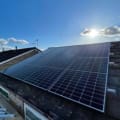

Borth, Bow Street, Talybont - SY24
Enquiry from: Sal J
Start Date: Immediate
Available roof space no shading
Dolgellau - LL40
Enquiry from: Ania W
Start Date: Immediate
PAT test Vet practice - will need to be done on a weekend
How much do Electricians charge? Prices for Electricians in 2026 can be very different depending on the kind of job that you need to have actually performed in your home.
Do you have an electrical project that needs to be undertaken in your home or property? If yes, then hiring the services of an electrician is the next reasonable course of action. However, before you proceed, you’d probably wish to know exactly how much electricians charge so as to help you make a budget and start to plan. In this post, we’re going to give you a good insight into the cost of hiring an electrician to help you make informed decisions moving forward. Let’s take a look!
The price charged by electricians for a project is determined by number of factors. These factors include the electricians themselves, the location of your property as well as the electrical work in question. For instance, electrical jobs in older or period properties will be a lot more expensive than the ones in modern houses which features electrical wiring and fittings and comply with modern regulations (even more so if the wiring needs to be made up to standard). Furthermore, if you happen to reside on London and the South East, you can expect to incur more costs than the rest of the UK. The biggest cost driver, however, is the type of electrical job that involved.
In general, for an electrical inspection, you can expect to incur within the range of £120 to about £200, repair of an electric shower should cost about £80 to £140, installation of an electric hob would cost between £90 to £250, while replacing a ceiling light can cost within the range of £85 to £130. With these wide variety in prices, if you need an accurate estimate, it’s advisable to get in touch with a local electrician who’ll be able to pay a visit to your home or property and provide you with a reasonable quote for your unique electrical project.
The table shows the types of job that Electricians generally do and also the typical price series of these jobs. Some tasks take longer to finish than others so costs do vary by project.
View our Electrician cost guide View our Electrician advice| Electrician job | Electrician cost in 2026 |
|---|---|
| Electrician in Machynlleth | £300-£460 |
| Solar thermal in Machynlleth | £3,000-£4,600 |
| Electric heaters in Machynlleth | £1,500-£2,300 |
| Rewiring a House in Machynlleth | £2,625-£4,025 |
| Electrical testing (pat testing) in Machynlleth | £135-£207 |
| Electrical survey in Machynlleth | £150-£230 |
| Solar battery in Machynlleth | £3,080-£5,390 |
| Garden lighting in Machynlleth | £320-£480 |
| Solar panels with battery in Machynlleth | £3,400-£5,100 |
| Electric vehicle charger in Machynlleth | £100-£1,000 |
How To Install Solar Panels And Batteries
Have you decide to purchase a solar system for your home and wondering how to go about the installation? If yes, then we’ve got you covered! In recent times, it’ll be totally safe to say that solar panels and batteries for home use in the UK has now become more of a necessity than a luxury considering the numerous benefits the system offers. However, with the cost of having the system installed, you might be forced to think about the doing the installation yourself.
If you lack proper training and experience in the solar system installation process, it’s advisable to hire the services of a qualified technician who can guarantee the best results the first time and help you save time and extra costs that may result from possible costly errors. Here, we’ll give you a good insight into the installation process.
• Mount the solar panel and ensure it’s properly screwed to your roof. Try to position in such a way that it faces direct sun rays to have enough solar power generated.
• Connect your charge controller. The current that’s being generated by the solar panels will not be stable all day long. As a result, it’s important to avoid connecting solar photo voltaic modules directly to your better, if you don’t want it damaged. To control the current received from the solar panels, the charge controller is required. It has three connecting points - one for the battery, one for the solar panels and the last for Direct Current (DC) identify the one for solar panels and connect accordingly.
• Connect the battery to charge controller. The charge controller possess two terminals for the battery - the positive and negative terminals. Connect the positive terminal to the positive of the battery and also do the same for the negative.
Registered Electricians will certainly work in uniformity with the UK nationwide criterion, BS 7671 - Demands for Electrical Installations. They will certainly provide a safety and security certification for their electric work to verify that the setup has actually been created, built, evaluated and evaluated, based on the standard.
You should guarantee that your selected Electrical installer is signed up with one of the adhering to companies:
Unlike in houses built in the 1970s where a good majority of the houses will not need to be rewired, for houses built in the 1960s you’d probably need to rewire the entire house unless the wiring is the modern PVCu coated type. Generally, the homes built especially in the 1960s and 1970s brought about enormous changes. This is because over the years our way of living began to change and as a result, our need for electricity became even greater. In response to this, the electrical systems we incorporate needed to change in order to match the new set standards.
In the 1960s, the amperage normally used was increased to 100, which enables home and property owners to power their dishwasher, microwave as well as refrigerator all on one circuit. However, while this may be a remarkable improvement for our grand parents, this is just enough to cater for our modern day appliances. In recent times, new homes are constructed using a wide range of dedicated circuits due to the fact that each of our appliances makes use of much more electricity to function. Consequently because the 100 amp panels of the 1960s possessed restricted space for breakers, home and property owners who still had the units in their homes will inevitably require a sub panel or a new panel entirely - meaning a total rewiring of their property.
Furthermore in the 1960s, builders turned to aluminium from the previously used copper as it was a great conductor and also happens to be relatively cheap. However, after a couple of years a host of electrical fires cropped up in houses that are wired using aluminium. It was later discovered that when the switch to aluminium was made, the light switches or receptacles which were originally made for the previously used copper was overlooked. It was learned that there’s a corrosive chemical reaction that arises as a result of the two dissimilar metals when connected. Hence, the more reason why aluminium wired houses in the 1960s needs to be rewired.
Are Electric Radiators Expensive To Run?
Just like many home additions, the running costs of electric radiators varies largely on a number of factors. Great number of electric radiators typically comes with an in built thermostat which is designed to turn itself off automatically when not in use in order to save energy.
However the energy provider’s set electricity charge tariff will also have a great influence on an electric radiator’s running cost. Let’s take a look at the running costs of an electric radiator!
A 600 Watt electric radiator ( on a standard electricity tariff) will usually have a running cost ranging between 4 to 6 pence each hour. However you should also take note that this scenario might change in situations whereby the electric radiator is not calling for heat the full 60 minutes of each hour. And this is more likely to be the situation as the thermostat is programmed in such a way that enables it to turn itself off immediately there’s an achievement of your required room temperature level - usually within 10 minutes from the time it was switched on. As a result of this, the running cost per hour of electric radiators will be greatly reduced to just about 1 to 2 pence.
It’s also important to note that enhancing the insulation of your home can go a long way to add to the heat retention value of each room. Consequently, the duration at which the electric radiator calls more heating will be significantly reduced, which in turn, implies a lower electricity bill.
Another key factor that can play a huge role in saving on your heating bills is the programming as well as usage of your electric radiators. Every radiator comes with an independent digital thermostat with a number of 24/7 programming options to help achieve maximum efficiency. When the radiator is properly set according to your lifestyle, you can save as much as 50 percent on your heating bills.
If you’re thinking about adding new power sockets to your room, then you’ve come to the right place! This task can be a very tricky one especially if you don’t know how to go about it. If you don’t have the skills or experience necessary to pull this off, then we’d strongly recommend you hire the services of qualified and licensed electrician who can guarantee the best results for help. In this guide, we’re going to take you through the numerous steps you’d have to take to make sure your new power sockets is added successfully. Let’s take a look!
How Much To Install Solar Panels And Battery?
Are you thinking about installing solar panels and battery in your home and wondering how much the installation is going to cost? Well, you’re not alone. This is one of the most commonly asked questions in the solar world, but unfortunately a precise answer can not be provided. This is mainly due to the fact that solar panel systems come in varying sizes which is the main influencing factor that determines how much electricity that can be generated. In other words, the larger the system, the more the electricity that’ll be produced to your home’s benefit.
Generally, for a solar system size of 1kW, the average cost of the solar panel ranges between £1800 to £1850, 2kW is between £3600 to £3700, solar panel size of 3kW ranges between £5500 to £5600 and finally, 4kW is between £6000 to £6050. For example, with the aforementioned prices in mind, the cost of solar panels for a standard 3 bedroom house will range between £5520 to £6040 as the high electricity demands will need the installation of 3 to 4kW solar system size.
Meanwhile the installation cost of solar batteries is also dependent on a number of influencing factors like the size as well as the make of the battery. Generally, you can expect to spend within the range of £500 to £2000 to install your batteries depending on aforementioned factors. In the event whereby you’ll be retrofitting, you might also need to include an additional cost of £1000 for an inverter. However, it’s important to note that there are only quite a few hybrid systems which are able to combine a battery storage with an inverter.
If you’re thinking about getting a solar thermal system for your home, it’s normal to consider the possibility of using the system for central heating. So is this viable? In this article, you’ll learn how solar thermal panels can be incorporated for heating. Let’s have a closer look!
Heating and hot water systems, on the average, takes up a sizeable part ( up to 70 percent) of our energy bills. Now take a moment to imagine how cool it’ll be to generate your own hot water for free without having to depend on any supplier which in turn significantly reduces your energy bills. Well, this is exactly the work of central heating systems that are powered by solar. That’s super cool, right? Well, let’s have a look at how this works.
While solar panels generates electricity, solar thermal panels produces heat for hot water production. However, what’s important is the fact that they both make use of the sun’s natural energy to provide us with a free and renewable energy we can use in our homes. Here’s how it works.
Solar thermal panels directed at central heating incorporates the sun’s natural energy to heat water in a storage cylinder which is then available for use at home. These solar thermal panels are exposed to the sunlight by fitting them on the roof of the home. Generally, they’ll include tubes that contains liquid whose job is to collect the heat and then transfer it to a hot water cylinder that’s solar compatible in your home. The heat is generated for free and is also renewable. This is help you save lots of money on oil, gas and even electricity which you purchase to power the cylinder.
If you’re a home or property owner planning to get an electric vehicle, having a Level 2 charger installed in your garage or near your driveway can go a long way to make charging really convenient for you. So if at all you want to take on this task by yourself, you should ensure to do it the right way. If you lack the confidence or skills required to pull this off, then we’d strongly recommend you hire the services of a professional who can guarantee the best results the first time. In this post, we’re going to provide you with an good insight on the home electric charger installation process. Let’s take a look!
Answer a few quick questions to help us match you with the right Electrician
Receive no-obligation quotes from 4 Electricians working in Machynlleth.
Compare prices, customer reviews and services, and hire the right Electrician.
View our open Electrician jobs near you
Join today

