
05 Nov
External Wall Insulation
Bristol - BS6
Enquiry from: Rachel K
Start Date: Immediate
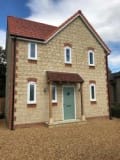
External insulation on 2 external walls


Over 13 reviews & an average rating of 4.4/5 stars, you'll find the right pro
Use the shortlist button to select up to 4 tradespeople, enter your project details and press send
Get up to 4 quotes from local Insulation Installers near you




Bristol - BS6
Enquiry from: Rachel K
Start Date: Immediate
External insulation on 2 external walls
Bristol - BS6
Enquiry from: Megan A
Start Date: Immediate
Labour for loft insulation. I need the old insulation taken down and new insulation put up. I want two layers of 150mm breathable insulation added. The size of the house is 10.45x4.8 meters. If possib
Bristol - BS16
Enquiry from: Julie W
Start Date: Immediate
It is a 1 bed flat which has some insulation already, but have bought 3 rolls of ieco insulation to top up as there is condensation in the Attic
Caldicot - NP26
Enquiry from: Owen B
Start Date: Immediate
Cavity wall insulation for 3 walls of a two story extension. Approx 5m per side and 2.5m tall per floor
How much do Insulation Installers in Bristol cost?
Costs for Insulation Installers around Bristol can fluctuate relying on the sort of service that you require to have actually done in your house. It's the inquiry we are asked a lot "how much do Insulation Installers in Bristol charge?". It's always great to have an idea of how much a Insulation Installer are going to likely cost for their services. Rates will likely fluctuate based on the products and the tradesperson picked. The list shows the kinds of job that Insulation Installers usually do and also the regular price series of these tasks. Some tasks take longer to finish than others so prices do fluctuate by job.
Tasks that Insulation Installers in Bristol can do:
| Insulation Installer job | Insulation Installer cost in 2026 |
|---|---|
| Loft insulation in Bristol | £450-£690 |
| Cavity wall insulation in Bristol | £400-£820 |
| Roof insulation in Bristol | £7,500-£11,500 |
| Soundproofing in Bristol | £900-£1,380 |
| External wall insulation in Bristol | £6,000-£15,000 |
How long it takes to install insulation will depend on the size of your property. In general, loft and cavity wall insulation can be installed in a day or two. External wall insulation will usually take longer to install. The rep or installer will be able to advise you when quoting for the job how long this will be.
Insulating your loft roof comes with a wide range of benefits. Not only do you get to maintain a comfortable temperature in your house for longer, but you’ll also get to cut down on your heating bills. If you wish to insulate your loft roof, you’ve come to the right place! This process can be very tedious and time consuming especially if you don’t what you’re doing or lack the required confidence to pull it off. It’s advisable to hire the services of a reputable professional who can guarantee the best results for help and also save you some time and money that can come from potentially costly errors.
Before you start rolling out, you’d have to make sure that all cracks, gaps and holes in the ceiling are filled with either a standard filler or decorators caulk. You can also clean between between the gaps in the joists thoroughly. And finally, check for hazards that can cause you problems before getting stated.
Over the years, more and more home and property owners are beginning to realize the huge benefits that can be derived from loft insulation being a worthwhile investment. It’s quite worrisome the way in which energy bills have soared over the past 10 years and loft insulation is a considerable affordable energy efficiency measure that can go a long way to help increase your home’s energy savings.
As far back as the 1980’s, the standard when it comes to insulation thickness was 25 mm to 50 mm which was, at the time, considered to be sufficient. However, building regulations have changed the norm that now states that a new build needs to possess 270 mm of insulation in the loft in order to achieve the required u-value of less than 0.16/m2k based on the standard rock wool or sheep wool insulation.
Generally with loft insulation, there’s a law of depreciating returns which implies that the first couple of insulation centimetres will save you many times the cost of the installation, however an extra layer or centimetre is going to add less value to the point where it’ll no longer be wise or worthwhile to add any further centimetre. Therefore, with cheaper energy prices 30 years back, that additional couple of centimetres was not just worthwhile, but with the recent alarming rises in costs of fuel, that additional £10 savings per year has all of sudden changed to £30 which makes it become a lot more attractive.
If you already have 270 mm of loft insulation, regardless of the material you’re looking to add you’re most likely not going to benefit from a top up. The cost of the materials and installation will definitely be too high for the couple of pounds it’ll save you per year.
If you want to install an external wall, it is only wise to consider whether or not a planning permission is required in order to avoid a hefty fine. In a great kudos to the government and a welcome relief to home and property owners, the installation of external wall insulation is seen as an “improvement to the house and not an “extension or an “enlargement. Ultimately, this implies that external wall insulation fitting is to be done under permitted development and a planning application may not be required. However, like many other regulations, there are also exceptions to this rule and the main one is if the activity changes the appearance of your property. Properties such as a listed building having tighter regulations may pose some issues. As a result, we’d advise you to consult your local authority to ensure that there’s no fast rule to this topic before commencement of the external wall insulation project.
At the moment, according to the Government Building Regulations, the surface of the entire wall is to be improved to existing standards if the area to be insulated exceeds 25 percent of the wall. In normal situations this is usually the typical case, however to prevent avoidable fines and other possible punishments, it is always best to reach to your local authority and check out the rules guiding external wall insulation in your constituency. Furthermore, since external wall insulation is not a task that’s recommended to be done by yourself, you can also ask the professional external wall insulation fitting company for the applying rules before proceeding. As a good professional, the company should have a better knowledge of the rules and regulation guiding its activities.
Before the commencement of any project, it’s always best to get an estimation of the cost. However, determining the cost of an external solid wall insulation is not the easiest of tasks as it relies on varying components such as the insulation materials to be used, labour cost and installation as well as the type of decorative finish to be incorporated. And depending on your choice of insulation material, some may need some adhesives while others may require some fixings which also contributes to the differences in price. As a result, the determination of the material cost alone can be tricky and even more so when various materials cover varying areas.
With that in mind, the cost of external solid wall insulation generally ranges between £80 to £100 per square metre2. As a result, a small flat can cost from £6000 to £9000 whereas a large detached house can have a price ranging between £21000 to £23000. To earn back your investment in terms of energy bill savings can take a couple of years, but it’s surely worth the try as there are several other benefits associated with installing an external solid wall insulation system. What’s more? Another huge factor that can influence the cost of your system is also the amount of work that’s required, how easy it is to be accessed by the installers and lots more
If you’re looking to cut down on the cost of your external solid wall insulation, then the best time for an installation might just be when you’re having another decorating or building project done such as fitting a new roof, window painting, installation of solar PV panels and more. This way, you’ll be able to spread the cost and have a greater value for each penny expended.
The short and simple answer to this question is yes, loft insulation does cause condensation. Over the years, problems with condensation in loft spaces have become increasingly common. While this may not be harmful in anyway, when the condensation becomes excessive it can lead to more serious issues taking root in your loft like wet rot, dry rot as well as black spot mould. Generally, the best thing to do if you’re concerned about the condensation in your loft space and that it may rapidly become a bigger problem is to get in touch with a damp specialist as soon as possible.
Even though insulating your loft space comes with a wide array of benefits like making the top floor rooms warmer, it’s however comes at the cost of making your loft or room space cooler. Condensation in lofts take place primarily due to the humid air making its way through insulation or other gaps into the loft space and touching a cooler surface which in turn results in beads of moisture on the timbers, lintels as well as the underside of the roof. This is why its always a great idea make use of thermal insulation with a vapour barrier that’s installed on the warmer side of the insulating material.
Condensation in loft is caused by excess moisture in the air and lack of adequate air ventilation. Here are some top reasons that gives rise to this in the loft:
When thinking about the right insulation material for your loft, some of the first few things that comes to mind is the various properties of that material as well as how good they fit with your home’s needs.naturally, you’d like to ensure that the insulation will be efficient enough to add to the overall energy efficiency of your home, however there are also other features that may not get as much attention but also happens to be equally important. As the primary function of an insulation is to blanket your house to offer a barrier against heat loss, going for an insulation material that’s also fireproof is crucial as loft insulation can burn. Although most insulation materials are fireproof, a myriad of problems can actually make your insulation burn.
For instance, fibreglass insulation is produced using glass combined with plastic polymers and is naturally resistant to fire. However, even at that you’d have to be careful with batts that are supported with foil or paper due to the fact that these materials can burn pretty quickly. Cellulose, on the other hand, is not fireproof and is required to be treated by other flame retardants in order to help reduce combustion. Some of the best insulation materials that are resistant to fire includes the following:
If you have a loft, then the next thing that’s crucial is a loft insulation. Asides from cutting down on your carbon footprint, when you’re able to install an effective loft insulation you can slash your heating bills by up to £250 per year. What’s more? Besides making your home more energy efficient, it can also increase the value of your property a great deal. So if you’re also considering the insulation of your loft, one of the few things that comes to mind is, what loft insulation is the best to incorporate? In order to help you make the best informed decision possible, this post is going to address this issue and put you on the right path.
In truth, there’s no way to say exactly which type of insulation is the best as all types usually have a different purpose as well as usage. The insulation you choose for your home’s loft is be based largely on the how you’re going to make use of the space as well as any unique challenges you might face given the shape of your home’s loft. Below are some types of insulation to give you a better idea:
Answer a few quick questions to help us match you with the right Insulation Installer
Receive no-obligation quotes from 4 Insulation Installers working in Bristol.
Compare prices, customer reviews and services, and hire the right Insulation Installer.
View our open Insulation Installer jobs near you
Join today

