30 Mar
Insulation | External Wall
St. Ives - TR26
Enquiry from: Cher D
Start Date: Immediate
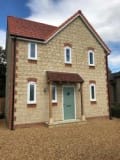
Exterior wool/wood insulation and render on 2 bed home


Over 9 reviews & an average rating of 4.3/5 stars, you'll find the right pro
Use the shortlist button to select up to 4 tradespeople, enter your project details and press send
Get up to 4 quotes from local Insulation Installers near you



St. Ives - TR26
Enquiry from: Cher D
Start Date: Immediate
Exterior wool/wood insulation and render on 2 bed home
Calstock, Gunnislake - PL18
Enquiry from: ALAN W
Start Date: Immediate
SOUND PROFFING THE GROUND FLOOR IN A RENOVATED C1860 STONE BUILDING.
St. Ives - TR26
Enquiry from: Robert H
Start Date: Immediate
250mm insulation of loft space
Penzance - TR18
Enquiry from: Alex M
Start Date: Immediate
I get a lot of noise from the flat above me, i can hear them talking, coffing , sneazing banging and general noise.
Falmouth - TR11
Enquiry from: Graham S
Start Date: Immediate
fully insulate loft to a minimum of 300mm, area 70 m2
Callington - PL17
Enquiry from: Rosemarie S
Start Date: Immediate
Roof insulation upgraded, 2 bed semi detached house
Bude - EX23
Enquiry from: Mike H
Start Date: Immediate

i have 100mm loft insulation but i need to augment it to 300mm are you the property owner: owner of the property how many bedrooms do you have: 3-4 do you currently have loft insulation: yes do you re...
Wadebridge - PL27
Enquiry from: Vivian L
Start Date: Immediate
New build starting Summer 2025 require price for external insulation and render.Plans available
Liskeard - PL14
Enquiry from: Andrew A
Start Date: Immediate
Loft insulation is already in place but needs to be brought up to modern code standards (270 mm)
Newquay - TR7
Enquiry from: Dan A
Start Date: Immediate
Hi, We have a property in pentire that will require external wall insulation, are you able to quote for this? Approx 244m2 -All external walls, with the exception of the front elevation, si...
Redruth - TR16
Enquiry from: Caroline W
Start Date: Immediate
removal of debris left in loft space after roof was last done. upgrade insulation to current regulations. at present there is a gap round whole perimeter of loft spaces! are you the property owner: ow...
Tintagel - PL34
Enquiry from: Vince W
Start Date: Immediate
Loft insulation for large 3 bedroom 2 bathroom bungalow
Bodmin - PL30
Enquiry from: Jacqueline A
Start Date: Immediate
In need of cavity wall insulation for a double garage with a studio flat above and possibly insulation for the floor of the flat.
Falmouth - TR11
Enquiry from: Jacqueline K
Start Date: Immediate
External insulation on solid walls
Wadebridge - PL27
Enquiry from: Brenda D
Start Date: Immediate
Loft boarded out for storage
Helston - TR12
Enquiry from: Brian S
Start Date: Immediate
External wall insulation and rendering
St. Austell - PL25
Enquiry from: Lionel H
Start Date: Immediate
large commercial building requiring wall insulation
Truro - TR4
Enquiry from: Mike C
Start Date: Immediate
customer in the truro area made an enquiry a couple of projects including cavity wall insulation.call anytime and arrange an appointment to discuss. below is some details about this project: are you t...
Truro - TR4
Enquiry from: Mike C
Start Date: Immediate
Additional loft insulation
Falmouth - TR11
Enquiry from: Nina S
Start Date: Immediate
External wall insulation
How much do Insulation Installers in Cornwall charge?
Costs for Insulation Installers around Cornwall can differ relying on the sort of task that you require to have performed in your home. It's the question we get asked a lot "how much do Insulation Installers in Cornwall cost?". It's generally better to have an idea of how much a Insulation Installer will likely cost for their services. Prices will likely change based on the materials as well as the tradesperson chosen. The table shows the kinds of task that Insulation Installers commonly do as well as the typical cost variety of these projects. Some tasks take longer to finish than others so prices do be very different by task.
Tasks that Insulation Installers in Cornwall can do:
| Insulation Installer job | Insulation Installer cost in 2026 |
|---|---|
| Loft insulation in Cornwall | £450-£690 |
| Cavity wall insulation in Cornwall | £400-£820 |
| Roof insulation in Cornwall | £7,500-£11,500 |
| Soundproofing in Cornwall | £900-£1,380 |
| External wall insulation in Cornwall | £6,000-£15,000 |
More often than not, several homeowners fail to realize there’s so much value sitting right under their roof - the loft. When a loft is insulated, there are so many juicy benefits that can be derived. It can go a long way to save increase you energy savings and several more functions. Therefore, if you really wish to maximize the space under your home’s roof, you’d have to considering insulating it. So how much would it cost to have your loft insulated? Here, you’ll discover the cost of insulating your lofts so you that you can set a budget and start to plan.
The cost of insulating a loft is actually affordable for several individuals, however, this depends on a wide range of factors such as the size of the house as well as the type of insulation being installed. One significant factor is the insulating material that you choose to install. If done properly, you’d be able to prevent heat from escaping through the roof of the house which helps improve energy efficiency and ultimately, save you some money on heating bills.
If you’d prefer to make it a DIY project and you go for a blanket insulation it costs about £5 per m2. therefore, this will cost within the range of £100 to about £150 for a small home.
For a professional service, you’ll be provided with a quote for both the materials and labour. The amount will be based on the number of insulation required, the company hired, your location as well as the method selected. The price to purchase and install blanket insulation would be between the range of £300 to £400 depending on the size of your home.
With the title of this blog, do not be deceived into thinking the purpose is to encourage you to install an external insulation by yourself. Even as a competent DIYer, it’s not advisable to buy a couple of materials and start slapping it into the wall hoping for the best outcome. External insulation is by no means a DIY job and without the proper training and experience, it can easily turn out disastrous resulting in loss of time, effort and money in such a valuable project. This blog, however, will give you a great insight on how the installation process works and help maximize knowledge ensuring you do not spend more than necessary.
External Insulation Installation
lRender Test
• This is done to ensure the existing render is good enough for insulation support.
• If positive, the insulation can be applied directly onto it.
• If negative, ensure removal of the old render before fitting the insulation.
lPipework Adjustment & Removal
• Remove all pipework prior to insulation fitting
• Install temporary downpipes to ensure water is not wasted and everything continue to function normally during the insulation fitting process.
lWindow Protection
• Protect the window with a protective layer or film.
lStarter Track Fitting
• Determine level you want the insulation to start (height).
• Fit the aluminium start track or carrier tray at the identified level.
lInsulation Boards Fitting
• Apply a layer of adhesive to the board and glue them to the wall in a staggered pattern.
• Cut to fit round all obstructions and windows.
• File off the edge of the board where necessary using a rasp upon successful fitting of the boards
lMechanical Fixing Inclusion
• Hammer around 10 fixings per square metre into the board.
• This is to secure the insulation boards.
lBeading Fitting
• Add corner beads and stop beads to ensure the insulation is secure and to prevent it from making contact with other materials.
lReinforcing Mesh & Render Addition
• Apply two layers of strengthening properties and between the two layers of render, include a fibre glass mesh.
lPrimer Application
• Paint on the primer
lFinal Render Application
• Choose your most preferred texture and colour as this will be the last coating of the installation process.
lPipework Re-installation
• Re-install all detached pipework at the start of the installation process.
Insulating a cavity wall should not affect the damp proofing of the wall. All insulation approved for use in cavity walls has been tested to ensure that it does not allow damp to pass through the wall. Some walls which receive a lot of wind driven rain are unsuitable for cavity wall insulation.
Over the years there has been an increase in the recommended thickness of loft insulation by the government. Obviously, the reason behind this is pretty simply - the thicker the layer of your loft insulation the bigger your savings. The UK government is very keen to every house in the country to have loft insulation fitted where possible as it helps to minimize the heating demands of these properties. Households get to benefit from loft insulation in so many ways which includes reduced energy energy bills as well as having a home that stays at a more comfortable temperature for longer.
Generally, for the government energy efficiency is crucial as it implies that the highest demand ( which is usually the time of the day when gas or electricity use is at its peak ) reduces, since each building requires slightly less energy. Overall, that ultimately implies that new power plants don’t have to be built which is some nice cost savings for the government.
In the 1980’s, any thickness of loft insulation from 25 mm to 50 mm was considered the standard. But then, building regulations stated that homes should have as much as 100 mm of loft insulation. Over time, this gradually increased to 270mm for new builds and also recommended for other properties, although not essential. As a result of this, there’s always a need to check how much insulation you currently have in your loft before you decide to purchase more. You may discover that you already have something within the range of 20 mm to 200 mm up there and knowing this and the insulation values will assist in determining how much more you’ll need to purchase, if any at all. You should also note that some modern materials can offer the same thermal insulation whilst not being as thick.
A lot of an uninsulated property’s heat is lost through the roof and that’s even more alarming, when you realize this figure is up to a quarter of the total heat of the house. Hence, the tremendous importance of preventing this heat loss through loft insulation which will go a long way to help you against spending unnecessary thousands of pounds on heating bill as well as energy loss.
Loft insulation is an effective method to achieve the desired result, however the question is, how exactly does it work? Well, it’s time to find out!
Using either a fireplace or central heating to heat up your home, a large quantity of that heat would be lost through the roof of your home. Generally, heat rises and when it does, there’s simply no way to prevent it - it’s just science. Escaping by both the conduction and convection methods via your roof, the heat escaping through your ceiling, into the loft space and out into the open air outside can only be significantly reduced by laying loft insulation.
Generally, the added layer of insulation works by trapping the heat inside the room below the loft so as to enable the air within your house to stay warmer for longer. What’s more? The layer of insulation also keeps cold air from the outside from entering your home. As a result, you don’t have to heat your home as much in order to achieve the same temperature for each individual room. Over time, just by doing this you can potentially save hundreds pounds. Getting it installed in your home may actually seem a bit expensive at first, but it’s something that’ll eventually pay off.
Before the commencement of any project, it’s always best to get an estimation of the cost. However, determining the cost of an external solid wall insulation is not the easiest of tasks as it relies on varying components such as the insulation materials to be used, labour cost and installation as well as the type of decorative finish to be incorporated. And depending on your choice of insulation material, some may need some adhesives while others may require some fixings which also contributes to the differences in price. As a result, the determination of the material cost alone can be tricky and even more so when various materials cover varying areas.
With that in mind, the cost of external solid wall insulation generally ranges between £80 to £100 per square metre2. As a result, a small flat can cost from £6000 to £9000 whereas a large detached house can have a price ranging between £21000 to £23000. To earn back your investment in terms of energy bill savings can take a couple of years, but it’s surely worth the try as there are several other benefits associated with installing an external solid wall insulation system. What’s more? Another huge factor that can influence the cost of your system is also the amount of work that’s required, how easy it is to be accessed by the installers and lots more
If you’re looking to cut down on the cost of your external solid wall insulation, then the best time for an installation might just be when you’re having another decorating or building project done such as fitting a new roof, window painting, installation of solar PV panels and more. This way, you’ll be able to spread the cost and have a greater value for each penny expended.
The answer is yes! Houses whose external walls have been insulated are more valuable than their uninsulated counterparts. And not only does it add to the value of a home, but also significantly reduces the amount of electricity consumption. This is a major turn on for potential investors which implies a greater demand and ultimately, a higher price. The real estate market is a very dynamic one which can be hard to predict at any particular time. The frequent changes in price are usually down to factors beyond the owners’ control, but if you’re looking to put up your house for sale in the near future, it would be a wise decision to consider ways in which you can increase its value. While renovating each room can be on the expensive side, a great solution would be insulate the external walls.
An insulated house is one that is well secured against the harmful impact of extremely high or low temperature, humidity and other atmospheric factors. Hence, the reason why a house with external wall insulation has a greater value which you would not want to miss out on. What’s more? You’ll get a great thermal insulation with the top notch materials like foamed polystyrene, high quality renders, mineral wool or polyurethane.
With an external wall insulation, you know the transaction will always be favourable on both ends. You get to smile to the bank, while the buyer also gets to enjoy great value for every penny spent. To employ the services of a reliable external wall insulation expert, simply conduct an in depth research from family and friends, online and other sources. Go through their online reviews and ask questions to become more familiar with the process and its value-adding potentials.
If you want to install an external wall, it is only wise to consider whether or not a planning permission is required in order to avoid a hefty fine. In a great kudos to the government and a welcome relief to home and property owners, the installation of external wall insulation is seen as an “improvement to the house and not an “extension or an “enlargement. Ultimately, this implies that external wall insulation fitting is to be done under permitted development and a planning application may not be required. However, like many other regulations, there are also exceptions to this rule and the main one is if the activity changes the appearance of your property. Properties such as a listed building having tighter regulations may pose some issues. As a result, we’d advise you to consult your local authority to ensure that there’s no fast rule to this topic before commencement of the external wall insulation project.
At the moment, according to the Government Building Regulations, the surface of the entire wall is to be improved to existing standards if the area to be insulated exceeds 25 percent of the wall. In normal situations this is usually the typical case, however to prevent avoidable fines and other possible punishments, it is always best to reach to your local authority and check out the rules guiding external wall insulation in your constituency. Furthermore, since external wall insulation is not a task that’s recommended to be done by yourself, you can also ask the professional external wall insulation fitting company for the applying rules before proceeding. As a good professional, the company should have a better knowledge of the rules and regulation guiding its activities.
Answer a few quick questions to help us match you with the right Insulation Installer
Receive no-obligation quotes from 4 Insulation Installers working in Cornwall.
Compare prices, customer reviews and services, and hire the right Insulation Installer.
View our open Insulation Installer jobs near you
Join today

