
07 Mar
Insulation | External Wall
Blakeney, Lydney - GL15
Enquiry from: Adam T
Start Date: Immediate
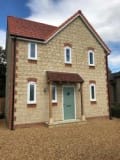
I would like a quotation on the whole property being externaly insulated and rendered


Over 5 reviews & an average rating of 4.8/5 stars, you'll find the right pro
Use the shortlist button to select up to 4 tradespeople, enter your project details and press send
Get up to 4 quotes from local Insulation Installers near you




Blakeney, Lydney - GL15
Enquiry from: Adam T
Start Date: Immediate
I would like a quotation on the whole property being externaly insulated and rendered
Blakeney, Lydney - GL15
Enquiry from: Mark W
Start Date: Immediate
Outside walls re rendered
Blakeney, Lydney - GL15
Enquiry from: Wayne S
Start Date: Immediate
Loft insulation Are you the property owner: Owner of the property Property Type: Detached How many bedrooms do you have: 1-2 Do you currently have loft insulationn: No Age of Property: Post-2000 Time ...
Caldicot - NP26
Enquiry from: Owen B
Start Date: Immediate
Cavity wall insulation for 3 walls of a two story extension. Approx 5m per side and 2.5m tall per floor.
Chepstow - NP16
Enquiry from: Allen T
Start Date: Immediate
loft ladder installation and some additional loft insulation are you the property owner: owner of the property how many bedrooms do you have: 1-2 do you currently have loft insulationn: yes do you req...
Chepstow - NP16
Enquiry from: Jason W
Start Date: Immediate
Insulation on the floor of the loft, around 25m2. Floor area is clean ready to lay.
Chepstow - NP16
Enquiry from: Jason W
Start Date: Immediate
Insulation on the floor of the loft, around 25m2. Floor area is clean ready to lay.
Ross-on-Wye - HR9
Enquiry from: Tim B
Start Date: Immediate
we have a upvc victorian conservatory approx 3.5m x 4.1m. i'm looking for a quote for internal superquilt insulation with white upvc cladding and including removing and replacing single light fitting....
Monmouth - NP25
Enquiry from: Roger R
Start Date: Immediate
dormer bungalow upper story insulation, floor and roof. are you the property owner: owner of the property property type: detached how many bedrooms do you have: 3-4 do you currently have loft insulat...
Chepstow - NP16
Enquiry from: Nevil Q
Start Date: Immediate
customer made an online enquiry for cavity wall insulation and confirmed on sms and email they would like a call with a builder to discuss prices.please call to arrange an appointment to quote. are yo...
Ross-on-Wye - HR9
Enquiry from: David F
Start Date: Immediate
property type: other, roof type: flat, work description: require an insulated flat roof to replace an existing (uninsulated) small felted flat roof which was originally over a utility room (now an ex...
Bristol - BS32
Enquiry from: Pamela O
Start Date: Immediate
I have a 4.5x4.0 conservatory that I want to insulate. I take that you don't replace the roof, just add some layers to insulate it. How much would that be, roughly?
Ross-on-Wye - HR9
Enquiry from: Emma S
Start Date: Immediate
Conservatory roof insulation
Caldicot - NP26
Enquiry from: Jim S
Start Date: Immediate
top up loft insulation price are you the property owner: owner of the property property type: detached how many bedrooms do you have: 3-4 do you currently have loft insulationn: yes do you require a ...
Chepstow - NP16
Enquiry from: Emma C
Start Date: Immediate
Hello, I'm looking to get a renewable heat source fitted to my house and before I can continue I need to make sure my property is well insulated. I also have other building work that I need to project...
Monmouth - NP25
Enquiry from: Jen F
Start Date: 1 to 3 months
victorian style conservatory roof insulation panels are you the property owner: owner of the property property type: detached property age: 1970-2000 how many bedrooms: 3-4 rooms roof height: 1st floo...
Ross-on-Wye - HR9
Enquiry from: Mick G
Start Date: Immediate
are you the property owner: owner of the property property type: detached how many bedrooms do you have: 3-4 do you require a top up: yes age of property: 1970-2000 are you interested in cavity wall ...
Ross-on-Wye - HR9
Enquiry from: Mick G
Start Date: Immediate
are you the property owner: owner of the property property type: detached how many bedrooms do you have: 3-4 property age: post-2000 are you in a conservation area: no are you looking for loft insula...
Ross-on-Wye - HR9
Enquiry from: Mick G
Start Date: Immediate
would like borescope inspection of extension and main house, then quote for the areas that need insulating thank you are you the property owner: owner of the property how many bedrooms do you have: 3...
Bristol - BS32
Enquiry from: Lisa B
Start Date: Immediate
We need an EPC carried out on our House
How much do Insulation Installers in Lydney charge?
Prices for Insulation Installers around Lydney can fluctuate relying on the sort of task that you want to have performed in your house. It's the inquiry we are asked a great deal "how much do Insulation Installers in Lydney cost?". It's often good to have an idea of how much a Insulation Installer will likely charge for their services. Prices will certainly rise and fall based upon the products as well as the tradesman chosen. The list shows the kinds of job that Insulation Installers usually do and also the typical price variety of these tasks. Some tasks take longer to finish than others so costs do fluctuate by task.
Tasks that Insulation Installers in Lydney can do:
| Insulation Installer job | Insulation Installer cost in 2026 |
|---|---|
| Loft insulation in Lydney | £450-£690 |
| Cavity wall insulation in Lydney | £400-£820 |
| Roof insulation in Lydney | £7,500-£11,500 |
| Soundproofing in Lydney | £900-£1,380 |
| External wall insulation in Lydney | £6,000-£15,000 |
A lot of an uninsulated property’s heat is lost through the roof and that’s even more alarming, when you realize this figure is up to a quarter of the total heat of the house. Hence, the tremendous importance of preventing this heat loss through loft insulation which will go a long way to help you against spending unnecessary thousands of pounds on heating bill as well as energy loss.
Loft insulation is an effective method to achieve the desired result, however the question is, how exactly does it work? Well, it’s time to find out!
Using either a fireplace or central heating to heat up your home, a large quantity of that heat would be lost through the roof of your home. Generally, heat rises and when it does, there’s simply no way to prevent it - it’s just science. Escaping by both the conduction and convection methods via your roof, the heat escaping through your ceiling, into the loft space and out into the open air outside can only be significantly reduced by laying loft insulation.
Generally, the added layer of insulation works by trapping the heat inside the room below the loft so as to enable the air within your house to stay warmer for longer. What’s more? The layer of insulation also keeps cold air from the outside from entering your home. As a result, you don’t have to heat your home as much in order to achieve the same temperature for each individual room. Over time, just by doing this you can potentially save hundreds pounds. Getting it installed in your home may actually seem a bit expensive at first, but it’s something that’ll eventually pay off.
How long it takes to install insulation will depend on the size of your property. In general, loft and cavity wall insulation can be installed in a day or two. External wall insulation will usually take longer to install. The rep or installer will be able to advise you when quoting for the job how long this will be.
Damp issues on a property are usually generated by a lot of factors such as a poor or broken guttering, condensation and lots more. The question arising here is what is the possibility of External Wall Insulation (EWI) preventing condensation? Not only is EWI a reliable way to reduce condensation-caused damp, but it’s also one of the major reasons property owners in solid wall homes consider thermally rendering or cladding their external walls.
Condensation arises as a result of warm moist internal air hitting a cold surface such as the steaming up of both windows and mirror when having a shower. What happens here is the condensation of the water vapour in the air from a gas to liquid in the process of touching the cold surface - one whose temperature is significantly reduced to reach the dew point. At the dew point, condensation is very rampant, and to tackle this issue you’ll have to heighten the wall temperature in order to convert the moisture to vapour and permit it to pass through the wall. And that’s exactly the job of an external wall insulation!
To get started you must ensure that the walls are clean and dry prior to fitting the external wall insulation. The month of May through to September when the weather tends to be dry and more stable are usually the best period to carry out the project. The external wall insulation will function just like a cosy blanket around the building. Ultimately, changing the feel and temperature of the inside of your home. As a result, the previously cold walls will no longer be cold which goes a long way to mitigate the effects of condensation. Furthermore, when an EWI is installed, the rooms of your home will automatically trap more thermal mass as the heat is saved in the walls’ fabric and released back when the temperature drops.
External Wall Insulation (EWI) is the act of insulating a home by fitting insulation to the exterior parts of the building which in turn improves thermal performance, cuts energy consumption ( savings on energy bill) and also adds to the home’s visual appeal. The systems are built in multiple layers, with the insulation board offering a plethora of options with each being suitable to varying projects and their needs. Installing an external wall insulation comes with a variety of benefits, let’s have a look!
• Thermal Performance Improvement
With EWI, the thermal inertia of the walls are greatly enhanced while also restricting the loss of heat. Ultimately, this lowers heating costs, enhances the comfort of indoor thermal and also reduces CO2 pollution.
• Eliminates Noise Pollution
When the noise levels are high, it can have a bad impact on our overall well being. A great way to reduce the disturbances from the outside like traffic noise is by fitting an External Wall Installation system.
• More Comfortable Living Space
Do you know the damp in homes can contribute to respiratory problems? A properly insulated home will greatly limit the impact of condensation by combating the damp issues. As a result, you can always expect your house to be cosy and comfy irrespective of the season. A cooler summer and warmer spring is guaranteed with EWI.
• Enhances The Property’s Visual Appeal
Looking for an excuse to rejuvenate your home’s aesthetic appeal? Well, you can as well try out adding an EWI system. There are a plethora of unique colours and styles you can pick from to beautify your home effortlessly.
• Adds Value To Property
An insulated home will generally cost more than an uninsulated one at the time of resale. Potential home buyers are more interested in the acquisition of a home with an EWI system due to its various benefits - and a higher demand can only imply a higher price!
External wall insulation works to keep your home cosy and comfy while also helping to cut the energy bills. However with the great benefits also comes great costs, so it’s actually a logical decision to know whether there are grants out there which you’re eligible for to help you handle the cost of the external wall insulation.
There are grants available for external wall insulation, but rarely will you find one that covers the full installation cost. With the help of the government’s Energy Company Obligation (ECO) scheme, a couple of energy companies assist in making your home more energy efficient by offering grants or free insulation. In certain cases whereby you receive particular state benefits, you may as well qualify for a higher grant that’ll cover more of the insulation cost.
However, if your energy supplier doesn’t offer any grant, you need not worry as you can save as much on energy bill after installation. Here’s what insulation can help you save per year on energy bills:
• Floor insulation can help you save within a range of £30 to £75 each year.
• Cavity wall insulation can help you save about £85 to £280 a year.
• Loft Insulation (270mm) can help you save about £135 to £250 a year.
Generally, the amount you’ll be able to save on your energy bills depends mainly on the type and size of your property, as well as how energy efficient it already is without the insulation. In the long run, your external wall insulation will more than give you back your investment on the valuable project through your savings on energy bills. In other words, whether or not you’re eligible for a grant should never stop you from installing an external wall insulation.
In recent times, more and more home and property owners are starting to come to terms with the large returns and little investment in cavity wall insulation provides. For a relatively little amount you can achieve a lot, from an increase in your home’s energy efficiency and reduction in heating bills to a huge boost in your property’s resale value and lots more. This makes you wonder how an ordinary insulation can help you achieve so much, right? Well, you’re definitely not alone! Several other potential investors are also eager to know exactly how the cavity wall insulation works to deliver all these juicy benefits. In this post, we’re going to go provide you with a detailed insight on how cavity wall insulation works. Let’s take a look!
Typically, cavity wall insulation works as acting as a shield which prevents the escape of heat from your home. It features a reflective surface which serves as a barrier to reflect heat from one side of the panel, effectively minimizing the amount of heat conduction that escapes through. This protection of your home from heat penetration comes with a couple of benefits with the obvious one being an incredible thermal efficiency. An insulated home or property is able to maintain a much more balanced temperature throughout the year – staying a lot cooler during the summer months and retain the heat generated during the winter months. However, a less talked about benefit is the fact that when an insulation is done during the construction of a house, the whole development phase can be completed a lot quicker. This is mainly because insulation offers total protection against weather conditions which enables internal trades to continue without the need to wait for brickwork or cladding to be completed.
Cavity wall insulation is basically the process of installing an insulating material between the two layers of brick making up a cavity wall, either as a retrofit measure or at the time of building. Obviously this is not a choice if you have solid wall, but for those who do possess a cavity wall, it represents an opportunity you may not want to let slide as it is a worthwhile and affordable wall insulation option. Clearly, cavity wall insulation will make your home or property feel warmer, but it also does come with a range of other benefits which is why we’d recommend installing it. In this post, we’re going to look at a number of reasons why having a cavity wall insulation done is a good idea.
With the numerous benefits that comes with the installation of an external wall insulation in a building, it’s also important to find out whether it’s also safe before proceeding to fit one in your home. Firstly, to ensure that external wall insulation systems are safe, they must be BBA approved, which means they’ve been subjected to a thorough testing by the British Board of Agrement and therefore, suitable for use in UK homes.
Given the fact that cladding materials have recently generated a lot of debate and negative press about how reliable some particular materials are, questions are being asked of the safety and reliability of external wall insulation. However we must clarify that, although external wall insulation can be classified under cladding, it is very different to rainscreen cladding - which caused the Grenfell fire tragedy.
External wall insulation is completely safe. However, when it comes to fire, the safety of your system depends largely on the insulation type in question. The safest type of insulation you can have installed is the Rockwool insulation boards which are rated as Euroclass A1 non-combustible. The board is specially designed in such a way that it contains fire - preventing it from reaching the other areas of the building. They also do not produce harmful emission or smoke when impacted by fire.
Meanwhile, the Wood Fibre, is also a great insulation which is known to char and not burn. Contrary to many beliefs, it actually burns slowly creating this charring effect which produces an oxygen barrier that helps reduce the spread of fire.
To make your system safer, you can also make use of Fibreglass Mesh for reinforcement. It helps to improve the strength of the tensile which promotes the security of the boards attached to the wall.
Answer a few quick questions to help us match you with the right Insulation Installer
Receive no-obligation quotes from 4 Insulation Installers working in Lydney.
Compare prices, customer reviews and services, and hire the right Insulation Installer.
View our open Insulation Installer jobs near you
Join today

