
28 Dec
Insulation | External Wall
Stonehouse - GL10
Enquiry from: Alan C
Start Date: Immediate
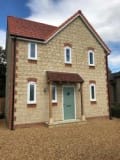
A solution to a porous West facing table end wall. Camp penetration on all 3 floors. The house was built in 1824


Over 5 reviews & an average rating of 4.8/5 stars, you'll find the right pro
Use the shortlist button to select up to 4 tradespeople, enter your project details and press send
Get up to 4 quotes from local Insulation Installers near you





Stonehouse - GL10
Enquiry from: Alan C
Start Date: Immediate
A solution to a porous West facing table end wall. Camp penetration on all 3 floors. The house was built in 1824
Stonehouse - GL10
Enquiry from: Jayne B
Start Date: Immediate
commercial cavity wall insulation
Stonehouse - GL10
Enquiry from: Ian M
Start Date: Immediate
Customer visited the myroofingquotes.co.uk site and submitted an enquiry. Property type: House, Roof type: Flat, Work description: Garage/out house flat roof
Stonehouse - GL10
Enquiry from: Sharon D
Start Date: Immediate
Customer visited the myroofingquotes.co.uk site and submitted an enquiry. Property type: House, Roof type: Pitched, Work description: 1. Erect 2 x tower scaffolds 2. Strip roof of all tiles and ri...
Stonehouse - GL10
Enquiry from: Mrs E
Start Date: Less than one month
A partition wall between 2 bedrooms sound proofed to stop noise of snoring. Please call on Tuesday between 9:30-2:00
Stonehouse - GL10
Enquiry from: Bethany P
Start Date: Less than one month
Cavity wall insulation for a link-detached 3 bedroom house. Are you the property owner: Owner of the property Property Type: Semi detached How many bedrooms do you have: 3-4 Property Age: 1970-2000 A...
Blakeney, Lydney - GL15
Enquiry from: Adam T
Start Date: Immediate
I would like a quotation on the whole property being externaly insulated and rendered
Wotton-under-Edge - GL12
Enquiry from: DENA N
Start Date: Immediate
Looking for supply and installation of rockwool - 60m2 @400mm and 18m2 @200mm for new build in Charfield
Wotton-under-Edge - GL12
Enquiry from: Chris G
Start Date: Immediate
customer requested quotes for loft & roof insulation from a builder around wotton-under-edge. they are considering a couple of projects at the moment.call anytime to arrange appointment to discuss. th...
Wotton-under-Edge - GL12
Enquiry from: Chris G
Start Date: Immediate

quote on loft insulation and cavity wall insulationj are you the property owner: owner of the property property type: detached how many bedrooms do you have: 3-4 property age: 1970-2000 are you in a ...
Wotton-under-Edge - GL12
Enquiry from: Upali P
Start Date: Immediate
We are on the process of buying the above house in Wotton Under-Edge . The house has urea formaldehyde cavity wall. We would like to get no obligation quote for removing and do cavity wall insulation....
Gloucester - GL4
Enquiry from: Jacqueline E
Start Date: Immediate
Ceilings kitchen/ bedroom soundproofing
Gloucester - GL4
Enquiry from: Jackie E
Start Date: Immediate
Shops have been converted into flats but need sound proof insulation
Wotton-under-Edge - GL12
Enquiry from: Bronwen H
Start Date: Immediate
Quote for insulation for walls and loft
Stroud - GL6
Enquiry from: Patricia D
Start Date: Immediate
Cavity wall insulation for 1970 s concrete block/ Brad stone extension
Gloucester - GL2
Enquiry from: Marlene E
Start Date: Immediate
Sound proofing in my property
Stroud - GL6
Enquiry from: RAYMOND E
Start Date: Immediate
Blown Cavity Wall on large 1930's house
Tetbury - GL8
Enquiry from: Susan T
Start Date: Immediate
improve loft insulation and board coverage. are you the property owner: owner of the property property type: terrace how many bedrooms do you have: 3-4 do you currently have loft insulationn: yes do y...
Badminton - GL9
Enquiry from: John H
Start Date: Immediate
cavity wall insulation and loft insulation are you the property owner: owner of the property how many bedrooms do you have: 1-2 property age: 1970-2000 are you in a conservation area: no are you looki...
Badminton - GL9
Enquiry from: John H
Start Date: Immediate
customer in the badminton area made an enquiry a couple of projects including loft & roof insulation.call anytime and arrange an appointment to discuss. below is some details about this project: are y...
How much do Insulation Installers in Stonehouse charge?
Costs for Insulation Installers around Stonehouse can be very different relying on the sort of work that you want to have carried out in your home. It's the question we get asked a great deal "how much do Insulation Installers in Stonehouse charge?". It's generally better to have an idea of how much a Insulation Installer are going to likely charge for their work. Prices will likely vary based upon the products as well as the tradesperson picked. The list shows the types of work that Insulation Installers commonly do as well as the average cost range of these jobs. Some projects take longer to finish than others so prices do vary by project.
Tasks that Insulation Installers in Stonehouse can do:
| Insulation Installer job | Insulation Installer cost in 2026 |
|---|---|
| Loft insulation in Stonehouse | £450-£690 |
| Cavity wall insulation in Stonehouse | £400-£820 |
| Roof insulation in Stonehouse | £7,500-£11,500 |
| Soundproofing in Stonehouse | £900-£1,380 |
| External wall insulation in Stonehouse | £6,000-£15,000 |
If you want to install an external wall, it is only wise to consider whether or not a planning permission is required in order to avoid a hefty fine. In a great kudos to the government and a welcome relief to home and property owners, the installation of external wall insulation is seen as an “improvement to the house and not an “extension or an “enlargement. Ultimately, this implies that external wall insulation fitting is to be done under permitted development and a planning application may not be required. However, like many other regulations, there are also exceptions to this rule and the main one is if the activity changes the appearance of your property. Properties such as a listed building having tighter regulations may pose some issues. As a result, we’d advise you to consult your local authority to ensure that there’s no fast rule to this topic before commencement of the external wall insulation project.
At the moment, according to the Government Building Regulations, the surface of the entire wall is to be improved to existing standards if the area to be insulated exceeds 25 percent of the wall. In normal situations this is usually the typical case, however to prevent avoidable fines and other possible punishments, it is always best to reach to your local authority and check out the rules guiding external wall insulation in your constituency. Furthermore, since external wall insulation is not a task that’s recommended to be done by yourself, you can also ask the professional external wall insulation fitting company for the applying rules before proceeding. As a good professional, the company should have a better knowledge of the rules and regulation guiding its activities.
Over the years there has been an increase in the recommended thickness of loft insulation by the government. Obviously, the reason behind this is pretty simply - the thicker the layer of your loft insulation the bigger your savings. The UK government is very keen to every house in the country to have loft insulation fitted where possible as it helps to minimize the heating demands of these properties. Households get to benefit from loft insulation in so many ways which includes reduced energy energy bills as well as having a home that stays at a more comfortable temperature for longer.
Generally, for the government energy efficiency is crucial as it implies that the highest demand ( which is usually the time of the day when gas or electricity use is at its peak ) reduces, since each building requires slightly less energy. Overall, that ultimately implies that new power plants don’t have to be built which is some nice cost savings for the government.
In the 1980’s, any thickness of loft insulation from 25 mm to 50 mm was considered the standard. But then, building regulations stated that homes should have as much as 100 mm of loft insulation. Over time, this gradually increased to 270mm for new builds and also recommended for other properties, although not essential. As a result of this, there’s always a need to check how much insulation you currently have in your loft before you decide to purchase more. You may discover that you already have something within the range of 20 mm to 200 mm up there and knowing this and the insulation values will assist in determining how much more you’ll need to purchase, if any at all. You should also note that some modern materials can offer the same thermal insulation whilst not being as thick.
With the title of this blog, do not be deceived into thinking the purpose is to encourage you to install an external insulation by yourself. Even as a competent DIYer, it’s not advisable to buy a couple of materials and start slapping it into the wall hoping for the best outcome. External insulation is by no means a DIY job and without the proper training and experience, it can easily turn out disastrous resulting in loss of time, effort and money in such a valuable project. This blog, however, will give you a great insight on how the installation process works and help maximize knowledge ensuring you do not spend more than necessary.
External Insulation Installation
lRender Test
• This is done to ensure the existing render is good enough for insulation support.
• If positive, the insulation can be applied directly onto it.
• If negative, ensure removal of the old render before fitting the insulation.
lPipework Adjustment & Removal
• Remove all pipework prior to insulation fitting
• Install temporary downpipes to ensure water is not wasted and everything continue to function normally during the insulation fitting process.
lWindow Protection
• Protect the window with a protective layer or film.
lStarter Track Fitting
• Determine level you want the insulation to start (height).
• Fit the aluminium start track or carrier tray at the identified level.
lInsulation Boards Fitting
• Apply a layer of adhesive to the board and glue them to the wall in a staggered pattern.
• Cut to fit round all obstructions and windows.
• File off the edge of the board where necessary using a rasp upon successful fitting of the boards
lMechanical Fixing Inclusion
• Hammer around 10 fixings per square metre into the board.
• This is to secure the insulation boards.
lBeading Fitting
• Add corner beads and stop beads to ensure the insulation is secure and to prevent it from making contact with other materials.
lReinforcing Mesh & Render Addition
• Apply two layers of strengthening properties and between the two layers of render, include a fibre glass mesh.
lPrimer Application
• Paint on the primer
lFinal Render Application
• Choose your most preferred texture and colour as this will be the last coating of the installation process.
lPipework Re-installation
• Re-install all detached pipework at the start of the installation process.
More often than not, several homeowners fail to realize there’s so much value sitting right under their roof - the loft. When a loft is insulated, there are so many juicy benefits that can be derived. It can go a long way to save increase you energy savings and several more functions. Therefore, if you really wish to maximize the space under your home’s roof, you’d have to considering insulating it. So how much would it cost to have your loft insulated? Here, you’ll discover the cost of insulating your lofts so you that you can set a budget and start to plan.
The cost of insulating a loft is actually affordable for several individuals, however, this depends on a wide range of factors such as the size of the house as well as the type of insulation being installed. One significant factor is the insulating material that you choose to install. If done properly, you’d be able to prevent heat from escaping through the roof of the house which helps improve energy efficiency and ultimately, save you some money on heating bills.
If you’d prefer to make it a DIY project and you go for a blanket insulation it costs about £5 per m2. therefore, this will cost within the range of £100 to about £150 for a small home.
For a professional service, you’ll be provided with a quote for both the materials and labour. The amount will be based on the number of insulation required, the company hired, your location as well as the method selected. The price to purchase and install blanket insulation would be between the range of £300 to £400 depending on the size of your home.
The short and simple answer to this question is yes, loft insulation does cause condensation. Over the years, problems with condensation in loft spaces have become increasingly common. While this may not be harmful in anyway, when the condensation becomes excessive it can lead to more serious issues taking root in your loft like wet rot, dry rot as well as black spot mould. Generally, the best thing to do if you’re concerned about the condensation in your loft space and that it may rapidly become a bigger problem is to get in touch with a damp specialist as soon as possible.
Even though insulating your loft space comes with a wide array of benefits like making the top floor rooms warmer, it’s however comes at the cost of making your loft or room space cooler. Condensation in lofts take place primarily due to the humid air making its way through insulation or other gaps into the loft space and touching a cooler surface which in turn results in beads of moisture on the timbers, lintels as well as the underside of the roof. This is why its always a great idea make use of thermal insulation with a vapour barrier that’s installed on the warmer side of the insulating material.
Condensation in loft is caused by excess moisture in the air and lack of adequate air ventilation. Here are some top reasons that gives rise to this in the loft:
Cavity wall insulation is basically the process of installing an insulating material between the two layers of brick making up a cavity wall, either as a retrofit measure or at the time of building. Obviously this is not a choice if you have solid wall, but for those who do possess a cavity wall, it represents an opportunity you may not want to let slide as it is a worthwhile and affordable wall insulation option. Clearly, cavity wall insulation will make your home or property feel warmer, but it also does come with a range of other benefits which is why we’d recommend installing it. In this post, we’re going to look at a number of reasons why having a cavity wall insulation done is a good idea.
Damp issues on a property are usually generated by a lot of factors such as a poor or broken guttering, condensation and lots more. The question arising here is what is the possibility of External Wall Insulation (EWI) preventing condensation? Not only is EWI a reliable way to reduce condensation-caused damp, but it’s also one of the major reasons property owners in solid wall homes consider thermally rendering or cladding their external walls.
Condensation arises as a result of warm moist internal air hitting a cold surface such as the steaming up of both windows and mirror when having a shower. What happens here is the condensation of the water vapour in the air from a gas to liquid in the process of touching the cold surface - one whose temperature is significantly reduced to reach the dew point. At the dew point, condensation is very rampant, and to tackle this issue you’ll have to heighten the wall temperature in order to convert the moisture to vapour and permit it to pass through the wall. And that’s exactly the job of an external wall insulation!
To get started you must ensure that the walls are clean and dry prior to fitting the external wall insulation. The month of May through to September when the weather tends to be dry and more stable are usually the best period to carry out the project. The external wall insulation will function just like a cosy blanket around the building. Ultimately, changing the feel and temperature of the inside of your home. As a result, the previously cold walls will no longer be cold which goes a long way to mitigate the effects of condensation. Furthermore, when an EWI is installed, the rooms of your home will automatically trap more thermal mass as the heat is saved in the walls’ fabric and released back when the temperature drops.
When thinking about the right insulation material for your loft, some of the first few things that comes to mind is the various properties of that material as well as how good they fit with your home’s needs.naturally, you’d like to ensure that the insulation will be efficient enough to add to the overall energy efficiency of your home, however there are also other features that may not get as much attention but also happens to be equally important. As the primary function of an insulation is to blanket your house to offer a barrier against heat loss, going for an insulation material that’s also fireproof is crucial as loft insulation can burn. Although most insulation materials are fireproof, a myriad of problems can actually make your insulation burn.
For instance, fibreglass insulation is produced using glass combined with plastic polymers and is naturally resistant to fire. However, even at that you’d have to be careful with batts that are supported with foil or paper due to the fact that these materials can burn pretty quickly. Cellulose, on the other hand, is not fireproof and is required to be treated by other flame retardants in order to help reduce combustion. Some of the best insulation materials that are resistant to fire includes the following:
Answer a few quick questions to help us match you with the right Insulation Installer
Receive no-obligation quotes from 4 Insulation Installers working in Stonehouse.
Compare prices, customer reviews and services, and hire the right Insulation Installer.
View our open Insulation Installer jobs near you
Join today

