
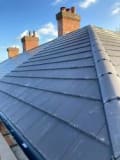
Find an Insulation Installer you can trust in Chathill.

Choose from 9 Insulation Installers, all rated by people like you.

Over 71 reviews & an average rating of 4.5/5 stars, you'll find the right pro

Choose and shortlist

Use the shortlist button to select up to 4 tradespeople, enter your project details and press send

or

Keen to get on with the job?

Get up to 4 quotes from local Insulation Installers near you

View Shortlist
Verified Pro

Owensdrivesandpatiosltd

0 review(s)
Offers services in CHATHILL
Owen's Drives and Patios Ltd specializes in designing and constructing durable driveways and patios that withstand all wea...
Over 50 Reviews

Home Services

69 review(s)
Offers services in CHATHILL
We repair all Roofs Gutters and installation, chimneys pointed lead dressings. Also install and repair Cctv,Sound systems...

Rentek

1 review(s)
Offers services in CHATHILL
Firstly we are a team of Surveyors not Salesmen. We work with the best manufacturers and installers to offer our customers...

Team 42

1 review(s)
Offers services in CHATHILL
Offering free Cavity wall and Loft insulation to all residents across the North East.

Walltransform

0 review(s)
Offers services in CHATHILL
Wall Transform are manufacturers and suppliers of innovative internal and external render products designed certified by B...

How much do Insulation Installer services cost?

How much do Insulation Installers in Chathill charge?
Prices for Insulation Installers around Chathill can differ depending upon the kind of task that you need to have actually done in your home. It's the question we get asked a great deal "how much do Insulation Installers in Chathill cost?". It's often good to have an idea of how much a Insulation Installer will likely charge for their services. Prices are going to change based on the materials and also the tradesperson picked. The list shows the types of service that Insulation Installers commonly do and the regular price variety of these projects. Some tasks take longer to finish than others so costs do vary by task.

Tasks that Insulation Installers in Chathill can do:

View our Insulation Installer cost guide View our Insulation Installer advice

The average price
of an Insulation Installer in Chathill is:

£4,300

Insulation Installer job Insulation Installer cost in 2026
Loft insulation in Chathill £450-£690
Cavity wall insulation in Chathill £400-£820
Roof insulation in Chathill £7,500-£11,500
Soundproofing in Chathill £900-£1,380
External wall insulation in Chathill £6,000-£15,000

Related Insulation Installer searches in Chathill

Insulation Installer FAQs

what is the best loft insulation?

If you have a loft, then the next thing that’s crucial is a loft insulation. Asides from cutting down on your carbon footprint, when you’re able to install an effective loft insulation you can slash your heating bills by up to £250 per year. What’s more? Besides making your home more energy efficient, it can also increase the value of your property a great deal. So if you’re also considering the insulation of your loft, one of the few things that comes to mind is, what loft insulation is the best to incorporate? In order to help you make the best informed decision possible, this post is going to address this issue and put you on the right path.


In truth, there’s no way to say exactly which type of insulation is the best as all types usually have a different purpose as well as usage. The insulation you choose for your home’s loft is be based largely on the how you’re going to make use of the space as well as any unique challenges you might face given the shape of your home’s loft. Below are some types of insulation to give you a better idea:

  • Blanket insulation. This is the most common type that comes in rolls of rock, glass or mineral fibre ( or foil-backed felt ). It normally the most affordable and also a good all-purpose insulation which is easy to fit although not suitable for the roof.
  • Loose-fill insulation. This type of insulation features a loose, lightweight material such as cork granules, cellulose fibre, mineral wool etc. It can either be incorporated as a top up or on its own. The primary drawback is it isn’t very secure and can also be very messy.
  • Sheet insulation. This is the best solution for the roof’s underside as it offers a highly effective insulation for your loft space and can also be decorated over. The drawback here is that it’s usually the most expensive type to purchase and install.

how does loft insulation work?

A lot of an uninsulated property’s heat is lost through the roof and that’s even more alarming, when you realize this figure is up to a quarter of the total heat of the house. Hence, the tremendous importance of preventing this heat loss through loft insulation which will go a long way to help you against spending unnecessary thousands of pounds on heating bill as well as energy loss.


Loft insulation is an effective method to achieve the desired result, however the question is, how exactly does it work? Well, it’s time to find out!


Using either a fireplace or central heating to heat up your home, a large quantity of that heat would be lost through the roof of your home. Generally, heat rises and when it does, there’s simply no way to prevent it - it’s just science. Escaping by both the conduction and convection methods via your roof, the heat escaping through your ceiling, into the loft space and out into the open air outside can only be significantly reduced by laying loft insulation.


Generally, the added layer of insulation works by trapping the heat inside the room below the loft so as to enable the air within your house to stay warmer for longer. What’s more? The layer of insulation also keeps cold air from the outside from entering your home. As a result, you don’t have to heat your home as much in order to achieve the same temperature for each individual room. Over time, just by doing this you can potentially save hundreds pounds. Getting it installed in your home may actually seem a bit expensive at first, but it’s something that’ll eventually pay off.

How good is external wall insulation?

External Wall Insulation (EWI) is the act of insulating a home by fitting insulation to the exterior parts of the building which in turn improves thermal performance, cuts energy consumption ( savings on energy bill) and also adds to the home’s visual appeal. The systems are built in multiple layers, with the insulation board offering a plethora of options with each being suitable to varying projects and their needs. Installing an external wall insulation comes with a variety of benefits, let’s have a look!

• Thermal Performance Improvement

With EWI, the thermal inertia of the walls are greatly enhanced while also restricting the loss of heat. Ultimately, this lowers heating costs, enhances the comfort of indoor thermal and also reduces CO2 pollution.

• Eliminates Noise Pollution

When the noise levels are high, it can have a bad impact on our overall well being. A great way to reduce the disturbances from the outside like traffic noise is by fitting an External Wall Installation system.

• More Comfortable Living Space

Do you know the damp in homes can contribute to respiratory problems? A properly insulated home will greatly limit the impact of condensation by combating the damp issues. As a result, you can always expect your house to be cosy and comfy irrespective of the season. A cooler summer and warmer spring is guaranteed with EWI.

• Enhances The Property’s Visual Appeal

Looking for an excuse to rejuvenate your home’s aesthetic appeal? Well, you can as well try out adding an EWI system. There are a plethora of unique colours and styles you can pick from to beautify your home effortlessly.

• Adds Value To Property

An insulated home will generally cost more than an uninsulated one at the time of resale. Potential home buyers are more interested in the acquisition of a home with an EWI system due to its various benefits - and a higher demand can only imply a higher price!

How long does it take to install insulation?

How long it takes to install insulation will depend on the size of your property. In general, loft and cavity wall insulation can be installed in a day or two. External wall insulation will usually take longer to install. The rep or installer will be able to advise you when quoting for the job how long this will be.

does loft insulation cause condensation?

The short and simple answer to this question is yes, loft insulation does cause condensation. Over the years, problems with condensation in loft spaces have become increasingly common. While this may not be harmful in anyway, when the condensation becomes excessive it can lead to more serious issues taking root in your loft like wet rot, dry rot as well as black spot mould. Generally, the best thing to do if you’re concerned about the condensation in your loft space and that it may rapidly become a bigger problem is to get in touch with a damp specialist as soon as possible.


Even though insulating your loft space comes with a wide array of benefits like making the top floor rooms warmer, it’s however comes at the cost of making your loft or room space cooler. Condensation in lofts take place primarily due to the humid air making its way through insulation or other gaps into the loft space and touching a cooler surface which in turn results in beads of moisture on the timbers, lintels as well as the underside of the roof. This is why its always a great idea make use of thermal insulation with a vapour barrier that’s installed on the warmer side of the insulating material.


Condensation in loft is caused by excess moisture in the air and lack of adequate air ventilation. Here are some top reasons that gives rise to this in the loft:

  • Extra insulation has been installed in the loft leading to a restriction on the natural air circulation in the property.
  • When the storage boxes or other items that has been stockpiled in the loft blocks the roof vents.
  • The release of steam and moist air into the loft space by hot water tanks.
how does cavity wall insulation work?

In recent times, more and more home and property owners are starting to come to terms with the large returns and little investment in cavity wall insulation provides. For a relatively little amount you can achieve a lot, from an increase in your home’s energy efficiency and reduction in heating bills to a huge boost in your property’s resale value and lots more. This makes you wonder how an ordinary insulation can help you achieve so much, right? Well, you’re definitely not alone! Several other potential investors are also eager to know exactly how the cavity wall insulation works to deliver all these juicy benefits. In this post, we’re going to go provide you with a detailed insight on how cavity wall insulation works. Let’s take a look!


Typically, cavity wall insulation works as acting as a shield which prevents the escape of heat from your home. It features a reflective surface which serves as a barrier to reflect heat from one side of the panel, effectively minimizing the amount of heat conduction that escapes through. This protection of your home from heat penetration comes with a couple of benefits with the obvious one being an incredible thermal efficiency. An insulated home or property is able to maintain a much more balanced temperature throughout the year – staying a lot cooler during the summer months and retain the heat generated during the winter months. However, a less talked about benefit is the fact that when an insulation is done during the construction of a house, the whole development phase can be completed a lot quicker. This is mainly because insulation offers total protection against weather conditions which enables internal trades to continue without the need to wait for brickwork or cladding to be completed.

Is external wall insulation safe?

With the numerous benefits that comes with the installation of an external wall insulation in a building, it’s also important to find out whether it’s also safe before proceeding to fit one in your home. Firstly, to ensure that external wall insulation systems are safe, they must be BBA approved, which means they’ve been subjected to a thorough testing by the British Board of Agrement and therefore, suitable for use in UK homes.

Given the fact that cladding materials have recently generated a lot of debate and negative press about how reliable some particular materials are, questions are being asked of the safety and reliability of external wall insulation. However we must clarify that, although external wall insulation can be classified under cladding, it is very different to rainscreen cladding - which caused the Grenfell fire tragedy.

External wall insulation is completely safe. However, when it comes to fire, the safety of your system depends largely on the insulation type in question. The safest type of insulation you can have installed is the Rockwool insulation boards which are rated as Euroclass A1 non-combustible. The board is specially designed in such a way that it contains fire - preventing it from reaching the other areas of the building. They also do not produce harmful emission or smoke when impacted by fire.

Meanwhile, the Wood Fibre, is also a great insulation which is known to char and not burn. Contrary to many beliefs, it actually burns slowly creating this charring effect which produces an oxygen barrier that helps reduce the spread of fire.

To make your system safer, you can also make use of Fibreglass Mesh for reinforcement. It helps to improve the strength of the tensile which promotes the security of the boards attached to the wall.

How to fit external insulation?

With the title of this blog, do not be deceived into thinking the purpose is to encourage you to install an external insulation by yourself. Even as a competent DIYer, it’s not advisable to buy a couple of materials and start slapping it into the wall hoping for the best outcome. External insulation is by no means a DIY job and without the proper training and experience, it can easily turn out disastrous resulting in loss of time, effort and money in such a valuable project. This blog, however, will give you a great insight on how the installation process works and help maximize knowledge ensuring you do not spend more than necessary.

External Insulation Installation

lRender Test

• This is done to ensure the existing render is good enough for insulation support.

• If positive, the insulation can be applied directly onto it.

• If negative, ensure removal of the old render before fitting the insulation.

lPipework Adjustment & Removal

• Remove all pipework prior to insulation fitting

• Install temporary downpipes to ensure water is not wasted and everything continue to function normally during the insulation fitting process.

lWindow Protection

• Protect the window with a protective layer or film.

lStarter Track Fitting

• Determine level you want the insulation to start (height).

• Fit the aluminium start track or carrier tray at the identified level.

lInsulation Boards Fitting

• Apply a layer of adhesive to the board and glue them to the wall in a staggered pattern.

• Cut to fit round all obstructions and windows.

• File off the edge of the board where necessary using a rasp upon successful fitting of the boards

lMechanical Fixing Inclusion

• Hammer around 10 fixings per square metre into the board.

• This is to secure the insulation boards.

lBeading Fitting

• Add corner beads and stop beads to ensure the insulation is secure and to prevent it from making contact with other materials.

lReinforcing Mesh & Render Addition

• Apply two layers of strengthening properties and between the two layers of render, include a fibre glass mesh.

lPrimer Application

• Paint on the primer

lFinal Render Application

• Choose your most preferred texture and colour as this will be the last coating of the installation process.

lPipework Re-installation

• Re-install all detached pipework at the start of the installation process.

Insulation Installer help and advice

How it works

Tell us about your Insulation Installer project

Answer a few quick questions to help us match you with the right Insulation Installer

Get up to 4 free quotes

Receive no-obligation quotes from 4 Insulation Installers working in Chathill.

Pick the right pro for you

Compare prices, customer reviews and services, and hire the right Insulation Installer.

Are you a Insulation Installer in Chathill?

View our open Insulation Installer jobs near you

Join today
View Shortlist
