

29 Sep
Asphalt or Tarmac Driveway
Barrow-in-Furness - LA13
Enquiry from: Neil A
Start Date: Immediate
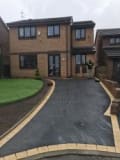
(address removed) done in tarmac


Over 108 reviews & an average rating of 4.3/5 stars, you'll find the right pro
Use the shortlist button to select up to 4 tradespeople, enter your project details and press send
Get up to 4 quotes from local Driveway Installers near you




Barrow-in-Furness - LA13
Enquiry from: Neil A
Start Date: Immediate
(address removed) done in tarmac
Barrow-in-Furness - LA13
Enquiry from: Steve C
Start Date: Immediate
Submit your free quote for rated tradespeople
Morecambe - LA4
Enquiry from: Lynne L
Start Date: Immediate
New driveway done in tarmac or asphalt
Morecambe - LA3
Enquiry from: Colin E
Start Date: Immediate
Relay crazy paving to rear of the garden
Barrow-in-Furness - LA13
Enquiry from: Lesley K
Start Date: Immediate
I need the patio and surrounding area pressure washed
Ulverston - LA12
Enquiry from: Jeannette M
Start Date: Immediate
Submit your free quote for rated tradespeople
Are you planning to install a driveway on your home or property? If yes, then you’ll most likely be interested to know exactly how much it’s going to cost. Well, to get started you’ll have to decide whether you’ll be doing this yourself or perhaps you’d be hiring a specialist. The project could be much more effective if you decide to tackle it on your own as you’re only going to be worried about the paying for the materials without any labour costs. However, installing a driveway is not the simplest of tasks even for the competent and more experienced DIYers. Therefore, if you choose to carry out the project on your own, you should also get ready for a longer completion time than it would have been if you hired a professional which is usually around 48 hours. If you have all the tools and materials in place before commencement, then it’s possible to complete the project over the weekend. However, there are many risks involved such as the possibility of misjudging the proper quantity of concrete mixture (for a concrete driveway) and more. So, how much does driveway installer charge?
Well, just like other home improvement projects, the amount charged by driveway installers depend on a number of factors like the type of driveway (concrete, asphalt, tarmac etc), size of the area, the experience of the professional, the property’s location and lots more. However, in general, the average cost of a driveway ranges between £35 to £85 per square metre. For labour costs, you can expect to pay between £200 to £450 per day based on the work’s complexity.
The table shows the sorts of task that Driveway Installers typically do as well as the regular cost series of these projects. Some jobs take longer to finish than others so costs do be very different by project.
View our Driveway Installer cost guide View our Driveway Installer advice| Driveway Installer job | Driveway Installer cost in 2026 |
|---|---|
| Tarmac paving and driveways in Barrow-in-furness | £1,125-£1,725 |
| Block paving in Barrow-in-furness | £3,000-£4,600 |
| Slab Paving and Driveway in Barrow-in-furness | £1,875-£2,875 |
| Driveway cleaning in Barrow-in-furness | £225-£345 |
| Gravel paving and driveways in Barrow-in-furness | £3,000-£4,600 |
| Pattern imprinted driveways in Barrow-in-furness | £3,750-£5,750 |
| Resin bound driveway in Barrow-in-furness | £2,625-£4,025 |
| Driveway repair in Barrow-in-furness | £1,520-£2,280 |
| Indian Stone Paving in Barrow-in-furness | £2,000-£3,800 |
| Pave Driveway in Barrow-in-furness | £1,800-£3,100 |
If you’re considering giving your home a quick facelift, laying of paving slabs for your outdoor living spaces might be a great way to start. It can be installed in some many parts of your home’s exterior from the pathways to driveways and from the yards to the patios. With proper training and experience, laying paving slabs is a very easy and quick process. However, the issue here is, how do you calculate the number of paving slabs you need? In this step by step guide, you’ll find all the information needed to help you get started. Once you’re able to get the accurate number of paving slabs, do ensure to include extras that’ll cover up for possible errors or damages.
Just like any other measurement task, it’ll be a lot easier when you know how as well as when you have the right tools to use for the job. To get started, you’ll need a tape measure, pen or pencil, pegs, string, hammer, paper and calculator.
• Draw a sketch of the area. This sketch will take note of the area’s length and width.
• Using strings and pegs, mark out the area to be paved
• Using a tape measure, take a measurement of the length and width of the space along the string lines and note them on the sketch.
• If the area is a drive make sure that the paved area is wide enough to accommodate the cars intended
• Multiply the length of the space by the width to get the area of the space.
• Once calculated, divide the total area of the space by the area of the single slab. This will give you an accurate number of the paving slabs you’ll require to complete your project.
Oil stains on your concrete driveway can look obvious and unsightly. However, there are several different ways to remove them.
If you’ve only just spilled the oil, you can use a mixture of absorbent material, like sawdust, and solvent, like acetone or lacquer. Combine these, place them on the stain, cover and leave for about 24 hours. Then sweep up the mixture and rinse the area with water.
If you’ve got a small, older stain, you can use a detergent like baking soda, vinegar, washing up liquid or laundry detergent. Cover the stain with the detergent and leave for about 30 minutes. Then, add hot water and scrub the area and rinse. You might need to repeat this if necessary.
If it’s a larger, more stubborn stain, you might need to use a special degreaser. You can use this similarly to a detergent but make sure you follow the instruction on the bottle carefully.
There are several effective ways to clean paving slabs. It’s important to pick a method that suits you and your paving material.
Whatever method you use, start by removing all weeds and loose debris from your paving. Then, if you have a pressure washer, you can simply use this to clean away any dirt.
If you don’t have a pressure washer, you can try using soapy water or watered-down bleach. If you use soapy water, mix a mild detergent like washing up liquid with warm water. Then pour it onto your paving, work it in with a brush and rinse it off with clean water.
If you use bleach, first make sure that the water won’t drain off onto any plant life, as this can kill it. You should also avoid using bleach on concrete slabs, as it will cause them to fade. Mix one-part bleach with five-parts water, pour it onto your paving and work it in with a brush. Then leave it for 15 minutes and rinse it off with clean water.
There is a variety of methods available to ensure that your paving drains properly, for example draining into a lawn or soakaway. Correct drainage of paving is a requirement for planning permission. See our guide on planning permission for paving for more information.
Tarmac is a material made up of broken stone and tar, used for surfacing roads, driveways and other outdoor areas. It’s actually a registered product trademark, but many people use ‘tarmac’ interchangeably with ‘asphalt’. Asphalt is similar to tarmac, but is now more commonly used, and is made from bitumen instead of tar.
As a homeowner, your home is your haven where you can control things and add more value, however that doesn’t give you the license to go around digging up your driveway as you deem fit. Replacing your old driveway with a new one comes with its own unique set of rules which are put in place to ensure that your personal preferences doesn’t pose long term issues such as flooding or poor visibility on any adjoining road. You should however note that it’s not every time you would need a planing permission for your driveway.
Below are the circumstances whereby you’ll need to submit an application before commencing your driveway paving project.
• In the event whereby you are to pave a driveway of over 5 square metres and/or a permeable surface is not available for its drainage. If the later is not available, there’ll be an increase in the flood risk. As a result, there’s the need to take into account permeable paving for your project.
• In the event whereby you’re changing the visibility on your road. These situations include removal of trees, gates or walls and the like. So far your changes negatively affects drivers’ visibility, you’ll need a planning permission.
• In the situations whereby you need to include a drop kerb. You may plan to add in a drop kerb if you’re thinking about expanding your driveway. Therefore, since residents can’t change the roads or pavements at their first fanciful impulse you’ll need to consult your local council before submitting your application.
• In the situation whereby its a listed building. Planning decisions are also greatly affected by the need to protect historic building. So if your building is a listed one, you’d have to submit an application before making changes.
No, pattern imprinted concrete shouldn’t be slippery. Most good driveway installers will add a special anti-slip agent to the sealant before they brush it onto your driveway, so it will stop it from being slippery.
It’s important to ask a driveway company how they will seal your driveway when you get a quote from them. If an untrustworthy company seals your driveway badly, it can cause a thick and extremely slippery surface, so it’s vital that you ask any contractor what their procedure is before you engage them.
It’s also important to remember that pattern imprinted concrete isn’t a ‘non-slip’ surface – it’s just not slippery. You could still slip over on a concrete driveway, just like you could on tarmac or a block paved driveway. Also, once you’ve walked and driven over your driveway for a few months, its skid and slip resistance will increase as it weathers and builds up tiny specs of dirt on it. Pattern imprinted concrete is often used in high footfall areas in places like shops, fast food restaurants and theme parks, so if there was a significant slip risk these businesses wouldn’t use it.
You might think that you could ask your contractor not to seal the driveway to make it less slippery, but it could actually do the opposite. By sealing pattern imprinted concrete, it means that moss and algae is much less likely to grow, which can be extremely slippery to walk on if it’s left to its own devices. If moss does form on your driveway, the sealed surface is much easier to clean as you can simply pressure wash it away; this is not as easy to do on a non-sealed surface.
Some paving projects require you to cut paving slabs to make them fit into a smaller space. To do this, firstly you need to measure the slab and draw a line in pencil or chalk where you want to cut.
There are then several different ways you can cut the slab – you or your professional can choose the one you or they are most happy with. A hammer and chisel can work well, or a handheld saw. You can also use an angle grinder fitted with a stone-cutting disc.
Answer a few quick questions to help us match you with the right Driveway Installer
Receive no-obligation quotes from 4 Driveway Installers working in Barrow-in-furness.
Compare prices, customer reviews and services, and hire the right Driveway Installer.
View our open Driveway Installer jobs near you
Join today

