

29 Jun
Paving & Driveway | Asphalt / Tarmac
Dalbeattie - DG5
Enquiry from: Susan S
Start Date: Immediate
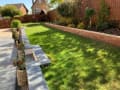
Driveway resurfaced with tar and chip


Over 17 reviews & an average rating of 4.7/5 stars, you'll find the right pro
Use the shortlist button to select up to 4 tradespeople, enter your project details and press send
Get up to 4 quotes from local Driveway Installers near you



Dalbeattie - DG5
Enquiry from: Susan S
Start Date: Immediate
Driveway resurfaced with tar and chip
Dalbeattie - DG5
Enquiry from: Patricia G
Start Date: Immediate
private road needs quality tarmac resurfacing. currently full of potholes and has storm damage. 1060 Sq metres to 1320 Sq metres required - depending on agreement from households. do not phone as abr...
Dalbeattie - DG5
Enquiry from: Ronald O
Start Date: Immediate
Clear Gravel and Paving and replace with suitable surface. Homeowner Supplied and fitted Please contact to appoint
Castle Douglas - DG7
Enquiry from: Xander B
Start Date: Immediate
42 square meter of tarmac added on to the original driveway. are you the property owner: tenant (with permission) property type: detached do you require: asphalt/tarmac what work do you need to have d...
Dumfries - DG1
Enquiry from: Lisa M
Start Date: Immediate
my front garden and all of my drive way tarred, many some bricks around the front part of my house.
Dumfries - DG2
Enquiry from: Derek B
Start Date: Immediate
I need an area of my back garden slabbing for improved recreational use. A large 'L' shape in slabs/paviers.
Dumfries - DG1
Enquiry from: Allan D
Start Date: Immediate
Complete new driveway with additional turning point
Dumfries - DG1
Enquiry from: Wendy P
Start Date: Immediate
I bought pavers. Need quote to lay 4m2
Dumfries - DG2
Enquiry from: Ian F
Start Date: Immediate
Imprinted concrete area in front garden of my house
Kirkcudbright - DG6
Enquiry from: Stephen L
Start Date: Immediate
area in front of house needs upgrading, possibly resin or tarmac
Castle Douglas - DG7
Enquiry from: Alan R
Start Date: Immediate
paved area round washing line are you the property owner: owner of the property property type: detached do you require: block paving location: rear what work is required: patio roughly how big is the...
Dumfries - DG2
Enquiry from: Bill K
Start Date: Immediate
old drive uplliftedand redoneintarmac are you the property owner: owner of the property property type: terrace do you require: asphalt/tarmac what work do you need to have done: driveway roughly how b...
Dumfries - DG1
Enquiry from: Graeme A
Start Date: Immediate
approx 75 square meters tegula block paving driveway installed are you the property owner: owner of the property property type: detached do you require: block paving location: front what work is requi...
Dumfries - DG2
Enquiry from: Garry J
Start Date: Immediate
path and back garden around 20 sq metres are you the property owner: owner of the property what work do you need to have done: path, patio roughly how much area are you looking to have paved: 0-20msq
Dumfries - DG1
Enquiry from: Jane H
Start Date: Immediate
ms requested quotes for driveway cleaning from a driveway installer around dumfries. they are considering a couple of projects at the moment.call anytime to arrange appointment to discuss. the informa...
Castle Douglas - DG7
Enquiry from: Julie P
Start Date: Immediate
Block pave my driveway and extend a little in a curve shape.
Dumfries - DG1
Enquiry from: Les O
Start Date: Immediate
extend drive by 15 meters sq
Kirkcudbright - DG6
Enquiry from: James R
Start Date: 1 to 3 months
are you the property owner: relative of owner property type: semi detached other forms: pitched roof repair agreed to receive quotes for selected products: yes please call to appoint
Kirkcudbright - DG6
Enquiry from: Janet T
Start Date: 1 to 3 months
i want a resin patio and path with the probability of it continuing as a driveway dependent on price time scale: 1-3 months please call to appoint
Dumfries - DG2
Enquiry from: Arnold B
Start Date: Immediate
driveway tar side and front of house are you the property owner: owner of the property property type: semi detached do you require: asphalt/tarmac roughly how big is the driveway area: 2-3 cars what l...
Are you planning to install a driveway on your home or property? If yes, then you’ll most likely be interested to know exactly how much it’s going to cost. Well, to get started you’ll have to decide whether you’ll be doing this yourself or perhaps you’d be hiring a specialist. The project could be much more effective if you decide to tackle it on your own as you’re only going to be worried about the paying for the materials without any labour costs. However, installing a driveway is not the simplest of tasks even for the competent and more experienced DIYers. Therefore, if you choose to carry out the project on your own, you should also get ready for a longer completion time than it would have been if you hired a professional which is usually around 48 hours. If you have all the tools and materials in place before commencement, then it’s possible to complete the project over the weekend. However, there are many risks involved such as the possibility of misjudging the proper quantity of concrete mixture (for a concrete driveway) and more. So, how much does driveway installer charge?
Well, just like other home improvement projects, the amount charged by driveway installers depend on a number of factors like the type of driveway (concrete, asphalt, tarmac etc), size of the area, the experience of the professional, the property’s location and lots more. However, in general, the average cost of a driveway ranges between £35 to £85 per square metre. For labour costs, you can expect to pay between £200 to £450 per day based on the work’s complexity.
The table shows the sorts of task that Driveway Installers typically do as well as the regular cost series of these projects. Some jobs take longer to finish than others so costs do be very different by project.
View our Driveway Installer cost guide View our Driveway Installer advice| Driveway Installer job | Driveway Installer cost in 2026 |
|---|---|
| Tarmac paving and driveways in Dalbeattie | £1,125-£1,725 |
| Block paving in Dalbeattie | £3,000-£4,600 |
| Slab Paving and Driveway in Dalbeattie | £1,875-£2,875 |
| Driveway cleaning in Dalbeattie | £163-£5,173 |
| Gravel paving and driveways in Dalbeattie | £3,000-£4,600 |
| Pattern imprinted driveways in Dalbeattie | £3,750-£5,750 |
| Resin bound driveway in Dalbeattie | £2,625-£4,025 |
| Driveway repair in Dalbeattie | £1,520-£2,280 |
| Indian Stone Paving in Dalbeattie | £2,000-£3,800 |
| Pave Driveway in Dalbeattie | £1,800-£3,100 |
No, pattern imprinted concrete shouldn’t be slippery. Most good driveway installers will add a special anti-slip agent to the sealant before they brush it onto your driveway, so it will stop it from being slippery.
It’s important to ask a driveway company how they will seal your driveway when you get a quote from them. If an untrustworthy company seals your driveway badly, it can cause a thick and extremely slippery surface, so it’s vital that you ask any contractor what their procedure is before you engage them.
It’s also important to remember that pattern imprinted concrete isn’t a ‘non-slip’ surface – it’s just not slippery. You could still slip over on a concrete driveway, just like you could on tarmac or a block paved driveway. Also, once you’ve walked and driven over your driveway for a few months, its skid and slip resistance will increase as it weathers and builds up tiny specs of dirt on it. Pattern imprinted concrete is often used in high footfall areas in places like shops, fast food restaurants and theme parks, so if there was a significant slip risk these businesses wouldn’t use it.
You might think that you could ask your contractor not to seal the driveway to make it less slippery, but it could actually do the opposite. By sealing pattern imprinted concrete, it means that moss and algae is much less likely to grow, which can be extremely slippery to walk on if it’s left to its own devices. If moss does form on your driveway, the sealed surface is much easier to clean as you can simply pressure wash it away; this is not as easy to do on a non-sealed surface.
Moss growth on tarmac and asphalt is pretty common. This can make your driveway or outside area slippy and untidy, so it’s a good idea to get rid of it.
Start by using a stiff brush to dislodge as much moss as possible and clear it off your driveway. Then use a moss killer to kill any remaining moss. Make sure you follow the product instructions – some moss killers are best used on tarmac or asphalt that’s clean and damp, whilst others are better for dry surfaces.
To prevent further moss growth, it’s a good idea to reduce the amount of shade on your tarmac or asphalt as much as possible. This will help you keep it as warm and dry as possible, and reduce moss growth.
One thing you should know about block paving a drive is that it can be very expensive depending on a number of factors such as the materials to be incorporated, block paving pattern, labour cost as well as the size of the drive in question. However, before you get started it’s always a good idea to obtain multiple quotes to compare the prices and select the most reasonable quote. Here, we’ve provided a breakdown of the block paving cost to ensure that you’ll not get ripped off.
There are three main types of block paving which includes clay blocks, concrete blocks as well as natural stone. If you were to go for complex block paving patterns and extras such as drainage solutions and edging, you may have to pay a significantly higher price. The size of your drive is also a major determinant of your block paving cost. What’s more? The materials you need as well as the contractors you select will all play a key role in the final cost of block paving your drive.
The material cost for the three types of block paving includes: Clay block £70 to £100 per m2, concrete blocks £20 to £60 per m2 and natural stone £50 to £105 per m2. To calculate your total material cost, you’ll need to determine the size of your drive.
The cost of labour for installing block paving is usually within the range of £50 to £100 per square metre. In certain cases, you may also have some waste removal needs. If you’re going to hire a specialist that’ll take a day or two of labour to get the job done, it’ll cost about £150 to £200 per day.
Other additional block paving costs include: hardcore £300, blocks and edgings £1,700, sharp sand £250. kiln-dried sand £250 and skip hire £500.
Being a strong and durable product requiring little maintenance and expected to last over 2 decades, it’s little wonder resin is now a popular material amongst homeowners in the UK to build their driveways. However, there’s always the issue of the driveway fading, cracking or even becoming worn and tired. So is it possible to repair resin driveways? The answer is yes, a resin driveway can be repaired, however the best approach to use largely depends on the issue being faced. As a confident DIYer it’ll be very easy to do, but if you lack the confidence then calling in a professional for help would be a better option. So let’s take a look at how you can repair your resin driveways.
For cracks, the best reparation approach would be to chisel it out. Once done, then you can proceed to breaking the stones to form a rough edge. It’s important to make sure that the matrix of the stone remains unaffected. Make a new mixture of resin bound stone and pack it in tightly to the gap. While doing this, we’ll recommend making use of a plastic trowel to avoid burnishing. This fresh mixture will then create a smooth and perfect surface by interlocking with the edges. You can follow similar procedure for patches but these are larger holes or damages than cracks and as the name suggests are mostly likely to remain noticeable but will prevent further crumbling of your resin driveway.
For homeowners, who aren’t so keen about the patch repairs, you can opt for an overlay especially in the event whereby the majority of the surface has failed. Although many usually shy away from this approach because of the perceived high expenses, but the fact is that the approach is actually cost effective as you won’t have the need to spend more money in the long run.
There is a variety of methods available to ensure that your paving drains properly, for example draining into a lawn or soakaway. Correct drainage of paving is a requirement for planning permission. See our guide on planning permission for paving for more information.
You should pull up and remove weeds by hand as and when they appear. If it is a regular problem, you might need to reseal the paving. In extreme cases, the sub layer itself may need to be re-laid. You can use weed killer, however some paving can be discoloured by stronger weed killers.
Answer a few quick questions to help us match you with the right Driveway Installer
Receive no-obligation quotes from 4 Driveway Installers working in Dalbeattie.
Compare prices, customer reviews and services, and hire the right Driveway Installer.
View our open Driveway Installer jobs near you
Join today

