
25 Mar
Driveway Cleaning
Annan - DG12
Enquiry from: Kevin S
Start Date: Immediate
How many pounds &££ to jet wash a small back yard


Over 17 reviews & an average rating of 4.7/5 stars, you'll find the right pro
Use the shortlist button to select up to 4 tradespeople, enter your project details and press send
Get up to 4 quotes from local Driveway Installers near you



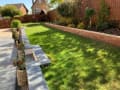
Annan - DG12
Enquiry from: Kevin S
Start Date: Immediate
How many pounds &££ to jet wash a small back yard
Gretna - DG16
Enquiry from: Mike W
Start Date: Immediate
Need a quote for tarring driveway
Lockerbie - DG11
Enquiry from: VIOLET C
Start Date: Immediate
Gutters cleaned and fascias soffits and eaves all cleaned down
Dumfries - DG1
Enquiry from: Lisa M
Start Date: Immediate
My front garden and all of my drive way tarred, many some bricks around the front part of my house
Dumfries - DG2
Enquiry from: Derek B
Start Date: Immediate
I need an area of my back garden slabbing for improved recreational use. A large 'L' shape in slabs/paviers
Are you planning to install a driveway on your home or property? If yes, then you’ll most likely be interested to know exactly how much it’s going to cost. Well, to get started you’ll have to decide whether you’ll be doing this yourself or perhaps you’d be hiring a specialist. The project could be much more effective if you decide to tackle it on your own as you’re only going to be worried about the paying for the materials without any labour costs. However, installing a driveway is not the simplest of tasks even for the competent and more experienced DIYers. Therefore, if you choose to carry out the project on your own, you should also get ready for a longer completion time than it would have been if you hired a professional which is usually around 48 hours. If you have all the tools and materials in place before commencement, then it’s possible to complete the project over the weekend. However, there are many risks involved such as the possibility of misjudging the proper quantity of concrete mixture (for a concrete driveway) and more. So, how much does driveway installer charge?
Well, just like other home improvement projects, the amount charged by driveway installers depend on a number of factors like the type of driveway (concrete, asphalt, tarmac etc), size of the area, the experience of the professional, the property’s location and lots more. However, in general, the average cost of a driveway ranges between £35 to £85 per square metre. For labour costs, you can expect to pay between £200 to £450 per day based on the work’s complexity.
The table shows the sorts of task that Driveway Installers typically do as well as the regular cost series of these projects. Some jobs take longer to finish than others so costs do be very different by project.
View our Driveway Installer cost guide View our Driveway Installer advice| Driveway Installer job | Driveway Installer cost in 2026 |
|---|---|
| Tarmac paving and driveways in Lockerbie | £1,125-£1,725 |
| Block paving in Lockerbie | £3,000-£4,600 |
| Slab Paving and Driveway in Lockerbie | £1,875-£2,875 |
| Driveway cleaning in Lockerbie | £163-£5,173 |
| Gravel paving and driveways in Lockerbie | £3,000-£4,600 |
| Pattern imprinted driveways in Lockerbie | £3,750-£5,750 |
| Resin bound driveway in Lockerbie | £2,625-£4,025 |
| Driveway repair in Lockerbie | £1,520-£2,280 |
| Indian Stone Paving in Lockerbie | £2,000-£3,800 |
| Pave Driveway in Lockerbie | £1,800-£3,100 |
Is there a hole in your asphalt driveway you feel you can repair yourself? If it’s something you know you can confidently do then this step by step guide is just for you. If otherwise, then we’d recommend you hire the services of a reliable professional who can guarantee the best results while also saving you some time and extra money that could result from possible errors. In this article, we’d go over the reparation process of an asphalt driveway with a hole in it.
✓ Get the necessary tools. You’re going to need a broom ( to clean the area), caulking gun ( to fill the hole), a hand tamp a plate compactor or a hammer ( to level the filled in hole) and a weeding glove (just in case there are weeds growing in the hole).
✓ Prepare the area. Do this by weeding the plants or weeds that might have grown inside the hole and identify your asphalt filler.
✓ Wet your soil, if necessary. It’s important to note that this is only necessary if your soil is dry to help the filler stick properly.
✓ Fill in deep holes. If the hole goes down about 3 to 4 inches or more, simply fill it with any material like rocks, clay etc.
✓ Apply the asphalt filler. Fill the hole with the asphalt filler to about half an inch higher than the surface of the driveway.
✓ Level the filler. For a large hole, make use of a plate compactor or a hand stamp, but a hammer will be sufficient for smaller holes.
✓ Cover the hole, if necessary. If your home isn’t level, covering your hole with a piece of plywood is advisable.
✓ Clean off the seal. After the asphalt looks done and in place, simply brush away the debris from the seal to finish off the project.
Oil stains on your concrete driveway can look obvious and unsightly. However, there are several different ways to remove them.
If you’ve only just spilled the oil, you can use a mixture of absorbent material, like sawdust, and solvent, like acetone or lacquer. Combine these, place them on the stain, cover and leave for about 24 hours. Then sweep up the mixture and rinse the area with water.
If you’ve got a small, older stain, you can use a detergent like baking soda, vinegar, washing up liquid or laundry detergent. Cover the stain with the detergent and leave for about 30 minutes. Then, add hot water and scrub the area and rinse. You might need to repeat this if necessary.
If it’s a larger, more stubborn stain, you might need to use a special degreaser. You can use this similarly to a detergent but make sure you follow the instruction on the bottle carefully.
Clearing snow from a gravel driveway can be tricky – you need to remove the snow without taking the gravel with it.
If the snow’s quite light and dry, try using a leaf blower. You might find that this is enough to get the snow out the way. If it isn’t, start by using a shovel. Use this to clear the top layer of snow off your driveway, leaving about an inch behind. Then, use a rake to remove most of the remaining snow. This won’t take away 100% of the snow or leave all of your gravel in place, but it’s still pretty effective. You can then lay salt to melt away the rest of the snow and stop it turning into ice.
Whether you think resin bound driveways are expensive or not will depend on your perception. While resin bound driveways are the most expensive up front, they should last much longer than other types of driveway. You should expect a resin bound driveway to last at least 25 years, if not longer, while a concrete or asphalt driveway may last between 15-20 years. A pattern imprinted driveway may last even less time due to the maintenance required to keep them looking pristine.
It’s also worth considering that resin bound driveways are good permeable surfaces, so will drain well and keep water from pooling around your property. This will keep your property maintenance costs down, since pooling water or flooding around your home could cause damp in your walls which is a very expensive problem to fix.
Resin bound driveways are by far the most attractive type of driveway to have. There are no loose stones to sweep up, no weeds to pull out from the gaps, and there’s no extensive power washing required to keep them looking good. If you want a driveway that gives your home true kerb appeal and you value your time, resin bound driveways don’t seem that expensive.
The other factor that can make resin bonded driveways less expensive is that sometimes you can lay them on top of the existing surface. For example, if you already have a concrete or asphalt driveway that is in good condition with no large cracks, a driveway contractor may be able to lay the resin and aggregate mix straight over the top, which will cost much less money than if you have to dig up the existing driveway and start from scratch.
If you’re considering giving your home a quick facelift, laying of paving slabs for your outdoor living spaces might be a great way to start. It can be installed in some many parts of your home’s exterior from the pathways to driveways and from the yards to the patios. With proper training and experience, laying paving slabs is a very easy and quick process. However, the issue here is, how do you calculate the number of paving slabs you need? In this step by step guide, you’ll find all the information needed to help you get started. Once you’re able to get the accurate number of paving slabs, do ensure to include extras that’ll cover up for possible errors or damages.
Just like any other measurement task, it’ll be a lot easier when you know how as well as when you have the right tools to use for the job. To get started, you’ll need a tape measure, pen or pencil, pegs, string, hammer, paper and calculator.
• Draw a sketch of the area. This sketch will take note of the area’s length and width.
• Using strings and pegs, mark out the area to be paved
• Using a tape measure, take a measurement of the length and width of the space along the string lines and note them on the sketch.
• If the area is a drive make sure that the paved area is wide enough to accommodate the cars intended
• Multiply the length of the space by the width to get the area of the space.
• Once calculated, divide the total area of the space by the area of the single slab. This will give you an accurate number of the paving slabs you’ll require to complete your project.
The best way to clean resin bound driveways is to sweep it regularly with a stiff broom. This will remove any debris and prevent moss from growing. It's a good idea to jet wash it after sweeping, because this will get rid of any smaller parts that a broom might not collect.
When you jet wash or power wash your resin bound driveway, make sure the pressure isn’t too high. It’s recommended to keep the pressure less than 150bar, as anything too strong could damage the surface. Make sure the water is cool, but not cold – both hot and cold water can damage the resin. Make sure the jet wash nozzle is at least 20cm from the surface. Any closer and this could damage your driveway. Use a sweeping back and forth motion to clean.
If you treat the area before you have your resin bound driveway installed, you shouldn’t get any weed growth. But if you get any moss or algae appear, you can apply a moss and algae killer that should remove and prevent any regrowth. If you have ingrained algae, you can remove it with a strong bleach solution; make sure you follow the manufacturer’s instructions. This should also help restore the driveway’s original colour. Make sure you rinse your driveway thoroughly with clean water after using bleach on it to prevent any harm to wildlife or plants.
If you get chewing gum on your resin bound driveway and you can’t get it off with a pressure washer, try using a freezing spray on it first. Then use a wall scraper to gently remove it – never dig under the chewing gum as this could damage the resin on your driveway.
Resin bound driveways are known to last a long time without the need for repairs, but sometimes accidents happen. You also need to make sure you regularly maintain your driveway by sweeping and power washing it to prevent damage. But if it does get damaged, how do you repair your resin bound driveway?
If you notice a crack in your resin bound driveway, it’s important to repair it as soon as possible. If you leave it to erode, you could end up with a difficult repair that will cost much more money.
To repair a crack, you’ll need to carefully chisel it open slightly so you can apply a primer then fill in the crack with a matching-coloured resin and aggregate mix. While there are variations in colour and size with all stone mixes, usually it’s easy to find a batch that matches almost perfectly. And once the crack has been repaired for a while, it will blend in seamlessly with the rest of your driveway.
To prevent cracking in your resin bound driveway, it’s best to tackle the issue at initial installation. Speak to your installer about whether it’s possible to add fibreglass mesh to the base. You should also ask your installer to add expansion trims as these will significantly reduce the risks of cracks.
So the best way to repair resin bound driveways is to prise open the crack and fill it in. It might seem simple, but getting the right colour match is something that should be left to the professionals, so get a few quotes to ensure you get the best finish.
Patios do not require lots of maintenance. They will only need occasional cleaning to make sure that the material keeps its original appearance. It's always best to clean your patio with a pressure washer and occasionally tap each slab or brick just to check the sand underneath hasn't washed away.
Answer a few quick questions to help us match you with the right Driveway Installer
Receive no-obligation quotes from 4 Driveway Installers working in Lockerbie.
Compare prices, customer reviews and services, and hire the right Driveway Installer.
View our open Driveway Installer jobs near you
Join today

