


19 Oct
Driveway Repair
Sale - M33
Enquiry from: Ishtiaq C
Start Date: Immediate
2-3 portions of block paving of driveway have settled down which need to be fixed


Over 95 reviews & an average rating of 4.3/5 stars, you'll find the right pro
Use the shortlist button to select up to 4 tradespeople, enter your project details and press send
Get up to 4 quotes from local Driveway Installers near you



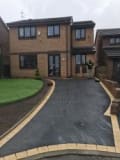

Sale - M33
Enquiry from: Ishtiaq C
Start Date: Immediate
2-3 portions of block paving of driveway have settled down which need to be fixed
Manchester - M40
Enquiry from: John K
Start Date: Immediate

Part of my driveway levelled for the placement of a shed, si*** x 5ft
Huddersfield - HD3
Enquiry from: Amy B
Start Date: Immediate
We are fitting a new automated gate at the school entrance and need the tarmac quoting as we have dug out for the power and data cables. its around 7m x 400mm, needs to be done on Friday 30th October
Stockport - SK3
Enquiry from: David B
Start Date: Immediate
Top coat of tarmac only 20ft by 70ft ground work already done
Manchester - M9
Enquiry from: Paul O
Start Date: Immediate
Asphalt pavement on the driveway
Heywood - OL10
Enquiry from: Rik H
Start Date: Immediate
Jetwash Driveway cleaning
Manchester - M8
Enquiry from: Husna S
Start Date: Immediate
Driveway cleaning with jet wash
Huddersfield - HD5
Enquiry from: Pat W
Start Date: Immediate
Submit your free quote for rated tradespeople
Stockport - SK5
Enquiry from: AJ O
Start Date: Immediate
Back garden and front driveway
Rochdale - OL16
Enquiry from: Sheraz G
Start Date: Immediate
Drive way done in tarmac
Oldham - OL2
Enquiry from: Stephen B
Start Date: Immediate
Front garden and lawn area
Manchester - M43
Enquiry from: Jean P
Start Date: Immediate
Submit your free quote for rated tradespeople
Huddersfield - HD5
Enquiry from: Audrey H
Start Date: Immediate
Driveway installed in tarmac
Huddersfield - HD3
Enquiry from: Patrick Anthony O
Start Date: Immediate
Bk garden instead of the paving bricks are there now early next year
Oldham - OL3
Enquiry from: Johnny C
Start Date: Immediate
Submit your free quote for rated tradespeople
Manchester - M27
Enquiry from: Kayleigh W
Start Date: Immediate
Submit your free quote for rated tradespeople
Manchester - M23
Enquiry from: Mandy S
Start Date: Immediate
16ft by 10ft tarmac driveway
Manchester - M32
Enquiry from: Parvaiz Y
Start Date: Immediate
Submit your free quote for rated tradespeople
Ashton-under-Lyne - OL6
Enquiry from: Abdul R
Start Date: Immediate


Submit your free quote for rated tradespeople
Ashton-under-Lyne - OL6
Enquiry from: Hena A
Start Date: Immediate
Quotes for patio done in paving slabs
Are you planning to install a driveway on your home or property? If yes, then you’ll most likely be interested to know exactly how much it’s going to cost. Well, to get started you’ll have to decide whether you’ll be doing this yourself or perhaps you’d be hiring a specialist. The project could be much more effective if you decide to tackle it on your own as you’re only going to be worried about the paying for the materials without any labour costs. However, installing a driveway is not the simplest of tasks even for the competent and more experienced DIYers. Therefore, if you choose to carry out the project on your own, you should also get ready for a longer completion time than it would have been if you hired a professional which is usually around 48 hours. If you have all the tools and materials in place before commencement, then it’s possible to complete the project over the weekend. However, there are many risks involved such as the possibility of misjudging the proper quantity of concrete mixture (for a concrete driveway) and more. So, how much does driveway installer charge?
Well, just like other home improvement projects, the amount charged by driveway installers depend on a number of factors like the type of driveway (concrete, asphalt, tarmac etc), size of the area, the experience of the professional, the property’s location and lots more. However, in general, the average cost of a driveway ranges between £35 to £85 per square metre. For labour costs, you can expect to pay between £200 to £450 per day based on the work’s complexity.
The table shows the sorts of task that Driveway Installers typically do as well as the regular cost series of these projects. Some jobs take longer to finish than others so costs do be very different by project.
View our Driveway Installer cost guide View our Driveway Installer advice| Driveway Installer job | Driveway Installer cost in 2026 |
|---|---|
| Tarmac paving and driveways in Ashton-under-lyne | £1,125-£1,725 |
| Block paving in Ashton-under-lyne | £3,000-£4,600 |
| Slab Paving and Driveway in Ashton-under-lyne | £1,875-£2,875 |
| Driveway cleaning in Ashton-under-lyne | £225-£345 |
| Gravel paving and driveways in Ashton-under-lyne | £3,000-£4,600 |
| Pattern imprinted driveways in Ashton-under-lyne | £3,750-£5,750 |
| Resin bound driveway in Ashton-under-lyne | £2,625-£4,025 |
| Driveway repair in Ashton-under-lyne | £1,520-£2,280 |
| Indian Stone Paving in Ashton-under-lyne | £2,000-£3,800 |
| Pave Driveway in Ashton-under-lyne | £1,800-£3,100 |
Patios do not require lots of maintenance. They will only need occasional cleaning to make sure that the material keeps its original appearance. It's always best to clean your patio with a pressure washer and occasionally tap each slab or brick just to check the sand underneath hasn't washed away.
How To Repair A Pothole In Gravel Driveways
When the integrity of your gravel driveway is impaired not only does it have a negative impact on the curb appeal of your property, but also makes your driveway a danger zone. If your driveway needs to be repaired, you’d simply have to grab the bull by the horn and get it done - the sooner, the better to avoid the problem getting worse and to have your beautiful gravel driveway back as soon as possible.
The major cause of potholes in driveways is usually water, when it gets trapped beneath the surface of the driveway. Therefore, you may also want to enhance the drainage in the area as part of your repair. The repair process is quite simple for confident do-it-yourselfers, but if otherwise, then calling in a reliable professional will save you some time and extra money that can result from possible errors. So how do you repair gravel driveway potholes?
✓ Prepare the area. This involves removing all forms of debris from the pothole. To achieve this, you can rake, shovel or brush the loose stones, soil and other debris from the pothole.
✓ Fill the pot hole. Make use of a coarse gravel to fill up the pothole to a depth of about 3 inches beneath the driveway’s level. Upon the filling, simply tamp down the coarse gravel using a commercial tamper or any available homemade option. Once done, the final 3 inches to the surface of the gravel driveway should then be filled up with gravel which perfectly matches the colour and texture of the remaining driveway.
✓ Compact the patch. To achieve this in an easy and fast way, simply run your car’s wheel up and down over the repaired spot gently a couple of times. This will be enough to compact the patch and seal the pothole.
Is your driveway damaged or starting to show some signs of cracks and gaps? If yes, then you’d probably be thinking of repairing it before it gets even worse. Repairing a driveway is largely an unknown process but also a very tedious task as well. So if you’re looking to hire a professional for help, just how much is the repair going to cost? In this article, we’re going to look at the various factors that can determine the cost of a driveway repair.
In the UK, the average price of repairing a driveway is usually within the range of £1,400 to £1,800, where as the normal price of a driveway repair will range between £700 to £2,400. although some small repairs tasks can be as low as £250, while huge driveway repairs can skyrocket to about £4,200.
However, in general, the overall cost of repair a driveway can not be determined as each driveway is unique with their special repair needs. The factors that can influence the price of a driveway repair includes the material used, the perimeter of the driveway as well as the condition of the foundation. The only factor that’s not unique to any one driveway is the materials used, so let’s take a look at the differences in price using the based on the various types of materials available.
✓ Concrete. The average cost of repairing a concrete driveway is usually between £250 to £3,200. Have it in mind at most times the price of fixing an overly damaged driveway can be more than the cost of buying a new one.
✓ Asphalt. The average cost of repairing an asphalt driveway is usually between £750 to £2,800.
✓ Brick. The average cost of repairing a brick driveway is usually between £700 to £1,700.
✓ Cobblestone. The average cost of repairing a cobblestone driveway is usually between £500 to £1,600.
Is Block Paving Permeable?
Back in 2008, there was a regulation introduced which comes with a requirement guiding the pavement of front gardens. It requires homeowners to incorporate the conventional impermeable driveways which makes for an uncontrolled run off of rainwater into sewers, roadways, local watercourses etc. However since then, new systems have been established which complies with the legislation and permit driveway laying of block paving without requiring planning permission while still providing the same visually appealing features as the conventional systems. Therefore, a short and simple answer to whether block paving is permeable is yes.
A permeable paving driveway (unlike the conventional ones which quickly diverts rainwater towards the edges to local drains) purposefully diverts rainwater into the built paving structure which oversees a controlled release of the rainwater into the environment. Permeable block paving comes with a wide range of benefits which includes the following:
• No Planning Permission Required
Unlike the traditional system, permeable block paving requires no planning permission as it oversees the driveway draining by ensuring that the surface water passes directly through the joints which makes sure the drains are not over worked and minimizing the risk of flood.
• Puddles Reduction By Natural Drainage
A permeable block paving minimizes puddles as well as standing water which helps to boost natural drainage. This is due to the laying process which features little voids that permits the passage of water.
• Natural Filtration
A natural filtration occurs when water is allowed to return to the ground by permeable block paving which helps assists in getting rid of any pollutants from the rain water.
• Flood Prevention
Permeable paving can help to prevent flooding as it absorbs water rather than directing it to the local drains or leaving it to build up on the surface’s top.
• Natural & Sustainable Materials
Natural and recyclable materials can be incorporated in producing permeable paving which is an excellent choice especially if you’re seeking a more sustainable driveway.
Cleaning block paving is a fairly straightforward task, although you’ll want to be careful to not use any chemicals that may cause damage to the surface. Use a simple household soap, mixed with water, and brush this across the paving with a stiff brush. Then, simply rinse off with clean water. Alternatively, use a pressure washer – but be careful not to use it on a powerful setting, as this may damage the joints and can cause slabs to come loose. Using the pressure washer on a medium setting and at a 45 degree angle is recommended.
Being a strong and durable product requiring little maintenance and expected to last over 2 decades, it’s little wonder resin is now a popular material amongst homeowners in the UK to build their driveways. However, there’s always the issue of the driveway fading, cracking or even becoming worn and tired. So is it possible to repair resin driveways? The answer is yes, a resin driveway can be repaired, however the best approach to use largely depends on the issue being faced. As a confident DIYer it’ll be very easy to do, but if you lack the confidence then calling in a professional for help would be a better option. So let’s take a look at how you can repair your resin driveways.
For cracks, the best reparation approach would be to chisel it out. Once done, then you can proceed to breaking the stones to form a rough edge. It’s important to make sure that the matrix of the stone remains unaffected. Make a new mixture of resin bound stone and pack it in tightly to the gap. While doing this, we’ll recommend making use of a plastic trowel to avoid burnishing. This fresh mixture will then create a smooth and perfect surface by interlocking with the edges. You can follow similar procedure for patches but these are larger holes or damages than cracks and as the name suggests are mostly likely to remain noticeable but will prevent further crumbling of your resin driveway.
For homeowners, who aren’t so keen about the patch repairs, you can opt for an overlay especially in the event whereby the majority of the surface has failed. Although many usually shy away from this approach because of the perceived high expenses, but the fact is that the approach is actually cost effective as you won’t have the need to spend more money in the long run.
Do you want to know the level of thickness a driveway concrete slab should be? Well, you are not alone! So many other home owners ask this question on a regular basis and reasonably so. In order to prevent cracks on your concrete over time, it’s crucial to ensure an even thickness across your driveway concrete. To determine the necessary thickness of your driveway concrete, there are some questions that must be answered. These includes:
• What’s the number of vehicles you expect to have on your driveway?
• Do you plan on parking heavy, industrial vehicles on it?
For a standard passenger vehicle driveway, you’d have a driveway spanning 8 to 9 feet in width as well as 15 to 18 feet for double width. The thickness for this type of driveway concrete is usually 4 inches of non-reinforced pavement. Ultimately, this enables you to park everyday family cars on it without having to worry about it cracking due to the car’s weight. Also in order to prevent cracks, it’s expected that the driveway should be sloped towards the street as this would make sure that there’s a run off of water especially for areas that experience lots of flooding. In addition, there’s also the need to install joints to prevent cracking. For the standard 4 inch thick driveway, these joints should be positioned about 10 feet apart.
Finally for parking heavy industrial vehicles, your concrete driveway is expected to be thicker in order to cope with the added weight. Typically, the concrete driveway will require a thickness of about 5 inches. The additional one inch may not sound much, but the fact is this can increase the load carrying capacity of the concrete driveway by up to 50 percent.
How To Lay Block Paving
Do you wish to know how to install block paving? We’ve got you covered! Here, you’ll find a useful step by step guide that’ll provide you with all the necessary information to lay a wide range of block paving products available in the market today. You must, however, note that the installation of block paving can be a tricky affair and should not be attempted unless you have undergone a proper training or have a good experience in the field. If otherwise, we’d advise you to leave the task for a reliable block laying professional to guarantee the best results and also avoid making costly mistakes.
lDesign
• Draw up a design to perfectly suits your needs.
• Decide on the type of block as well as colour.
lExcavation
• Use a mini excavator or a JCB ( depending on the size of the job) to excavate the driveway.
• Identify and mark out the area to be excavated.
• Dug out the area until you reach a suitable level
• Ensure that the proposed finish level is 150mm underneath the damp proof course in any of the adjoining building’s brick.
lEdge Restraints
• Build a 100mm depth-thick concrete foundation with the help of a concrete mixer, 1 part cement and 6 parts ballast.
• Position the kerb unit on top of the level with a string line and spirit level.
• Use a trowel and rubber mallet to mortar the kerb unit to the foundation.
• Haunch the back of the kerb units in such a way that the concrete reach half way up the kerb’s rear.
lSubbase
• Put the crushed concrete in the edge restraints and ensure it’s at the desired level of 50mm.
• Use a vibrating plate to compact and level
lScreeding
• Apply a layer of sharp sand (to 50mm depth) and campact it using a vibrating plate.
• Apply second layer of sharp sand (to 20mm depth) on top of the first layer.
• Level the second layer to the correct falls.
lInstallation Of Paving
• Lay the block paving starting from the bottom of a slope.
• Ensure the blocks are placed at about 10mm to 15mm above the required finish level.
• Make sure the blocks used are between 3-5 packs as you proceed with your desired pattern. You may need to cut smaller block pieces to fill smaller gaps.
lFinishing Touches
• Clear out the area to ensure no debris is left on the blocks.
• Put kiln dried sand and brush across the whole of the area, ensuring the sands falls between the blocks’ joints.
• Compact the drive with the vibrating plate.
• Brush more kiln dried sand over the area and compact again
• Repeat the process until the joints are full of sand.
Answer a few quick questions to help us match you with the right Driveway Installer
Receive no-obligation quotes from 4 Driveway Installers working in Ashton-under-lyne.
Compare prices, customer reviews and services, and hire the right Driveway Installer.
View our open Driveway Installer jobs near you
Join today

