
12 Oct
Slab Paving
Blackburn - BB2
Enquiry from: Naeem H
Start Date: Immediate
9 feet w 4 feet h price plz


Over 85 reviews & an average rating of 4.3/5 stars, you'll find the right pro
Use the shortlist button to select up to 4 tradespeople, enter your project details and press send
Get up to 4 quotes from local Driveway Installers near you



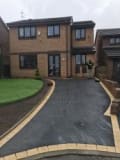

Blackburn - BB2
Enquiry from: Naeem H
Start Date: Immediate
9 feet w 4 feet h price plz
Manchester - M9
Enquiry from: Paul O
Start Date: Immediate
Asphalt pavement on the driveway
Heywood - OL10
Enquiry from: Rik H
Start Date: Immediate
Jetwash Driveway cleaning
Manchester - M8
Enquiry from: Husna S
Start Date: Immediate
Driveway cleaning with jet wash
Rochdale - OL16
Enquiry from: Sheraz G
Start Date: Immediate
Drive way done in tarmac
Oldham - OL2
Enquiry from: Stephen B
Start Date: Immediate
Front garden and lawn area
Rossendale - BB4
Enquiry from: Nasreen M
Start Date: Immediate
Submit your free quote for rated tradespeople
Oldham - OL3
Enquiry from: Johnny C
Start Date: Immediate
Submit your free quote for rated tradespeople
Manchester - M27
Enquiry from: Kayleigh W
Start Date: Immediate
Submit your free quote for rated tradespeople
Halifax - HX3
Enquiry from: Scott M
Start Date: Immediate
(address removed) needs tarmac installed
Oldham - OL9
Enquiry from: Rumon M
Start Date: Immediate
New tarmac driveway installation
Salford - M6
Enquiry from: Karen P
Start Date: Immediate
Install new resin driveway
Oldham - OL8
Enquiry from: Gibin V
Start Date: Immediate
Paving my backyard partially
Bury - BL8
Enquiry from: Gail W
Start Date: Immediate
Hi im in bl8 and would like a quote for a tarmac drive plz
Oldham - OL2
Enquiry from: Stephen B
Start Date: Immediate
Tarmac part of my driveway and garden area
Bury - BL9
Enquiry from: Tracey W
Start Date: Immediate
Resurface existing driveway
Bolton - BL4
Enquiry from: Kane G
Start Date: Immediate
Submit your free quote for rated tradespeople
Manchester - M40
Enquiry from: Sue B
Start Date: Immediate
New asphalt driveway installed
Bolton - BL3
Enquiry from: Tewoderos G
Start Date: Immediate
Submit your free quote for rated tradespeople
Manchester - M24
Enquiry from: Tina T
Start Date: Immediate
Tarmac driveway installed
Are you planning to install a driveway on your home or property? If yes, then you’ll most likely be interested to know exactly how much it’s going to cost. Well, to get started you’ll have to decide whether you’ll be doing this yourself or perhaps you’d be hiring a specialist. The project could be much more effective if you decide to tackle it on your own as you’re only going to be worried about the paying for the materials without any labour costs. However, installing a driveway is not the simplest of tasks even for the competent and more experienced DIYers. Therefore, if you choose to carry out the project on your own, you should also get ready for a longer completion time than it would have been if you hired a professional which is usually around 48 hours. If you have all the tools and materials in place before commencement, then it’s possible to complete the project over the weekend. However, there are many risks involved such as the possibility of misjudging the proper quantity of concrete mixture (for a concrete driveway) and more. So, how much does driveway installer charge?
Well, just like other home improvement projects, the amount charged by driveway installers depend on a number of factors like the type of driveway (concrete, asphalt, tarmac etc), size of the area, the experience of the professional, the property’s location and lots more. However, in general, the average cost of a driveway ranges between £35 to £85 per square metre. For labour costs, you can expect to pay between £200 to £450 per day based on the work’s complexity.
The table shows the sorts of task that Driveway Installers typically do as well as the regular cost series of these projects. Some jobs take longer to finish than others so costs do be very different by project.
View our Driveway Installer cost guide View our Driveway Installer advice| Driveway Installer job | Driveway Installer cost in 2026 |
|---|---|
| Tarmac paving and driveways in Bacup | £1,125-£1,725 |
| Block paving in Bacup | £3,000-£4,600 |
| Slab Paving and Driveway in Bacup | £1,875-£2,875 |
| Driveway cleaning in Bacup | £225-£345 |
| Gravel paving and driveways in Bacup | £3,000-£4,600 |
| Pattern imprinted driveways in Bacup | £3,750-£5,750 |
| Resin bound driveway in Bacup | £2,625-£4,025 |
| Driveway repair in Bacup | £1,520-£2,280 |
| Indian Stone Paving in Bacup | £2,000-£3,800 |
| Pave Driveway in Bacup | £1,800-£3,100 |
Gravel, asphalt, concrete and paving can all be permeable. However, some types of asphalt and concrete are impermeable. This is why it’s important to be precise about what material you want for your driveway. If you want a permeable driveway, you should also make sure that your sub-base is also permeable.
Driveways usually sink because they haven’t been laid properly. They may not have been dug deep enough, or the installer might not have used the right materials. This will need to be corrected at the earliest opportunity, although in extreme cases, the driveway may need to be completly be relaid.
Have you decided to install block paving and wondering what the best sand to be applied to the joints is in order to achieve a perfect job? Well, you’re at the right place! This is one of the most frequently asked questions when it comes to block paving and we seek to give you a reliable solution once and for all.
The best sand for block paving is a kiln-dried sand. It’s an extremely fine sand which has been dried in a kiln to get rid of all the water before it’s incorporated to achieve the best results. Therefore, the sand contains no moisture and is commonly used to fill the joints of block paving to keep the paving’s structure rigid and strong. It also goes a long way to prevent the ingress of water while stopping the paving from moving and becoming loose. The major reason why the paving sand must be dried is to allow it flow easily into the joints as well as the block paving’s gaps. As result of this smooth flowing to the bottom of the joints, there will be no sand sticking to the sides of the pavers.
Another major reason why kiln-dried sand is commonly applied to the block paving’s joints is to prevent water from penetrating the paved area. It also tightens the individual pavers together to prevent from moving and becoming loose. In the event whereby you happen to leave the joints of your block paving without kiln dried sand, it’s highly likely that they’ll sink as a result of water penetration and the blocks will become very loose. After washing block paving, it’s very important to also replace any sand washed off in the process once the paving is dried to prevent water ingress into the joints.
You should pull up and remove weeds by hand as and when they appear. If it is a regular problem, you might need to reseal the paving. In extreme cases, the sub layer itself may need to be re-laid. You can use weed killer, however some paving can be discoloured by stronger weed killers.
From concrete paving to material bound and also obstruct paving, there are a plethora of hard surfacing system alternatives readily available on the market today. Nevertheless, one of the alternatives that really stands out is the Indian stone appearing. The Indian stone is not just distinguished for its variety colour profiles and also reduced maintenance requirements, however its additionally understood to be really budget friendly when contrasted to various other comparable high-end appearing alternatives like Yorkshire paving. The Indian stone paving is always among the very best when it comes some top qualities such as strength, resistance, structural in addition to its visual benefits. In this post, we'll be checking out a lot of reasons that you need to consider getting an Indian stone paving mounted on your driveway. Let's have a look!
Slab paving is a great material to use to create a sturdy shed base.
Start by measuring out the area where your shed is going to be. This needs to be the size of your shed, plus about 10-20cm extra each way. Mark it out with string and pegs, make sure it’s square, and dig it down to about 6cm deep.
Then create a sand and cement mixture and put a layer down, followed by your paving slabs. Make sure you start in one corner and use a rubber mallet and spirit level to make sure they’re as level as possible. Leave this to set and you’re ready to use your shed base.
How to joint pave or grout paving slabs is a common question asked by several home owners. Most times they may have some existing paving and thinking its high time to have them re-pointed or laid some new pavings and wondering how to fill the gaps.
In the UK, patios don’t get much use especially during cold winter months. However even when not in use, the combination of wet weather and cold temperatures is capable of having the hardest outdoor living spaces looking a bit neglected. This may lead to cracked grouting which leaves gaps between stones making way to a place where weeds can grow and flourish during spring. You definitely wouldn’t want your outdoor living space looking this messy. Hence, there’s a need to get your patio back on track by grouting the paving slabs. However, if you lack proper training or experience, it’s advisable to employ a reliable professional who can guarantee the best results. In this guide, you’ll learn more about the paving slabs grouting process.
• Saturate the area that needs to be repointed with the help of a hosepipe and/or watering cans. Use a yard brush to distribute the water across the paving slabs.
• Pour a generous amount of your compound product over the newly soaked patio.
• Sweep the into the joints where it’s needed with the help of a broom. Do this carefully in order to make sure each and every joint is fully filled with the compound. If done right, this can help prevent premature cracking for a long period of time.
• Once the joints are filled with the compound, brush aside the exces product and strike it in. Ensure that the product is pressed firmly into each gap leaving behind no spaces.
• Sweep out the excesses which can be kept for future use.
A resin bound driveway is made from resin and aggregates that are mixed together to create a smooth, flat surface. They’re often called ‘stone carpets’ because they offer a decorative finish that is durable and requires very little maintenance. It has lots of little gaps that allow water to drain into the ground, which means that you won’t get pooling or flooding around your property.
You can choose from lots of different colours and types of aggregate (stones) so that your resin bound driveway complements your property. Most contractors recommend choosing a darker aggregate because they are more resistant to the sun, but if you choose a good UV-resistant resin you should be able to have a lighter stone that doesn’t get too bleached by the sun.
To lay a resin bound driveway, resin and aggregates are mixed in a forced action mixer to create a mixture that a tradesperson will then pour and trowel onto a prepared base. It will become smooth once it’s cured, and the stones will all be contained, so you won’t have to spend time sweeping gravel back onto your driveway. The only maintenance that’s needed is to wash it with soapy water every now and again and sweep away any debris. Just make sure you don’t use chemicals or oils, as this might damage the coating.
Answer a few quick questions to help us match you with the right Driveway Installer
Receive no-obligation quotes from 4 Driveway Installers working in Bacup.
Compare prices, customer reviews and services, and hire the right Driveway Installer.
View our open Driveway Installer jobs near you
Join today

