

14 Aug
Asphalt or Tarmac Driveway
Morecambe - LA4
Enquiry from: Lynne L
Start Date: Immediate
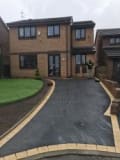
New driveway done in tarmac or asphalt


Over 108 reviews & an average rating of 4.3/5 stars, you'll find the right pro
Use the shortlist button to select up to 4 tradespeople, enter your project details and press send
Get up to 4 quotes from local Driveway Installers near you




Morecambe - LA4
Enquiry from: Lynne L
Start Date: Immediate
New driveway done in tarmac or asphalt
Morecambe - LA3
Enquiry from: Colin E
Start Date: Immediate
Relay crazy paving to rear of the garden
Kendal - LA9
Enquiry from: Louise F
Start Date: Immediate
Resin driveway and ramp to the front door. side and end of ramp rendering and painting also small section of lawn removing for easier access
Kendal - LA9
Enquiry from: Peter J
Start Date: Immediate
Replacement of a step outside a front door
Lancaster - LA2
Enquiry from: Chris H
Start Date: Less than one month
Require quote for a resin patio 21-40m sq
Ulverston - LA12
Enquiry from: Jeannette M
Start Date: Immediate
Submit your free quote for rated tradespeople
Are you planning to install a driveway on your home or property? If yes, then you’ll most likely be interested to know exactly how much it’s going to cost. Well, to get started you’ll have to decide whether you’ll be doing this yourself or perhaps you’d be hiring a specialist. The project could be much more effective if you decide to tackle it on your own as you’re only going to be worried about the paying for the materials without any labour costs. However, installing a driveway is not the simplest of tasks even for the competent and more experienced DIYers. Therefore, if you choose to carry out the project on your own, you should also get ready for a longer completion time than it would have been if you hired a professional which is usually around 48 hours. If you have all the tools and materials in place before commencement, then it’s possible to complete the project over the weekend. However, there are many risks involved such as the possibility of misjudging the proper quantity of concrete mixture (for a concrete driveway) and more. So, how much does driveway installer charge?
Well, just like other home improvement projects, the amount charged by driveway installers depend on a number of factors like the type of driveway (concrete, asphalt, tarmac etc), size of the area, the experience of the professional, the property’s location and lots more. However, in general, the average cost of a driveway ranges between £35 to £85 per square metre. For labour costs, you can expect to pay between £200 to £450 per day based on the work’s complexity.
The table shows the sorts of task that Driveway Installers typically do as well as the regular cost series of these projects. Some jobs take longer to finish than others so costs do be very different by project.
View our Driveway Installer cost guide View our Driveway Installer advice| Driveway Installer job | Driveway Installer cost in 2026 |
|---|---|
| Tarmac paving and driveways in Carnforth | £1,125-£1,725 |
| Block paving in Carnforth | £3,000-£4,600 |
| Slab Paving and Driveway in Carnforth | £1,875-£2,875 |
| Driveway cleaning in Carnforth | £225-£345 |
| Gravel paving and driveways in Carnforth | £3,000-£4,600 |
| Pattern imprinted driveways in Carnforth | £3,750-£5,750 |
| Resin bound driveway in Carnforth | £2,625-£4,025 |
| Driveway repair in Carnforth | £1,520-£2,280 |
| Indian Stone Paving in Carnforth | £2,000-£3,800 |
| Pave Driveway in Carnforth | £1,800-£3,100 |
Removing oil from block paving can be tricky, and a professional clean and re-point is often the best option. However, for small stains, especially recent ones, it’s worth attempting to clean it yourself. To do this, you can purchase oil remover or driveway cleaning solutions – although be careful, as some may stain or mark certain kinds of paving stones. In general, stay away from acid based cleaners.
There are several effective ways to clean paving slabs. It’s important to pick a method that suits you and your paving material.
Whatever method you use, start by removing all weeds and loose debris from your paving. Then, if you have a pressure washer, you can simply use this to clean away any dirt.
If you don’t have a pressure washer, you can try using soapy water or watered-down bleach. If you use soapy water, mix a mild detergent like washing up liquid with warm water. Then pour it onto your paving, work it in with a brush and rinse it off with clean water.
If you use bleach, first make sure that the water won’t drain off onto any plant life, as this can kill it. You should also avoid using bleach on concrete slabs, as it will cause them to fade. Mix one-part bleach with five-parts water, pour it onto your paving and work it in with a brush. Then leave it for 15 minutes and rinse it off with clean water.
Weeds growing on your gravel can look unsightly, so it’s worth taking steps to stop them sprouting up.
When you lay your driveway, make sure you use a weed proof membrane. This will help to stop most growth, although it won’t totally prevent weeds occurring. For any other growth, dig the weed out or use a weed killer.
Driveway work is usually done in the warmer half of the year. This is partly to avoid bad weather. If you want to get ahead and avoid waiting for a contractor to be free, you should try getting in touch with a professional in the early spring so a date can be booked for install as soon as practically possible.
How To Repair Sunken Concrete Driveway
If you have concrete driveway that’s cracked, uneven and mostly especially sunken, you’d know how distasteful it can be just viewing it on your property. A sunken concrete driveway is most likely caused by rainwater erosion removing the soil under it or a big root under it which as rotted over time. Another possible cause of the sunken concrete is an improperly prepared base which implies that the soil beneath wasn’t fully compact when the concrete was poured on it. Later on the soil beneath will eventually settle and shift below the concrete driveway which weakens the integrity of the entire driveway, making it more vulnerable to cracks, unevenness and sunken.
Two ways in which you can fix this problem includes either demolishing the whole driveway, re-compact the soil underneath and fill with new concrete or repair the entire driveway using an easy process called slabjacking. In this article, we’re going to look at the slabjacking repair process as it’s significantly less expensive than the demolishing approach and will also cause minimal disruption to your lifestyle.
Also referred to as mudjacking or concrete lifting, slabjacking is simply a process used to float your existing concrete back to its original position. If you are not a competent DIYer or lack confidence to pull this off, we’d recommend reach out to a professional for help. If otherwise, then you can practice the slabjacking process given below.
✓ Drill holes through the slab.
✓ Pump grout mixture through the holes. This mixture will spread out beneath he driveway and raise it up.
✓ Lastly, fill the holes and level the concrete driveway surface.in such a way to hide the signs of the repair made.
This is a process that works to efficiently get your driveway back in a top condition relatively quickly.
Gravel, asphalt, concrete and paving can all be permeable. However, some types of asphalt and concrete are impermeable. This is why it’s important to be precise about what material you want for your driveway. If you want a permeable driveway, you should also make sure that your sub-base is also permeable.
Are you worried there’s a slope on the area where your block paving is to be installed? Good news is, it’s very possible to lay block paving on a slope. However, this can be a very difficult task which should be done by a reliable professional ( especially if you lack proper training and experience) who can guarantee the best results, the first time and also help save you money from possible costly mistakes. This guide will provide you with everything you need about the slope block paving installation process. Let’s have a look!
• Demarcate The Walkway
To get started, you have to determine how and where you want your walkway to be while also determining the thickness of the paver. Ensure to choose the less sloppy area and utilize landscape paint to mark the area visibly.
• Prepare The Ground
Clear out all forms of dirts, roots, rocks and other debris on the soil. Once done, proceed to cutting the sods to the required length and put them somewhere close.
• Make Boundaries
There’s a need for landscape borders. Here, it’ll be easier to use plastics as boundaries for your lawn’s edges. Install them on the sides that have already been cut
• Apply A Level Of Gravel
Obtain the correct size of gravel and spread them evenly over the area to ensure a firm foundation for the pavers is formed. Makes sure that the rocks is at a minimum of 2 inches deep into the soil.
• Install The Block Pavers
Start from the centremost position of the pathway and work towards the sides until you’re able to cover every inch of the area.
• Apply A Layer Of Cement
Apply cement over the pavers and utilize a broom to sweep it and fill up all the gaps and spaces between the pavers. Then, press the pathway to be levelled using a compactor.
Do you want to know the level of thickness a driveway concrete slab should be? Well, you are not alone! So many other home owners ask this question on a regular basis and reasonably so. In order to prevent cracks on your concrete over time, it’s crucial to ensure an even thickness across your driveway concrete. To determine the necessary thickness of your driveway concrete, there are some questions that must be answered. These includes:
• What’s the number of vehicles you expect to have on your driveway?
• Do you plan on parking heavy, industrial vehicles on it?
For a standard passenger vehicle driveway, you’d have a driveway spanning 8 to 9 feet in width as well as 15 to 18 feet for double width. The thickness for this type of driveway concrete is usually 4 inches of non-reinforced pavement. Ultimately, this enables you to park everyday family cars on it without having to worry about it cracking due to the car’s weight. Also in order to prevent cracks, it’s expected that the driveway should be sloped towards the street as this would make sure that there’s a run off of water especially for areas that experience lots of flooding. In addition, there’s also the need to install joints to prevent cracking. For the standard 4 inch thick driveway, these joints should be positioned about 10 feet apart.
Finally for parking heavy industrial vehicles, your concrete driveway is expected to be thicker in order to cope with the added weight. Typically, the concrete driveway will require a thickness of about 5 inches. The additional one inch may not sound much, but the fact is this can increase the load carrying capacity of the concrete driveway by up to 50 percent.
Answer a few quick questions to help us match you with the right Driveway Installer
Receive no-obligation quotes from 4 Driveway Installers working in Carnforth.
Compare prices, customer reviews and services, and hire the right Driveway Installer.
View our open Driveway Installer jobs near you
Join today

