
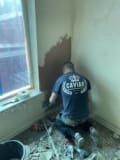
There are several different kinds of plastering. ‘Dot and dab’ refers to a base layer of plasterboard which is attached to a wall using ‘dabs’ of adhesive. ‘Floating’ is a technique where a backing or undercoat plaster is applied to walls. ‘Skimming’ or ‘reskimming’ refers to the very thin final decorative layer of plaster.
Find a Plasterer you can trust in Broughton-in-furness.
Choose from 6 Plasterers, all rated by people like you.
Over 3 reviews & an average rating of 3.7/5 stars, you'll find the right pro
Choose and shortlist
Use the shortlist button to select up to 4 tradespeople, enter your project details and press send
Keen to get on with the job?
Get up to 4 quotes from local Plasterers near you
Owensdrivesandpatiosltd
RKA Decor
RMR Decorators
How much do Plasterer services cost?
How much do Plasterers cost? Costs for Plasterers in 2026 can be very different depending on the type of work that you require to have performed in your house.
A plaster is used to serve a number of purposes when applied on a solid surface. It seals rough brickwork or stonework, it provides a smooth surface for the application of paint, the smooth surface offers a clean and wipeable finish, it’s used to repair holes and cracks in existing plasterwork and lots more. With all these benefits, it’s little surprise more and more home and property owners are looking to have their properties plastered. If you’re also considering taking on this task, then you’d probably want to know exactly how much it’ll cost to get this project over the line. In this post, we’re going to give you a good insight into wall plastering costs to help you make the best informed decisions moving forward. Let’s take a look!
As you may have expected, the cost of charged by plasterers is dependent on a number of factors. These factors include the dimension of the room, accessibility of the surface, the condition of the existing plaster as well as the size or reputation of the company. Several plasterer professionals charge a daily rate or a average room size. They know the approximate area that they can cover in a day and charge accordingly. Typically, plastering walls from scratch for small rooms will cost within the range of £600 to £700 with a duration of 2 to 3 days, while mid-sized room should cost in between £650 to £1000 with a completion time from 2 to 4 days. Lastly, for a large room, you can expect to incur about of £1000 to £1500 and can be completed within 4 days.
The table shows the kinds of job that Plasterers usually do and the regular price series of these projects. Some jobs take longer to complete than others so prices do vary by task.
View our Plasterer adviceThe average price
of a Plasterer in Broughton-in-furness is:
£430
| Plasterer job | Plasterer cost in 2026 |
|---|---|
| Plastering in Broughton-in-furness | £563-£863 |
| Artexing in Broughton-in-furness | £150-£230 |
| Plasterboard ceilings in Broughton-in-furness | £225-£600 |
| Suspended ceilings in Broughton-in-furness | £525-£805 |
| Artex Removal in Broughton-in-furness | £190-£400 |
Plasterer FAQs
How Much Do Plasterer’s Charge?
If you’re look to plaster your walls, one of the first things that’ll come to mind is the cost to complete the project so you can set a budget and start planning as soon as possible. However, the amount charged by plasterer, just like other tradesmen, is based on a number of factors. These factors include how urgent the project is, how long it’ll take as well as what materials are needed. Some of the other influencing factors of plastering jobs include the accessibility of the location, the size of the wall to be plastered and also the current condition of the old plaster. Therefore, you can expect a plaster work of multiple rooms with deteriorating old plaster to be more expensive than a simple refresh of a single wall in a relatively good condition.
It’s likely you’d also get the average cost per room reduce when you require the plastering of several rooms. As a result, to get a final price for your plastering work, you’ll have to call in a qualified and experienced tradesman who’ll consider all the unique requirements of your project and provide a suitable quote.
✓ Medium sized room plastering. A medium sized room would be a room that’s roughly between 3.5m by 5m or one that can comfortable accommodate up to 8 individuals. This will cost within the range of £520 to £870.
✓ Small sized room plastering. Small room such as small kitchens, box bedrooms, utility rooms and the likes will require less plaster but more intricacy with the plasterer having to work in tight spaces. This will cost within the range of £215 to £370.
If your artex ceiling is looking tired or you just fancy a change, you can try plastering over your artex. You have two options when it comes to plastering over your artex: plasterboard or skimming.
Covering your ceiling with plasterboard is a good option if you suspect the artex may contain asbestos. If done carefully, it doesn’t involve disturbing the artex, reducing the risk of asbestos exposure.
You also have the option to skim over your ceiling. The first steps to this involve removing loose and flaking parts, cutting off stipples and sanding your ceiling down. So, if there’s a chance your artex ceiling may contain asbestos, this isn’t the right solution for you. However, if you’re sure there’s no asbestos in your ceiling, then sanding down and skimming over your ceiling can be a great way to create an attractive result.
It’s worth noting that both putting up plasterboard and skimming plaster can be difficult jobs. Although possible to DIY, you’re likely to get much better results if you hire a professional.
Can You Plaster Over Tiles?
Yes, it’s absolutely possible to plaster over tiles but just because is possible doesn’t mean you should. Plastering over tiles is an option but it’s not recommended by experts due to several reasons. A good example is the fact that a tiled environment is in no way a suitable environment that can serve as a good bonding surface for a plaster. For the success of a plastering project, there’s the need for the surface to be able to bond to the PVA base coat. Due to fact that most tiles are slippery in nature and also lack of the ability to be able to absorb moisture, the PVA base coat layer will not be able to bond to the tiled surface, which will ultimately make for a weak surface upon the application of the plaster. Consequently, the plaster will easily flake and fall from the wall.
The inability to drill into the tiled wall surface after plastering is one of the major disadvantages that also arises when you decide to plaster over tiled surfaces. Most tiled surfaces are found in kitchens and bathrooms which are going to need appliances such as sinks, lavatories, kitchen counters and lots more. These appliances are designed to be installed on solid surfaces which would not be an easy task to carry out on tiles knowing there would definitely be great cracks or damages.
The best tip you’ll get if you’re considering to plaster on a tiled surface, is that detaching tiles from a surface can easily be done with a hammer and chisel, and that would save you a host of problems later in the future. However, if you still wish to plaster on your tiled walls, then you best bet would be to get a Blue Grit bonding agent. It works better than PVA and only needs one coat.
Plastering is suitable to cover most Artex. If it’s shallow Artex, it may be covered by skimming plaster on top. If the pattern of the Artex is too deep, you may need to use plasterboard to cover it or if you want to remove it entirely, you will need to use a wallpaper steamer.
Installing a plasterboard on your ceiling is a cool way to modernize your property. Over the past couple of decades, there has bee an increasing number of trends associated with plastering of both walls and ceilings such as rounded edges and textured plaster. However, in recent times, home and property owners are now looking to install more of sharp edges. If you’re planning to plaster your ceiling, you’d probably want to know just how much this project is going to cost. If yes, then you’ve come to the right place. In this article, we’ll give you a rough estimate of ceiling plastering costs.
There are a plethora of factors the can influence the price of plastering your ceiling. These pricing components includes the following:
✓ Size. As you would have expected, the larger the job, the more the overall cost. However, the price per square metre will reduce which means that the cost of plastering a small ceiling space will cost more per square metre than the cost of plastering a larger ceiling space per square metre.
✓ Materials. We have a wide range of plasterboard available in the market. If you need a fire retardant, acoustic or other types of specialist plasterboard, you can expect to pay higher than standard plasterboards.
✓ Location. Just like many other home improvement projects, the cost of plastering ceiling varies greatly throughout the UK. Places such as London and the South East have the highest prices due to the high standard of living as well as greater demands.
In general, to plaster a ceiling (small 2 m x 2 m) - overboard and plaster will cost within the range of £200 to about £300. Also, to plaster a ceiling (large 5 m x 6 m) - overboard and plaster will cost within the range of £400 to about £600. The average plasterer’s daily rate (including material) is about £180 to £300 and ceiling plastering cost per square metre ranges between £20 to £40.
Prior to removing artex on your ceiling, it’s always crucial to determine whether or not the surface coating material contains asbestos. Asides from this, you may also wish to know how much you’re going to have the asbestos artex ceiling removed. If yes, then you’ve come to the right place! In order to help you make the best informed decision possible, this post was written to help give you an idea of the price it’s going to cost to remove asbestos artex ceiling in the UK.
Unfortunately, as simple as it seems, there’s no single straightforward answer to this question as there are many factors that can affect the cost of hiring an asbestos artex removal professional. These factors include the project’s scale, the complexity of the area which needs to be removed as well as the need for extra materials. Generally, professional artex removal companies charge a standard rate for their labour. As a result, you can always predict that the tradesperson’s labour will be more costly based on the extent of the job. Therefore, the more costly the labour fees will be if the job takes longer time to complete.
On the average, a tradesperson will charge within the range of £250 to £400 on a daily basis to undertake the project for you. And of course, you can expect these rates to vary based on the company hired as well as the area you live in. For rxample, you can expect that a tradesperson’s charges would be higher in an area such as Central London, as opposed to other areas which are more rural.
Installing a plasterboard to a ceiling is not the easiest of tasks, and even though it can be done by one person, it’s usually a lot easier when done by two people. If you’re an experienced DIYer, this task becomes a lot easier to undertake, with both confidence and patience needed to ensure a successful outcome. If you lack these essential attributes, we’d strongly recommend you call in a reliable professional who can guarantee the best results for help. In this guide, we’re going to take you through the processes involved to plasterboard your ceiling. Let’s take a look!
✓ Take a measurement of your ceiling. Knowing the length and width of your room is crucial here. You have nothing to worry about if it’s not a perfect square as that’ll only mean more cutting.
✓ Make the necessary plasterboard cuts. Cut the plasterboard sheet with a utility knife in accordance to ceiling space measured.
✓ Remove existing plaster. Once done, examine the trusses and beams to ensure they’re still in a great condition before you proceed. Also, make sure there’s no loose plaster that can compromise your new installation.
✓ Apply construction adhesive. For a better fit, you’d have to apply adhesive along the beams while also avoiding the edges as this could affect your screw placement.
✓ Start in a level corner. You have to start the installation from the most level corner.
✓ Work along the outside edges. Secure it using a screw along the outside edge. This will make your plasterboard held to your ceiling perfectly. It won’t bend or break as your proceed with the installation.
✓ Complete the installation. Install the plasterboard on your entire ceiling and complete the installation by taping the seams and plastering for a smooth surface.
Plasterer help and advice
Our reviews
How it works
Tell us about your Plasterer project
Answer a few quick questions to help us match you with the right Plasterer
Get up to 4 free quotes
Receive no-obligation quotes from 4 Plasterers working in Broughton-in-furness.
Pick the right pro for you
Compare prices, customer reviews and services, and hire the right Plasterer.
Are you a Plasterer in Broughton-in-furness?
View our open Plasterer jobs near you
Join today

