

04 Oct
Plastering
Ilkeston - DE7
Enquiry from: Hayri S
Start Date: Immediate
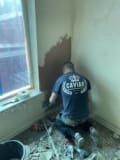
Kitchen wall need plasring


Over 7 reviews & an average rating of 4.1/5 stars, you'll find the right pro
Use the shortlist button to select up to 4 tradespeople, enter your project details and press send
Get up to 4 quotes from local Plasterers near you



Ilkeston - DE7
Enquiry from: Hayri S
Start Date: Immediate
Kitchen wall need plasring
Nottingham - NG7
Enquiry from: Venice V
Start Date: Immediate
To repair wall and celing
Nottingham - NG7
Enquiry from: Venice V
Start Date: Immediate
Plastering walls and make good where election cut out to run cable
Nottingham - NG12
Enquiry from: Kathryn D
Start Date: Immediate
Quotation for plasterboarding (& plastering - not sure if that is a separate thing) lounge and hall, stairs and landing ceilings. Potentially 2 standard bedrooms, box room, study and downstairs toilet
Nottingham - NG5
Enquiry from: Barbara S
Start Date: Immediate
Due to a leak my bedroom ceiling is bulging. There is a crack going from the bulge to the wall. I'm actually not sure who is best to contact but I imagine all the damaged stuff will need to be removed
Nottingham - NG9
Enquiry from: Rhiannon J
Start Date: Immediate
Plasterboard ceiling in utility room of my nother's house has come down and needs replacing
Nottingham - NG10
Enquiry from: Rachel S
Start Date: Immediate
Plaster a ceiling and 3 walls
How much do Plasterers cost? Costs for Plasterers in 2026 can be very different depending on the type of work that you require to have performed in your house.
A plaster is used to serve a number of purposes when applied on a solid surface. It seals rough brickwork or stonework, it provides a smooth surface for the application of paint, the smooth surface offers a clean and wipeable finish, it’s used to repair holes and cracks in existing plasterwork and lots more. With all these benefits, it’s little surprise more and more home and property owners are looking to have their properties plastered. If you’re also considering taking on this task, then you’d probably want to know exactly how much it’ll cost to get this project over the line. In this post, we’re going to give you a good insight into wall plastering costs to help you make the best informed decisions moving forward. Let’s take a look!
As you may have expected, the cost of charged by plasterers is dependent on a number of factors. These factors include the dimension of the room, accessibility of the surface, the condition of the existing plaster as well as the size or reputation of the company. Several plasterer professionals charge a daily rate or a average room size. They know the approximate area that they can cover in a day and charge accordingly. Typically, plastering walls from scratch for small rooms will cost within the range of £600 to £700 with a duration of 2 to 3 days, while mid-sized room should cost in between £650 to £1000 with a completion time from 2 to 4 days. Lastly, for a large room, you can expect to incur about of £1000 to £1500 and can be completed within 4 days.
The table shows the kinds of job that Plasterers usually do and the regular price series of these projects. Some jobs take longer to complete than others so prices do vary by task.
View our Plasterer advice| Plasterer job | Plasterer cost in 2026 |
|---|---|
| Plastering in Heanor | £563-£863 |
| Artexing in Heanor | £150-£230 |
| Plasterboard ceilings in Heanor | £225-£600 |
| Suspended ceilings in Heanor | £525-£805 |
| Artex Removal in Heanor | £190-£400 |
Plastering will fix small cracks in walls. Very small cracks may be fixed by simply reskimming plaster. More serious cracks will usually mean that you need to use new plasterboard or backing plaster. Larger jobs or deep cracks may need an experienced plasterer to come in.
Cutting a plasterboard is a relatively simple process requiring only some basic tools. Unfortunately, the lack of knowledge serves as big deterrent for many people who wishes to put it to good use. Plasterboard can actually be sawn using an ordinary timber saw that’s fine-toothed to get a cleaner edge. However, the basic tools you may also need includes a sharp knife (Stanley Knife), pencil, a fine sandpaper, a straight edge and measurement tape as well as a wall board saw. Let’s have a look at the cutting process!
✓ Firstly, you need to put the plasterboard sheet flat on a firm surface.
✓ Use the tape measurement to measure the cut you wish to make.
✓ With the help of a pencil, simply mark out the part you wish to cut on the plasterboard’s front side.
✓ Once marked, place a spirited level over the marked spot on the plasterboard sheet you want to cut.
✓ Cut a shallow mark into the plasterboard sheet using the Stanley Knife to cut along the edge.
✓ The cut should be slow and gradual to ensure you do not wander off the edge of the marked area.
✓ Once the shallow cut has been made, turn the plasterboard sheet on its edge and deliver a quick and sharp push towards the plasterboard’s back and on one side of the cut.
✓ Place the plasterboard sheet backing against a flat surface ensuring the line of the cut is over an edge. Once done, give a quick and sharp push towards the back of the plasterboard sheet and on the part of the board is reaches beyond the edge.
✓ Using a fine sandpaper, remove all forms of paper burrs.
The process of cutting plasterboard requires a lot of practice. If you lack the training and experience, the cutting process is best left to a proficient professional who can guarantee the best results the first time and save you some additional costs due to potential damages.
There are several different kinds of plastering. ‘Dot and dab’ refers to a base layer of plasterboard which is attached to a wall using ‘dabs’ of adhesive. ‘Floating’ is a technique where a backing or undercoat plaster is applied to walls. ‘Skimming’ or ‘reskimming’ refers to the very thin final decorative layer of plaster.
Although they’re pretty much outdated now, artex happens to be a very popular surface coating option just a few decades ago. Several homeowners with artex in recent times would either want to have them removed or cover them up with stuffs such as a wallpaper. So if you’re wondering whether or not it’s possible to wallpaper over artex, then there you have it. It’s possible to wallpaper over artex, however it’s not advisable as wallpaper may eventually crack over time. On the other hand, the artex can also create ridges beneath the wallpaper which allows unpleasant protrusions in the wallpaper. Instead of applying wallpaper over artex, a more permanent solution would be to cover it with drywall or wet plaster or perhaps just have it removed completely.
There are two types of wallpaper, there’s the thin wallpaper application which comes with adhesive on one side as well as a pattern or colour on the other side. With this, all you need do is simply to peel and stick. Then the other type is the sturdier wallpaper that’s more thick and requires a special wallpaper paste. However, it’s important to note that if you choose to wallpaper over your artex, you won’t be able to make use of the thin type of wallpaper, rather you’ll have to incorporate the sturdier option which makes use of wallpaper paste.
The wallpaper paste is the product you mix with water to produce a paste which you’ll have to apply to your walls before applying the applying the regular wallpaper - one without adhesive on one side. Appling wallpaper to an artex decoration may just give you the updated appearance you so much desire.
Can You Plaster Over Artex?
The short and simple answer to this question is yes, you can plaster over Artex. However, you must also note that plastering over Artex may not be the best choice as Artex is porous and as such, you’d have to detach the stripping so as to get a smooth and even coating. In the event whereby your ceilings or walls have Artex on them, you’ll have to smooth the Artex in order to obtain a plaster of solid coat.
✓ Preparing Artex for plastering. First and foremost, you’ll have to detach any bumps before you can plaster over the Artex. Do note that you don’t have to completely remove the Artex, all that’s needed is just enough to get a coat of plaster. Make use of a scraper to get rid of the bumps on various Artex designs like swirl and bark. Once you’re through getting rid of as much bumps as possible, there’s the need to seal the Artex due to the fact that it can absorb the moisture out of the plaster which will cut the time to get a good finish to little or nothing. You can use a PVA and water mix to do the job!
✓ The PVA mix. This is done to seal off the porous Artex in order to stop it from absorbing moisture from your plaster which can make it start to crack and crumble. To do this, simply mix half PVA and half water, then use a brush to paint the mixture over the plastering area. Once done, you can give the plastering surface about two to three coats and wait for the solution to dry off within a hour or two.
Plastering over Artex is not as hard as it seems, but if you lack the confidence to complete the task, simply contact a professional for help.
The short and simple answer to this question is, it depends. Artex surface coating was manufactured with white abestos ( until the mid 1980’s ) in order to strengthen as well as harden it. In other words, this implies that all the ceilings and walls coverings made by Artex Ltd and other manufactures at the time are highly likely to contain asbestos. Although Artex Ltd stopped using asbestos as early as the mid 1980’s, there were still other manufacturers who continued using it until 1999 when the laws and regulations covering the use of asbestos changed in the year 2000.
Asbestos, however, is only harmful when disturbed and releases its deadly fibres. For instance, when it’s being sanded and removed as it usually poses no risks when left undisturbed. Since it’s not possible to identify Artex containing asbestos fibres with the naked eye, it’s strongly recommended that you hire the services of a qualified person or company to help determine if you have asbestos in your ceilings or walls especially if your house was constructed before the year 2000. The professionals will be able to advise you on the best course of action as well as if it’s dangerous.
To be sure if your Artex contains asbestos, you’ll need to have the artex sampled by an asbestos surveyor. If you’re planning to have a construction or maintenance work done on your property, and the artex is likely to be in the way or disturbed, there’s a need for you to have a refurbishment or demolition asbestos survey done. This will ensure that all the areas that’ll be disturbed by the work is properly tested to determine the presence or otherwise of asbestos. If found, the artex will have to be addressed and either removed or protected before any work can take place.
Can You Plaster Over WallPaper?
If you have wallpaper installed on your wall surface and you’re considering plastering the wall, when you put into consideration the stress involved in removing a wallpaper you may want to consider plastering directly over the wallpaper. This is quite understandable as removing a wallpaper can be quite time consuming and tedious, but plastering directly over wallpaper is a mistake that should never be made. Plastering over wallpaper is in no way a viable option due to the fact that it can only turn out disastrous after a couple of weeks or even days in some cases as the plaster will crack and crumble. As a result, you’ll have to firstly scrape off the wallpaper in order to assist the plaster get to be firmly secured to the wall behind.
When you plaster over a wallpaper, this will make the wallpaper wet and it’ll absorb the moisture. And once the plaster does not have moisture, the only result is for it to crack and start to crumble. Hence, plaster and wallpaper is never a good combination.
Asides from cracking and crumbling, anther issue is that the wallpaper will bubble. You can actually key the wallpaper with the help of a knife and it might look secured for some time, however it’ll eventually crumble and you’d have to scrape off the plaster complete to start all over again. The wallpaper will bubble as the plaster can’t be keyed into a wallpaper and the wallpaper will only work as a barrier between the plaster and the wall.
Overall, plaster always needs to slowly dry off as well as a good and proper surface to grip to. No matter the amount of PVA mix you spread on the wallpaper, it will always remain a barrier. So you’d have to remove the wallpaper completely to get a great result.
If your artex ceiling is looking tired or you just fancy a change, you can try plastering over your artex. You have two options when it comes to plastering over your artex: plasterboard or skimming.
Covering your ceiling with plasterboard is a good option if you suspect the artex may contain asbestos. If done carefully, it doesn’t involve disturbing the artex, reducing the risk of asbestos exposure.
You also have the option to skim over your ceiling. The first steps to this involve removing loose and flaking parts, cutting off stipples and sanding your ceiling down. So, if there’s a chance your artex ceiling may contain asbestos, this isn’t the right solution for you. However, if you’re sure there’s no asbestos in your ceiling, then sanding down and skimming over your ceiling can be a great way to create an attractive result.
It’s worth noting that both putting up plasterboard and skimming plaster can be difficult jobs. Although possible to DIY, you’re likely to get much better results if you hire a professional.
Answer a few quick questions to help us match you with the right Plasterer
Receive no-obligation quotes from 4 Plasterers working in Heanor.
Compare prices, customer reviews and services, and hire the right Plasterer.
View our open Plasterer jobs near you
Join today
