

28 Sep
Plastering
Edinburgh - EH9
Enquiry from: Janice G
Start Date: Immediate
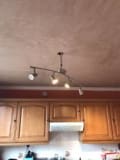
Looking for quote for patch platering works done due to partcial electrical upgrade, coupled with patch work on ceilings and staircase


Over 3 reviews & an average rating of 4.8/5 stars, you'll find the right pro
Use the shortlist button to select up to 4 tradespeople, enter your project details and press send
Get up to 4 quotes from local Plasterers near you



Edinburgh - EH9
Enquiry from: Janice G
Start Date: Immediate
Looking for quote for patch platering works done due to partcial electrical upgrade, coupled with patch work on ceilings and staircase
Kirkcaldy - KY2
Enquiry from: Carol D
Start Date: Immediate
1 chimney wall and 1 small wall needing skimmed
Edinburgh - EH12
Enquiry from: John R
Start Date: Immediate
Water damage to house, I require estimates for ceilings and walls to be repaired
Edinburgh - EH16
Enquiry from: JudIth C
Start Date: 1 to 3 months
Submit your free quote for rated tradespeople
How much do Plasterers cost? Costs for Plasterers in 2026 can be very different depending on the type of work that you require to have performed in your house.
A plaster is used to serve a number of purposes when applied on a solid surface. It seals rough brickwork or stonework, it provides a smooth surface for the application of paint, the smooth surface offers a clean and wipeable finish, it’s used to repair holes and cracks in existing plasterwork and lots more. With all these benefits, it’s little surprise more and more home and property owners are looking to have their properties plastered. If you’re also considering taking on this task, then you’d probably want to know exactly how much it’ll cost to get this project over the line. In this post, we’re going to give you a good insight into wall plastering costs to help you make the best informed decisions moving forward. Let’s take a look!
As you may have expected, the cost of charged by plasterers is dependent on a number of factors. These factors include the dimension of the room, accessibility of the surface, the condition of the existing plaster as well as the size or reputation of the company. Several plasterer professionals charge a daily rate or a average room size. They know the approximate area that they can cover in a day and charge accordingly. Typically, plastering walls from scratch for small rooms will cost within the range of £600 to £700 with a duration of 2 to 3 days, while mid-sized room should cost in between £650 to £1000 with a completion time from 2 to 4 days. Lastly, for a large room, you can expect to incur about of £1000 to £1500 and can be completed within 4 days.
The table shows the kinds of job that Plasterers usually do and the regular price series of these projects. Some jobs take longer to complete than others so prices do vary by task.
View our Plasterer advice| Plasterer job | Plasterer cost in 2026 |
|---|---|
| Plastering in Aberdour | £563-£863 |
| Artexing in Aberdour | £150-£230 |
| Plasterboard ceilings in Aberdour | £225-£600 |
| Suspended ceilings in Aberdour | £525-£805 |
| Artex Removal in Aberdour | £190-£400 |
Plastering will fix small cracks in walls. Very small cracks may be fixed by simply reskimming plaster. More serious cracks will usually mean that you need to use new plasterboard or backing plaster. Larger jobs or deep cracks may need an experienced plasterer to come in.
If your artex ceiling is looking tired or you just fancy a change, you can try plastering over your artex. You have two options when it comes to plastering over your artex: plasterboard or skimming.
Covering your ceiling with plasterboard is a good option if you suspect the artex may contain asbestos. If done carefully, it doesn’t involve disturbing the artex, reducing the risk of asbestos exposure.
You also have the option to skim over your ceiling. The first steps to this involve removing loose and flaking parts, cutting off stipples and sanding your ceiling down. So, if there’s a chance your artex ceiling may contain asbestos, this isn’t the right solution for you. However, if you’re sure there’s no asbestos in your ceiling, then sanding down and skimming over your ceiling can be a great way to create an attractive result.
It’s worth noting that both putting up plasterboard and skimming plaster can be difficult jobs. Although possible to DIY, you’re likely to get much better results if you hire a professional.
How Much Do Plasterer’s Charge?
If you’re look to plaster your walls, one of the first things that’ll come to mind is the cost to complete the project so you can set a budget and start planning as soon as possible. However, the amount charged by plasterer, just like other tradesmen, is based on a number of factors. These factors include how urgent the project is, how long it’ll take as well as what materials are needed. Some of the other influencing factors of plastering jobs include the accessibility of the location, the size of the wall to be plastered and also the current condition of the old plaster. Therefore, you can expect a plaster work of multiple rooms with deteriorating old plaster to be more expensive than a simple refresh of a single wall in a relatively good condition.
It’s likely you’d also get the average cost per room reduce when you require the plastering of several rooms. As a result, to get a final price for your plastering work, you’ll have to call in a qualified and experienced tradesman who’ll consider all the unique requirements of your project and provide a suitable quote.
✓ Medium sized room plastering. A medium sized room would be a room that’s roughly between 3.5m by 5m or one that can comfortable accommodate up to 8 individuals. This will cost within the range of £520 to £870.
✓ Small sized room plastering. Small room such as small kitchens, box bedrooms, utility rooms and the likes will require less plaster but more intricacy with the plasterer having to work in tight spaces. This will cost within the range of £215 to £370.
What Is Plaster Made Of?
Plaster is one of the most commonly used materials when it comes to building construction. It’s a crucial component that’s incorporated in coating walls, ceilings as well as partitions and it hardens on drying. Plastering is one of the most ancient building materials which has taken over mud to plaster reed or sapling huts so as to serve as a protection against the elements. Here, we’re going to take a look at the multiple compositions of plaster. These components are very important due to the fact that they form a protective coating on whatever they are used on. They work to protect surfaces such as ceiling and underlying walls from scratches or any form of damage.
Plaster comprises a few materials which includes gypsum, lime or cement and all operates in a similar way. Gypsum is made of calcium sulfate dihydrate and it’s the main component of main forms of plaster, sidewalk chalk, blackboard, drywall and more. Meanwhile, lime plaster is made up of sand, water and lime ( mostly non hydraulic hydrated lime). And lastly, cement which is a mix of suitable plaster, portland cement, sand as well as water.
The plaster is usually produced as a dry powder which is mixed thoroughly with water to create a stiff but also a paste that’s workable immediately before it’s applied to the wall or ceiling.
It’s quite easy to confuse a drywall with a plaster but there are some differences. Not only is plaster a much older style of wall construction than dry wall, but it’s also a lot more expensive than installing a drywall. Plaster walls are also able to provide you with a more durable finish when compared to a drywall and it makes for a better quality finish.
How Much Does Plastering Cost?
If your existing interior or exterior plaster is starting to show signs of needing to be refreshed or the painting never seems to last, then it’s probably time to have your plaster renewed to breathe in a new lease of life to your decorating efforts.
So if you’re giving wall plastering a thought, there’s a need to have a rough estimate of the cost a professional is likely to charge so you can set a budget and start planning. However a direct answer can not be provided for this question as there are so many factors that a professional will put into considering before coming up with a quote that’s unique to your specific requirements.
A lot of plasterers will come up with a quote for the job using the number of square metres of wall space that’s going to be covered. This is due to the number of plasterboards as well as the other materials that the plasterer will need to purchase, how long the work will take and also the labour that’ll be involved in completing the project.
Another popular influencing factor that several plasterers use is the size of the room to be plastered. This is the main reason why you’re more likely to find the prices in small, medium as well as large rooms. Therefore, in order to have a more accurate estimate of the cost of your plastering project, you’d have to call in a qualified professional to have a look at the job at hand. Generally, to re-plaster a small room will cost within the range of £350 to £550, a medium room will cost within the range of £400 to £600 and a large room, between £550 to £700.
Artex is a water based surface coating which is used to decorate both ceilings and walls with a textured finish. Back in the 1970’s, artex happens to be very popular when the swirling or spiky effects it creates were considered to be the best of fashion when it comes to interior designs. However, in today’s world, an artex ceiling is not only considered outdated but also a pain to clean and repair.
If you have an artex ceiling in your residential property and looking for a way to get it off, then you’ve come to the right place. In this post, we’re going to show you how its done without much stress.
To get started you’d need to get the following tools and material which includes: safety goggles, dust mask and rubber gloves, plastic sheeting, canvas drop cloth ( carpet) or rosin paper (hard floor) and step ladder
Prepare the room. Start this by moving all furniture out of the room or stack the furniture at the centre of the room and cover using plastic sheets. Once done, cover all non-removable items with plastic sheets and lay down a canvas drop cloth for carpet floors and rosin paper for hard floors
The fact is several buildings contain artex as well as other textured coating on walls and ceilings which are all likely to contain asbestos. However, artex itself is not the main threat here but the potentially deadly harmful fibres that’s contained in it. In this post, we’re going to look at whether or not artex truly contains the deadly abestos.
The short and simply answer to this question is yes, artex can definitely contain asbestos, however not all artex will contain asbestos. The main reason asbestos was a popular construction material is because it was not only cheap and strong but also because it was very durable and long lasting. It was used in numerous construction materials ( which includes artex ) before it was finally banned in the year 1999. unfortunately during the time when artex was very popular in the 60’s, 70’s as well as 80’s, asbestos was still very much in use during the period. And as a result, a lot of the artex incorporated during that period will contain the deadly asbestos fibres. However, this does not only apply to artex, but also other textured coatings containing asbestos were incorporated in construction until 1999 when asbestos was formerly banned in the UK. These asbestos containing materials are often used on walls as well as ceilings of residential properties.
Unfortunately, it’s not possible to know an asbestos containing artex just by looking at it. In order to determine whether or not an artex contains the deadly asbestos fibres, it’ll have to be sampled and tested in a laboratory. What’s more? While several artex contains asbestos, asbestos free artex was available from the 1970s. However, since it’s impossible to determine using the naked eye, all artex installed before the ban will be assumed to contain asbestos.
Can You Plaster Over Artex?
The short and simple answer to this question is yes, you can plaster over Artex. However, you must also note that plastering over Artex may not be the best choice as Artex is porous and as such, you’d have to detach the stripping so as to get a smooth and even coating. In the event whereby your ceilings or walls have Artex on them, you’ll have to smooth the Artex in order to obtain a plaster of solid coat.
✓ Preparing Artex for plastering. First and foremost, you’ll have to detach any bumps before you can plaster over the Artex. Do note that you don’t have to completely remove the Artex, all that’s needed is just enough to get a coat of plaster. Make use of a scraper to get rid of the bumps on various Artex designs like swirl and bark. Once you’re through getting rid of as much bumps as possible, there’s the need to seal the Artex due to the fact that it can absorb the moisture out of the plaster which will cut the time to get a good finish to little or nothing. You can use a PVA and water mix to do the job!
✓ The PVA mix. This is done to seal off the porous Artex in order to stop it from absorbing moisture from your plaster which can make it start to crack and crumble. To do this, simply mix half PVA and half water, then use a brush to paint the mixture over the plastering area. Once done, you can give the plastering surface about two to three coats and wait for the solution to dry off within a hour or two.
Plastering over Artex is not as hard as it seems, but if you lack the confidence to complete the task, simply contact a professional for help.
Answer a few quick questions to help us match you with the right Plasterer
Receive no-obligation quotes from 4 Plasterers working in Aberdour.
Compare prices, customer reviews and services, and hire the right Plasterer.
View our open Plasterer jobs near you
Join today
