
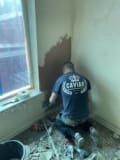

Find a Plasterer you can trust in Cemaes Bay.

Choose from 6 Plasterers, all rated by people like you.

Over 0 reviews & an average rating of 0/5 stars, you'll find the right pro

Choose and shortlist

Use the shortlist button to select up to 4 tradespeople, enter your project details and press send

or

Keen to get on with the job?

Get up to 4 quotes from local Plasterers near you

View Shortlist

RKA Decor

0 review(s)
Offers services in CEMAES BAY
We are an established painting and decorating company based in the North west of England. Customer satisfaction is our pri...

Dk/Dekor

0 review(s)
Offers services in CEMAES BAY
DK/DEKOR for all your painting needs

Recent Plasterer Enquiries

03 Oct

Interior work | Plastering

Cemaes Bay - LL67

Enquiry from: Dale W

Start Date: Immediate

Customer visited the myplasteringprices.co.uk site and submitted an enquiry. Property type: Semi detached, Work description: Stairs and landing. And hall way. Are you the property owner: Owner of th...

Post a similar request >

16 Jan

Interior work | Plastering

Amlwch - LL68

Enquiry from: Philip B

Start Date: Immediate

water is coming in through the pebble dash over the top of a window and has soaked in to the plaster inside. stop the leak and repair the interior plaster are you the property owner: owner of the pro...

Post a similar request >

24 Sep

Interior work | Plastering

Holyhead - LL65

Enquiry from: Robert B

Start Date: Immediate

skim over artex walls. replace ceiling coving. block small hole in fireplace. provide all materials are you the property owner: owner of the property property type: detached how many rooms are you lo...

Post a similar request >

18 Oct

Interior work | Plastering

Amlwch - LL68

Enquiry from: P

Start Date: Immediate

Re skim lounge approx 6mtrsx 4 mtrs ceiling and walls ( ceiling Is artexed at moment)

Post a similar request >

14 Mar

Interior work | Plastering

Rhosneigr - LL64

Enquiry from: Tina B

Start Date: Immediate

Homeowner Skim ceiling to cover artex in 1 room and porch . Are you the property owner: Owner of the property Property Type: Detached How many rooms are you looking to have plastered: 2 Are you ...

Post a similar request >

19 Jan

Interior work | Plastering

Holyhead - LL65

Enquiry from: S

Start Date: Immediate

scrape old artex of celling and re plaster 24 metres Homeowner Please contact to appoint

Post a similar request >

How much do Plasterer services cost?

How much do Plasterers cost? Costs for Plasterers in 2026 can be very different depending on the type of work that you require to have performed in your house. 

A plaster is used to serve a number of purposes when applied on a solid surface. It seals rough brickwork or stonework, it provides a smooth surface for the application of paint, the smooth surface offers a clean and wipeable finish, it’s used to repair holes and cracks in existing plasterwork and lots more. With all these benefits, it’s little surprise more and more home and property owners are looking to have their properties plastered. If you’re also considering taking on this task, then you’d probably want to know exactly how much it’ll cost to get this project over the line. In this post, we’re going to give you a good insight into wall plastering costs to help you make the best informed decisions moving forward. Let’s take a look!

As you may have expected, the cost of charged by plasterers is dependent on a number of factors. These factors include the dimension of the room, accessibility of the surface, the condition of the existing plaster as well as the size or reputation of the company. Several plasterer professionals charge a daily rate or a average room size. They know the approximate area that they can cover in a day and charge accordingly. Typically, plastering walls from scratch for small rooms will cost within the range of £600 to £700 with a duration of 2 to 3 days, while mid-sized room should cost in between £650 to £1000 with a completion time from 2 to 4 days. Lastly, for a large room, you can expect to incur about of £1000 to £1500 and can be completed within 4 days.

The table shows the kinds of job that Plasterers usually do and the regular price series of these projects. Some jobs take longer to complete than others so prices do vary by task.

View our Plasterer advice

The average price
of a Plasterer in Cemaes Bay is:

£430

Plasterer job Plasterer cost in 2026
Plastering in Cemaes Bay £563-£863
Artexing in Cemaes Bay £150-£230
Plasterboard ceilings in Cemaes Bay £225-£600
Suspended ceilings in Cemaes Bay £525-£805
Artex Removal in Cemaes Bay £190-£400

Related Plasterer searches in Cemaes Bay

Plasterer FAQs

how much does it cost to remove asbestos artex ceiling?

Prior to removing artex on your ceiling, it’s always crucial to determine whether or not the surface coating material contains asbestos. Asides from this, you may also wish to know how much you’re going to have the asbestos artex ceiling removed. If yes, then you’ve come to the right place! In order to help you make the best informed decision possible, this post was written to help give you an idea of the price it’s going to cost to remove asbestos artex ceiling in the UK.


Unfortunately, as simple as it seems, there’s no single straightforward answer to this question as there are many factors that can affect the cost of hiring an asbestos artex removal professional. These factors include the project’s scale, the complexity of the area which needs to be removed as well as the need for extra materials. Generally, professional artex removal companies charge a standard rate for their labour. As a result, you can always predict that the tradesperson’s labour will be more costly based on the extent of the job. Therefore, the more costly the labour fees will be if the job takes longer time to complete.


On the average, a tradesperson will charge within the range of £250 to £400 on a daily basis to undertake the project for you. And of course, you can expect these rates to vary based on the company hired as well as the area you live in. For rxample, you can expect that a tradesperson’s charges would be higher in an area such as Central London, as opposed to other areas which are more rural.

how to plasterboard a ceiling?

Installing a plasterboard to a ceiling is not the easiest of tasks, and even though it can be done by one person, it’s usually a lot easier when done by two people. If you’re an experienced DIYer, this task becomes a lot easier to undertake, with both confidence and patience needed to ensure a successful outcome. If you lack these essential attributes, we’d strongly recommend you call in a reliable professional who can guarantee the best results for help. In this guide, we’re going to take you through the processes involved to plasterboard your ceiling. Let’s take a look!

✓ Take a measurement of your ceiling. Knowing the length and width of your room is crucial here. You have nothing to worry about if it’s not a perfect square as that’ll only mean more cutting.

✓ Make the necessary plasterboard cuts. Cut the plasterboard sheet with a utility knife in accordance to ceiling space measured.

✓ Remove existing plaster. Once done, examine the trusses and beams to ensure they’re still in a great condition before you proceed. Also, make sure there’s no loose plaster that can compromise your new installation.

✓ Apply construction adhesive. For a better fit, you’d have to apply adhesive along the beams while also avoiding the edges as this could affect your screw placement.

✓ Start in a level corner. You have to start the installation from the most level corner.

✓ Work along the outside edges. Secure it using a screw along the outside edge. This will make your plasterboard held to your ceiling perfectly. It won’t bend or break as your proceed with the installation.

✓ Complete the installation. Install the plasterboard on your entire ceiling and complete the installation by taping the seams and plastering for a smooth surface.

How to artex a ceiling?

Artexing a ceiling can be a tricky job, but whether you’re considering hiring a professional or DIY, it’s helpful to know how it’s done.

Artex is available either in a paste or powder form. The paste is ideal if you’re making small repairs or additions to an existing ceiling. But, if you have a whole ceiling to cover, the powder is more cost effective. When you’re ready to get started, you’ll need to mix the powder up with cold water according to the instructions.

It’s possible to artex over plaster, plasterboard or paint. If you have a plasterboard surface, you should tape and fill any joints or cracks before you begin. Plaster and plasterboard both require a coat of sealant or primer first. You can usually artex straight over paint, but any gloss paint should be sanded down, and any dark paints covered with a layer of white.

Artexing can get quite messy, so make sure you empty the room you’re working in as much as possible, lay down sheets and wear protective clothing and glasses. You might want to practice on a piece of board before you start on the ceiling.

Start by using a brush or roller to cover a 500 square cm area with a generous layer of artex. Then use a brush, comb or roller to create your chosen texture. Every time you do a new section of ceiling, try to blend it with the other sections you’ve done. Don’t be tempted to cover the whole ceiling before you start adding texture – the artex will dry too quickly for you to do it all in time.

Artex usually needs 12-24 hours in a well-ventilated space to dry completely.

how much does plastering cost?

How Much Does Plastering Cost?

If your existing interior or exterior plaster is starting to show signs of needing to be refreshed or the painting never seems to last, then it’s probably time to have your plaster renewed to breathe in a new lease of life to your decorating efforts.

So if you’re giving wall plastering a thought, there’s a need to have a rough estimate of the cost a professional is likely to charge so you can set a budget and start planning. However a direct answer can not be provided for this question as there are so many factors that a professional will put into considering before coming up with a quote that’s unique to your specific requirements.

A lot of plasterers will come up with a quote for the job using the number of square metres of wall space that’s going to be covered. This is due to the number of plasterboards as well as the other materials that the plasterer will need to purchase, how long the work will take and also the labour that’ll be involved in completing the project.

Another popular influencing factor that several plasterers use is the size of the room to be plastered. This is the main reason why you’re more likely to find the prices in small, medium as well as large rooms. Therefore, in order to have a more accurate estimate of the cost of your plastering project, you’d have to call in a qualified professional to have a look at the job at hand. Generally, to re-plaster a small room will cost within the range of £350 to £550, a medium room will cost within the range of £400 to £600 and a large room, between £550 to £700.

can you wallpaper over artex?

Although they’re pretty much outdated now, artex happens to be a very popular surface coating option just a few decades ago. Several homeowners with artex in recent times would either want to have them removed or cover them up with stuffs such as a wallpaper. So if you’re wondering whether or not it’s possible to wallpaper over artex, then there you have it. It’s possible to wallpaper over artex, however it’s not advisable as wallpaper may eventually crack over time. On the other hand, the artex can also create ridges beneath the wallpaper which allows unpleasant protrusions in the wallpaper. Instead of applying wallpaper over artex, a more permanent solution would be to cover it with drywall or wet plaster or perhaps just have it removed completely.


There are two types of wallpaper, there’s the thin wallpaper application which comes with adhesive on one side as well as a pattern or colour on the other side. With this, all you need do is simply to peel and stick. Then the other type is the sturdier wallpaper that’s more thick and requires a special wallpaper paste. However, it’s important to note that if you choose to wallpaper over your artex, you won’t be able to make use of the thin type of wallpaper, rather you’ll have to incorporate the sturdier  option which makes use of wallpaper paste.


The wallpaper paste is the product you mix with water to produce a paste which you’ll have to apply to your walls before applying the applying the regular wallpaper - one without adhesive on one side. Appling wallpaper to an artex decoration may just give you the updated appearance you so much desire.

can you plaster over wallpaper?

Can You Plaster Over WallPaper?

If you have wallpaper installed on your wall surface and you’re considering plastering the wall, when you put into consideration the stress involved in removing a wallpaper you may want to consider plastering directly over the wallpaper. This is quite understandable as removing a wallpaper can be quite time consuming and tedious, but plastering directly over wallpaper is a mistake that should never be made. Plastering over wallpaper is in no way a viable option due to the fact that it can only turn out disastrous after a couple of weeks or even days in some cases as the plaster will crack and crumble. As a result, you’ll have to firstly scrape off the wallpaper in order to assist the plaster get to be firmly secured to the wall behind.

When you plaster over a wallpaper, this will make the wallpaper wet and it’ll absorb the moisture. And once the plaster does not have moisture, the only result is for it to crack and start to crumble. Hence, plaster and wallpaper is never a good combination.

Asides from cracking and crumbling, anther issue is that the wallpaper will bubble. You can actually key the wallpaper with the help of a knife and it might look secured for some time, however it’ll eventually crumble and you’d have to scrape off the plaster complete to start all over again. The wallpaper will bubble as the plaster can’t be keyed into a wallpaper and the wallpaper will only work as a barrier between the plaster and the wall.

Overall, plaster always needs to slowly dry off as well as a good and proper surface to grip to. No matter the amount of PVA mix you spread on the wallpaper, it will always remain a barrier. So you’d have to remove the wallpaper completely to get a great result.

what is artex?

Artex simply refers to a surface coating that’s commonly incorporated for interior decorating. Although it’s usually found on ceilings but it can also be used on the walls as well. The surface coating enables the professional plasterer or decorator add both texture as well as patterns to it. Originally, the name “Artex is the trademark of a UK based company known as Artex Ltd. Over time, the Artex name has been used to refer to all textured coatings, although there are other businesses that manufacture and sell identical products.


You can find Artex on ceilings as well as walls of mainly residential properties. In the 70’s and 80’s, it was pretty much a trend to have either your wall or ceiling ( can be both ) covered with Artex. The surface coating can be incorporated to create raised, textured swirls as well as patterns on ceiling and walls. There are a number of different patterns that can be made using Artex and some of these includes the following: Broken leather, swirl, stipple, fan or shell as well as knifed plaster. It can also provide just a bobbly raised uneven patter appearance from top to bottom.


Artex is main put to use by mainly decorators ( mostly plasterers). This is a skilled job as it’s tedious to create uninformed patterns especially if you don’t know how or where to start. Although the skill of Artex is very much a trade that’s dying rapidly now, but it was pretty much in high demand especially in the 70’s and 80’s. Nowadays, homeowners now prefer smooth plastered finishes over Artex, as they can be easily painted or wallpapered.

What types of plastering are there?

There are several different kinds of plastering. ‘Dot and dab’ refers to a base layer of plasterboard which is attached to a wall using ‘dabs’ of adhesive. ‘Floating’ is a technique where a backing or undercoat plaster is applied to walls. ‘Skimming’ or ‘reskimming’ refers to the very thin final decorative layer of plaster.

Plasterer help and advice

How it works

Tell us about your Plasterer project

Answer a few quick questions to help us match you with the right Plasterer

Get up to 4 free quotes

Receive no-obligation quotes from 4 Plasterers working in Cemaes Bay.

Pick the right pro for you

Compare prices, customer reviews and services, and hire the right Plasterer.

Are you a Plasterer in Cemaes Bay?

View our open Plasterer jobs near you

Join today
View Shortlist

