
14 Oct
Plasterboard Ceilings
Bolton - BL2
Enquiry from: David O
Start Date: Immediate
Plaster and skim 2x2 meter or ceiling with which has to be opened up for plumbing repair !


Over 24 reviews & an average rating of 4.4/5 stars, you'll find the right pro
Use the shortlist button to select up to 4 tradespeople, enter your project details and press send
Get up to 4 quotes from local Plasterers near you


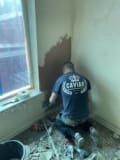



Bolton - BL2
Enquiry from: David O
Start Date: Immediate
Plaster and skim 2x2 meter or ceiling with which has to be opened up for plumbing repair !
Liverpool - L36
Enquiry from: Gina R
Start Date: Immediate
Reboard part of ceiling after leak make safe to artex at later date
Bolton - BL6
Enquiry from: Sharon P
Start Date: Immediate
Need artexed removing and plastering
Bolton - BL3
Enquiry from: HELEN T
Start Date: 1 to 3 months
Submit your free quote for rated tradespeople
Bolton - BL2
Enquiry from: Peter A
Start Date: Immediate
Kitchen part need plastering
Wigan - WN1
Enquiry from: Lee W
Start Date: Immediate
Have taken down a chimney in the bedroom from the loft and need a small area of ceiling and wall plastering where the chimney has been taken out
Bootle - L30
Enquiry from: David S
Start Date: Immediate
Plaster over an artex ceiling approx 10mx3n
Ormskirk - L39
Enquiry from: Keith M
Start Date: Immediate
I have a swirl pattern artexed ceiling in my living room needs repairs
Manchester - M27
Enquiry from: Harry B
Start Date: Less than one month
Submit your free quote for rated tradespeople
How much do Plasterers cost? Costs for Plasterers in 2026 can be very different depending on the type of work that you require to have performed in your house.
A plaster is used to serve a number of purposes when applied on a solid surface. It seals rough brickwork or stonework, it provides a smooth surface for the application of paint, the smooth surface offers a clean and wipeable finish, it’s used to repair holes and cracks in existing plasterwork and lots more. With all these benefits, it’s little surprise more and more home and property owners are looking to have their properties plastered. If you’re also considering taking on this task, then you’d probably want to know exactly how much it’ll cost to get this project over the line. In this post, we’re going to give you a good insight into wall plastering costs to help you make the best informed decisions moving forward. Let’s take a look!
As you may have expected, the cost of charged by plasterers is dependent on a number of factors. These factors include the dimension of the room, accessibility of the surface, the condition of the existing plaster as well as the size or reputation of the company. Several plasterer professionals charge a daily rate or a average room size. They know the approximate area that they can cover in a day and charge accordingly. Typically, plastering walls from scratch for small rooms will cost within the range of £600 to £700 with a duration of 2 to 3 days, while mid-sized room should cost in between £650 to £1000 with a completion time from 2 to 4 days. Lastly, for a large room, you can expect to incur about of £1000 to £1500 and can be completed within 4 days.
The table shows the kinds of job that Plasterers usually do and the regular price series of these projects. Some jobs take longer to complete than others so prices do vary by task.
View our Plasterer advice| Plasterer job | Plasterer cost in 2026 |
|---|---|
| Plastering in Newton-le-willows | £563-£863 |
| Artexing in Newton-le-willows | £150-£230 |
| Plasterboard ceilings in Newton-le-willows | £225-£600 |
| Suspended ceilings in Newton-le-willows | £525-£805 |
| Artex Removal in Newton-le-willows | £190-£400 |
Installing a plasterboard on your ceiling is a cool way to modernize your property. Over the past couple of decades, there has bee an increasing number of trends associated with plastering of both walls and ceilings such as rounded edges and textured plaster. However, in recent times, home and property owners are now looking to install more of sharp edges. If you’re planning to plaster your ceiling, you’d probably want to know just how much this project is going to cost. If yes, then you’ve come to the right place. In this article, we’ll give you a rough estimate of ceiling plastering costs.
There are a plethora of factors the can influence the price of plastering your ceiling. These pricing components includes the following:
✓ Size. As you would have expected, the larger the job, the more the overall cost. However, the price per square metre will reduce which means that the cost of plastering a small ceiling space will cost more per square metre than the cost of plastering a larger ceiling space per square metre.
✓ Materials. We have a wide range of plasterboard available in the market. If you need a fire retardant, acoustic or other types of specialist plasterboard, you can expect to pay higher than standard plasterboards.
✓ Location. Just like many other home improvement projects, the cost of plastering ceiling varies greatly throughout the UK. Places such as London and the South East have the highest prices due to the high standard of living as well as greater demands.
In general, to plaster a ceiling (small 2 m x 2 m) - overboard and plaster will cost within the range of £200 to about £300. Also, to plaster a ceiling (large 5 m x 6 m) - overboard and plaster will cost within the range of £400 to about £600. The average plasterer’s daily rate (including material) is about £180 to £300 and ceiling plastering cost per square metre ranges between £20 to £40.
How Much To Plaster A Room?
Generally, the standard of plastering in older houses leaves a lot to be desired. Having settled for so many years, there is a lot of tendency that anything brittle will break or crumble with the movement. And this is exactly where plasters fall.
Plaster provides a wide range of functions in your home and as a result, has grown to become very popular amongst several homeowners. So if you want to plaster a room, you might just wish to estimate the cost so you can set a budget and start to plan. However, there’s no short and simple answer to this as the cost of plastering is based on a number of factors. These factors include the dimensions of the room, the accessibility of the surface, the condition of the existing plaster as well as the size of the company.
So if you want to paster your room, you can either remove the old plaster or skim a 3mm plaster coat over the existing one. In respect to the two options, the prices will also vary. However, several plastering experts will charge either on the average room size or a daily rate. This is due to the fact that they know approximately the number of area they can cover in a day’s work. You can, however, request a quotation which specifies the costs per square metre in order to allow you compare with other contractors. In reality, several plastering professionals use either small, medium or large sized room as the yard stick for providing a quote.
Generally, for a small sized room, you’ll have to pay about £600 to £700, a medium sized will cost within the range of £650 to £1000, while a large sized room will cost between the range of £1000 to £1500.
There are several different kinds of plastering. ‘Dot and dab’ refers to a base layer of plasterboard which is attached to a wall using ‘dabs’ of adhesive. ‘Floating’ is a technique where a backing or undercoat plaster is applied to walls. ‘Skimming’ or ‘reskimming’ refers to the very thin final decorative layer of plaster.
If you’re looking to plaster your ceiling, one of the most essential parts of the process is cutting the plasterboard. Once you’re able to master this skill, the rest of the plastering is quite easy. This is a task that can be done by any competent DIYer but with a little bit of patience and confidence. If you lack any of these attributes, we’d strongly recommend you call in a reliable professional who can guarantee the best results for help. In this guide, we’re going to take you through the plasterboard ceiling cutting process. Let’s take a look!
To cut plasterboard ceiling, you don’t need any expensive tool which is usually not the case when it comes to carpentry. If you won’t be cutting a lot of plasterboard, all you really need would be just an old handsaw or plasterboard one, a Stanley knife as well as a straight edge. However, if you’ll be cutting lots of plasterboards, you’ll require the following to make your task a lot easier:
✓ An old handsaw
✓ A Stanley knife and many spare blades
✓ A straight edge like a long spirit level
✓ A surform
✓ A battery drill and oh2 screwdriver bits, with specific plasterboard screws.
To cut plasterboard to length, you’ll have to first score a line on the face side of the board with a straight edge and Stanley knife. Once done, simply lift the sheet off the ground and snap it along the score line. Then, you can run your knife down the other side of the board , cutting the back of the plasterboard backing sheet. Upon completion, your plasterboard is now ready to be fitted on your ceiling.
It’s possible to paint your artex ceiling if you want to smarten it up or make it a different colour.
If it’s never been painted before, you’ll need to paint it with a PVA-based solution or water-thinned paint layer to start with. You may want to scrape or sand off any loose or peeling patches beforehand, but only do this if you’re sure that the artex doesn’t contain any asbestos.
Once you’ve done this, follow with two coats of your paint of choice – ideally an emulsion. If your artex ceiling has been painted before then you can paint directly without priming. However, if you’re painting over a particularly bold colour with a lighter one, you might want apply a layer of white paint first.
Can You Plaster Over Tiles?
Yes, it’s absolutely possible to plaster over tiles but just because is possible doesn’t mean you should. Plastering over tiles is an option but it’s not recommended by experts due to several reasons. A good example is the fact that a tiled environment is in no way a suitable environment that can serve as a good bonding surface for a plaster. For the success of a plastering project, there’s the need for the surface to be able to bond to the PVA base coat. Due to fact that most tiles are slippery in nature and also lack of the ability to be able to absorb moisture, the PVA base coat layer will not be able to bond to the tiled surface, which will ultimately make for a weak surface upon the application of the plaster. Consequently, the plaster will easily flake and fall from the wall.
The inability to drill into the tiled wall surface after plastering is one of the major disadvantages that also arises when you decide to plaster over tiled surfaces. Most tiled surfaces are found in kitchens and bathrooms which are going to need appliances such as sinks, lavatories, kitchen counters and lots more. These appliances are designed to be installed on solid surfaces which would not be an easy task to carry out on tiles knowing there would definitely be great cracks or damages.
The best tip you’ll get if you’re considering to plaster on a tiled surface, is that detaching tiles from a surface can easily be done with a hammer and chisel, and that would save you a host of problems later in the future. However, if you still wish to plaster on your tiled walls, then you best bet would be to get a Blue Grit bonding agent. It works better than PVA and only needs one coat.
If your artex ceiling is looking tired or you just fancy a change, you can try plastering over your artex. You have two options when it comes to plastering over your artex: plasterboard or skimming.
Covering your ceiling with plasterboard is a good option if you suspect the artex may contain asbestos. If done carefully, it doesn’t involve disturbing the artex, reducing the risk of asbestos exposure.
You also have the option to skim over your ceiling. The first steps to this involve removing loose and flaking parts, cutting off stipples and sanding your ceiling down. So, if there’s a chance your artex ceiling may contain asbestos, this isn’t the right solution for you. However, if you’re sure there’s no asbestos in your ceiling, then sanding down and skimming over your ceiling can be a great way to create an attractive result.
It’s worth noting that both putting up plasterboard and skimming plaster can be difficult jobs. Although possible to DIY, you’re likely to get much better results if you hire a professional.
Artex is a type of interior surface coating, similar to plaster. It’s used to create decorative textured finishes on ceilings and walls, so it takes longer to dry than plaster.
Artex is actually a brand name, but it’s used to refer to similar products made by other manufacturers too. It was particularly popular in the 1970s, but is still used to create attractive wall and ceiling finishes today.
Answer a few quick questions to help us match you with the right Plasterer
Receive no-obligation quotes from 4 Plasterers working in Newton-le-willows.
Compare prices, customer reviews and services, and hire the right Plasterer.
View our open Plasterer jobs near you
Join today
